
Ali
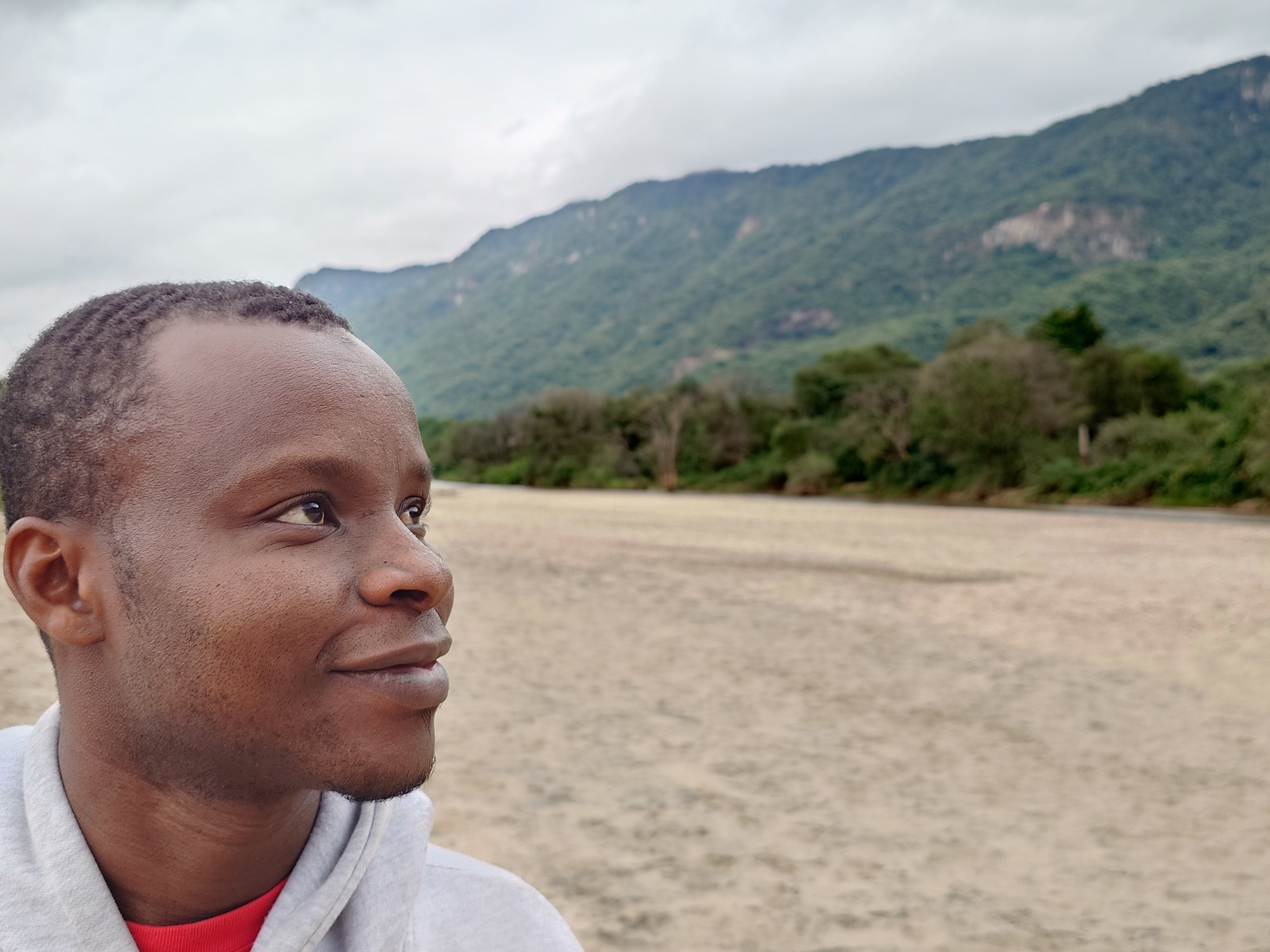
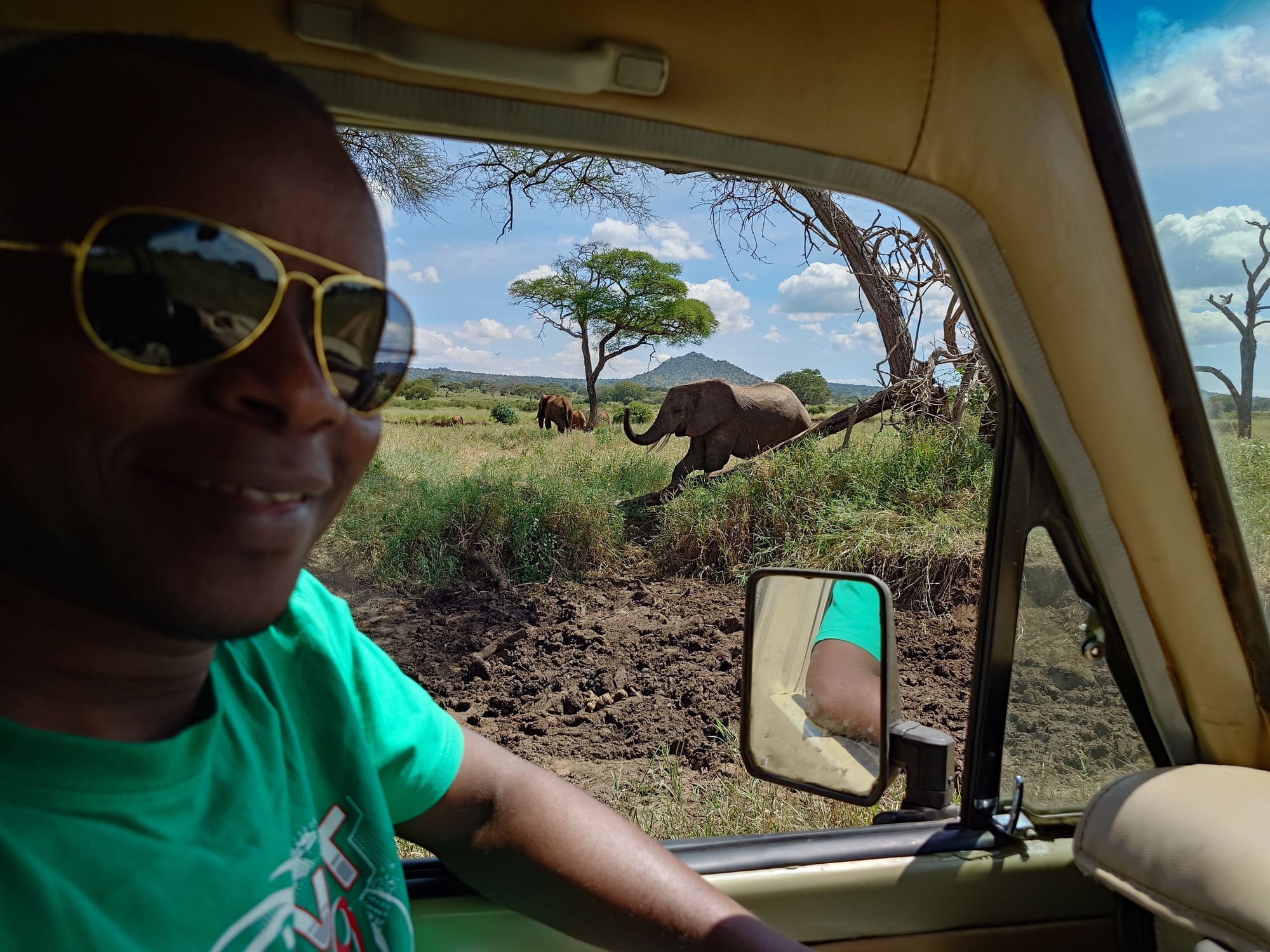
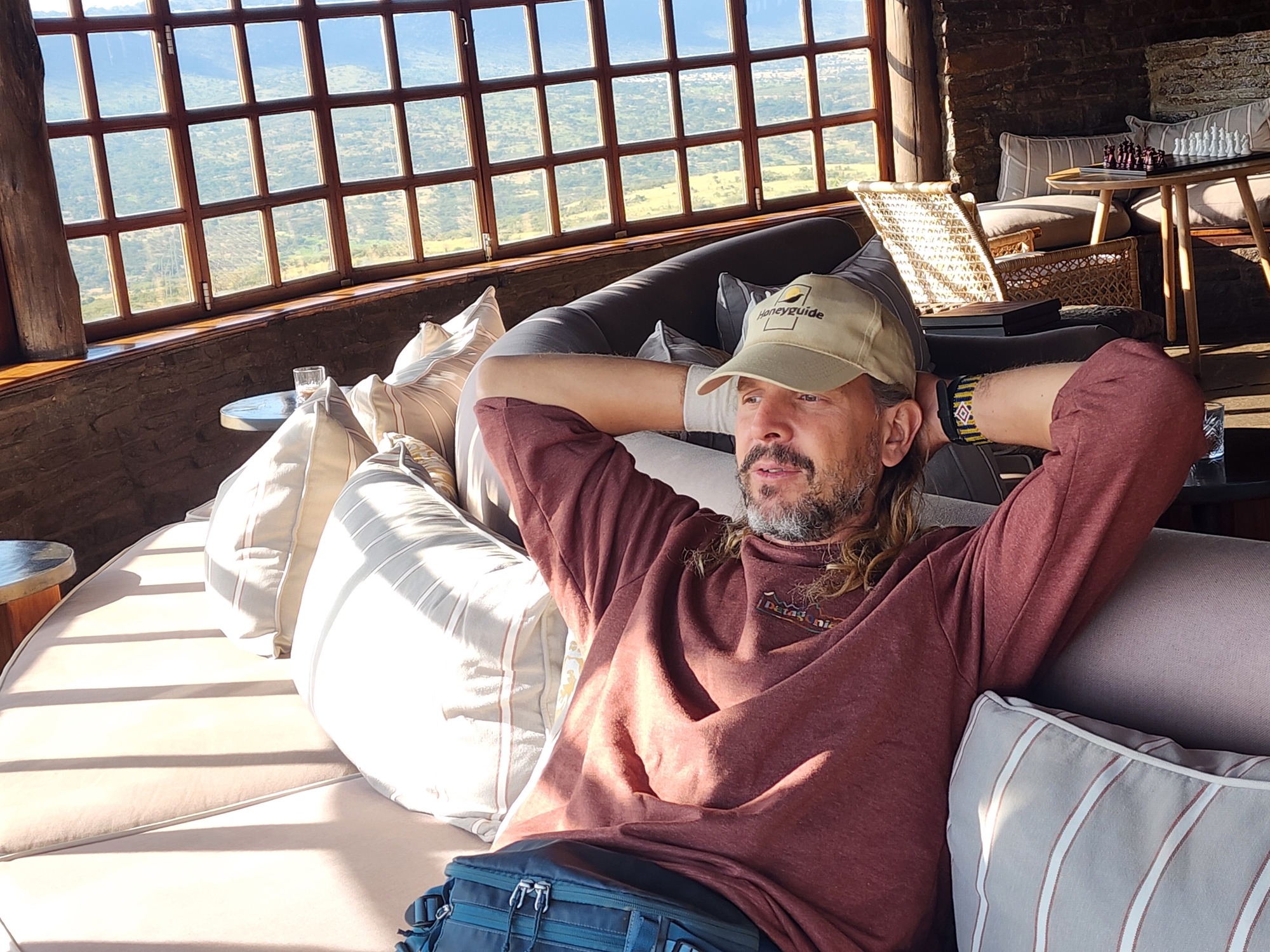
…is our friend from Zanzibar. Actually, he was our first friend on the island. His full name is Ali Dude Bakari. Dude is his father, and Bakari was his grandfather. When we first arrived in Zanzibar, he was working at a hotel and made our initial experiences on the island much easier. Ali also owns a travel agency here in Zanzibar.
About 8 years have passed since our first visit, and now we’re both true “Zanzibarians.” Ali is one of the few people who has stayed with us from the very beginning until now. It’s such a great feeling to have “your own” person on the island—someone you can rely on even when other “friends” drift out of your life for various reasons…
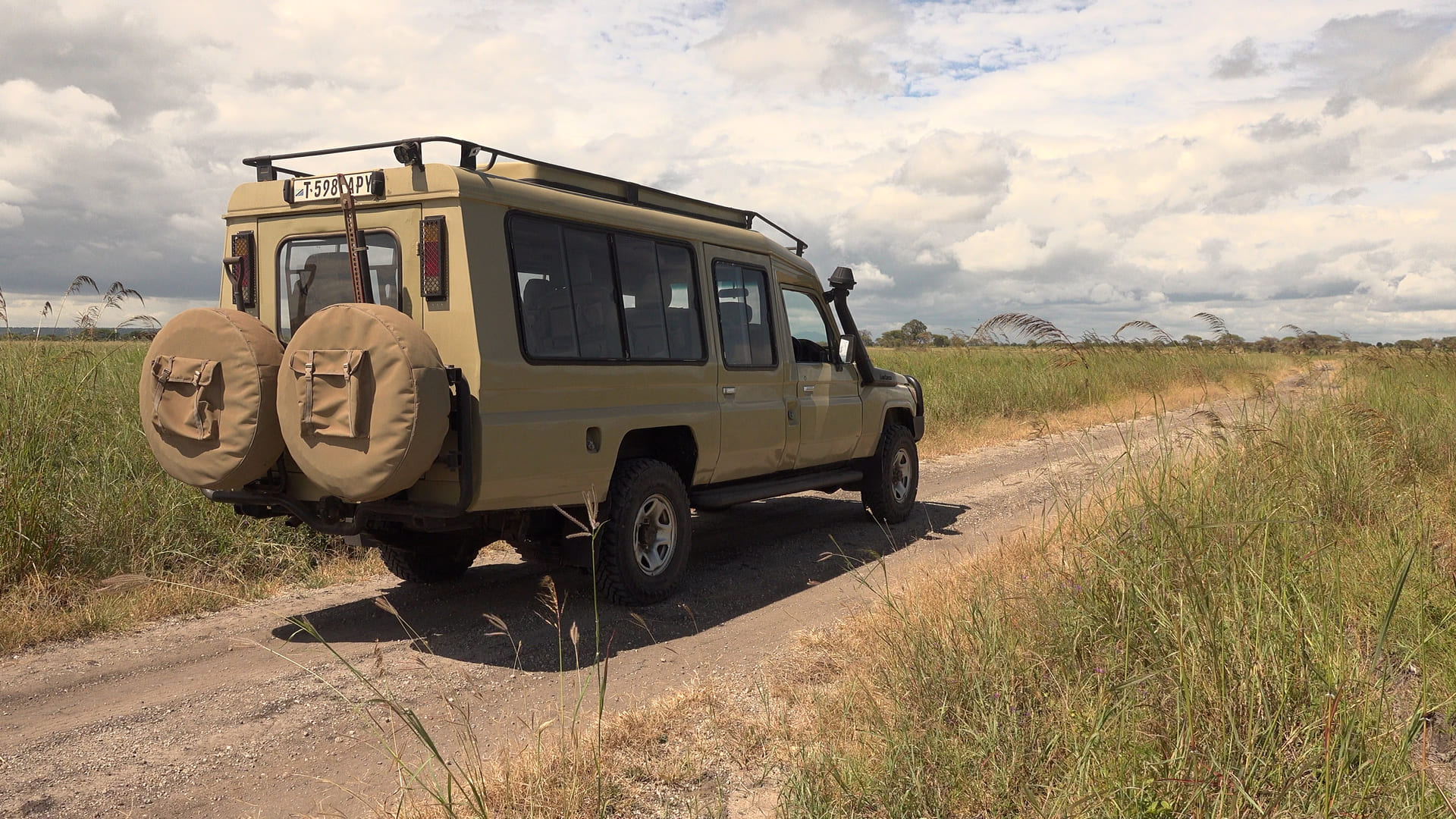
And, interestingly, Ali has never been on a safari in mainland Tanzania. Nor has he ever flown on an airplane. So, during one of his completely spontaneous visits to us, Aruna and I decided to take action. We invited him on a safari in our safari vehicle, with me as the guide and driver. Aruna stayed home on the island—she had plenty of work to do—but, honestly, a week-long trip was just what I needed to deepen my understanding of driving, the car, guiding, animal migrations, and accommodations, and perhaps to see and get to know a new environment…
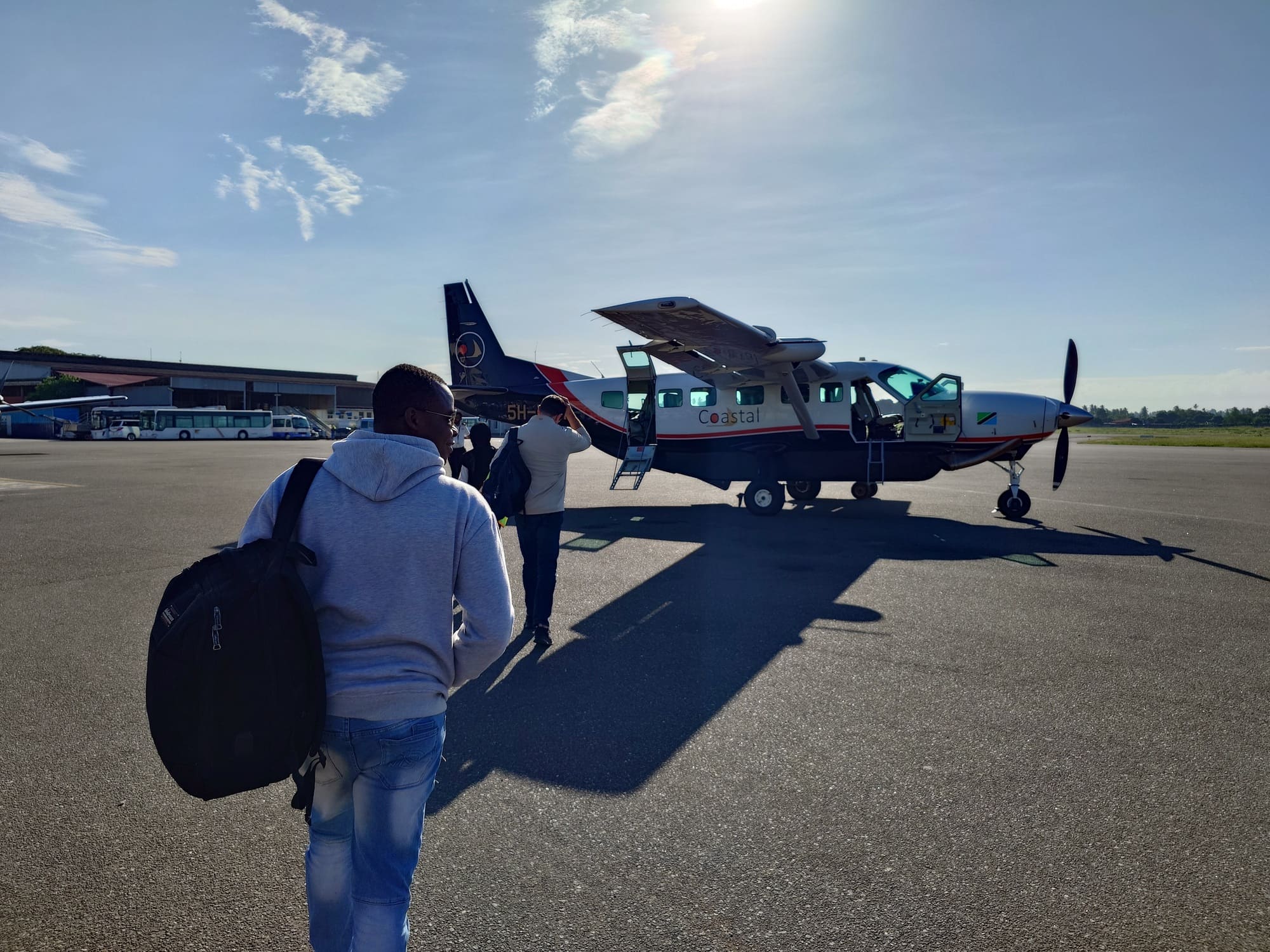
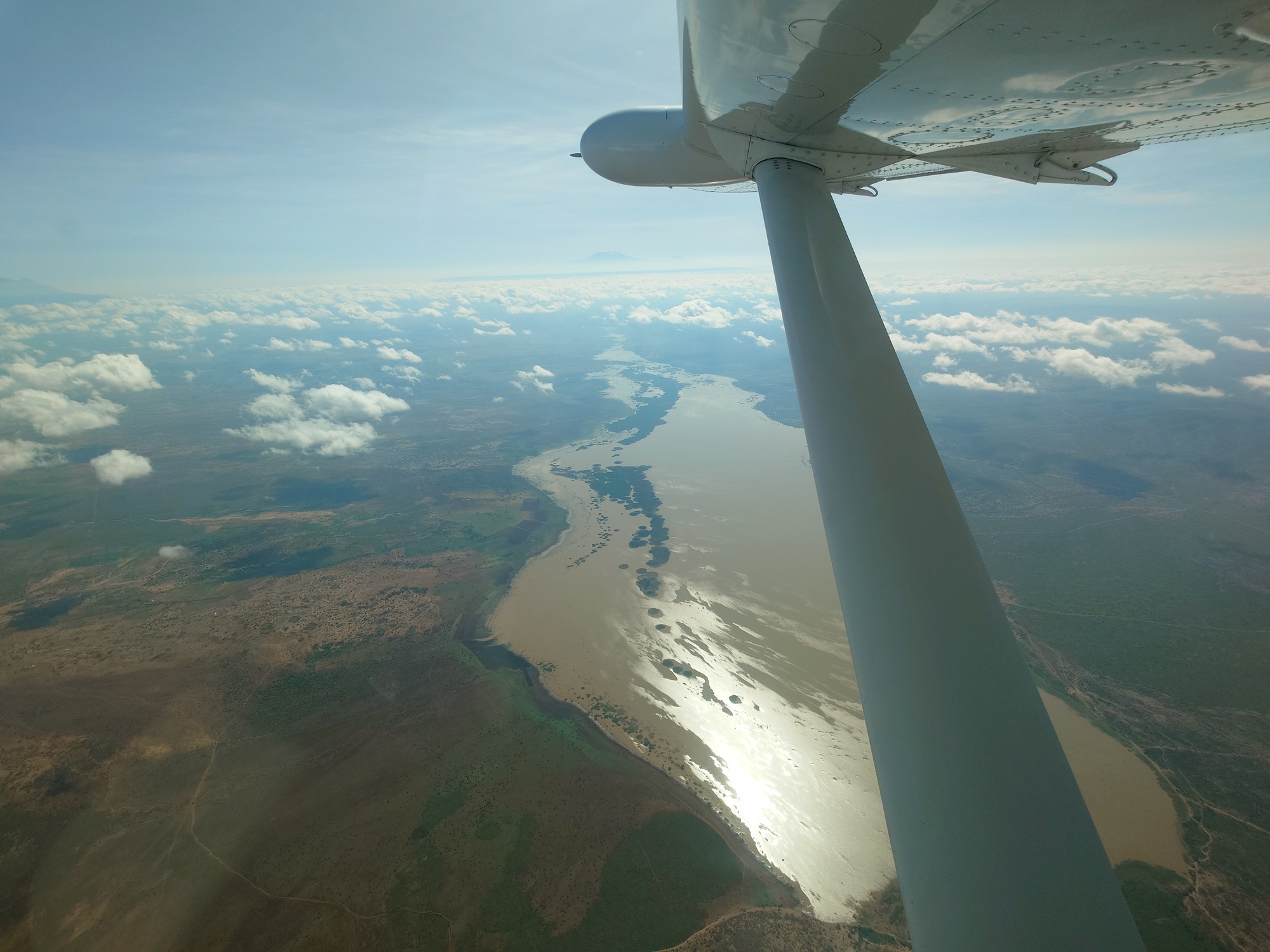
And off we went. First, onto the plane. A real safari plane—we flew in a Cessna. From the island to northern Tanzania. Actually, with the flood of tourism in Tanzania, I’ve often missed out on a real “safari” flight like that—in a small plane—to at least somewhat satisfy my desire for a primal, adventurous exploration of this wonderful part of the world. And yes, it’s still possible. That’s exactly what I’d love to share with our guests. So, the Cessna is booked and the airline is set.
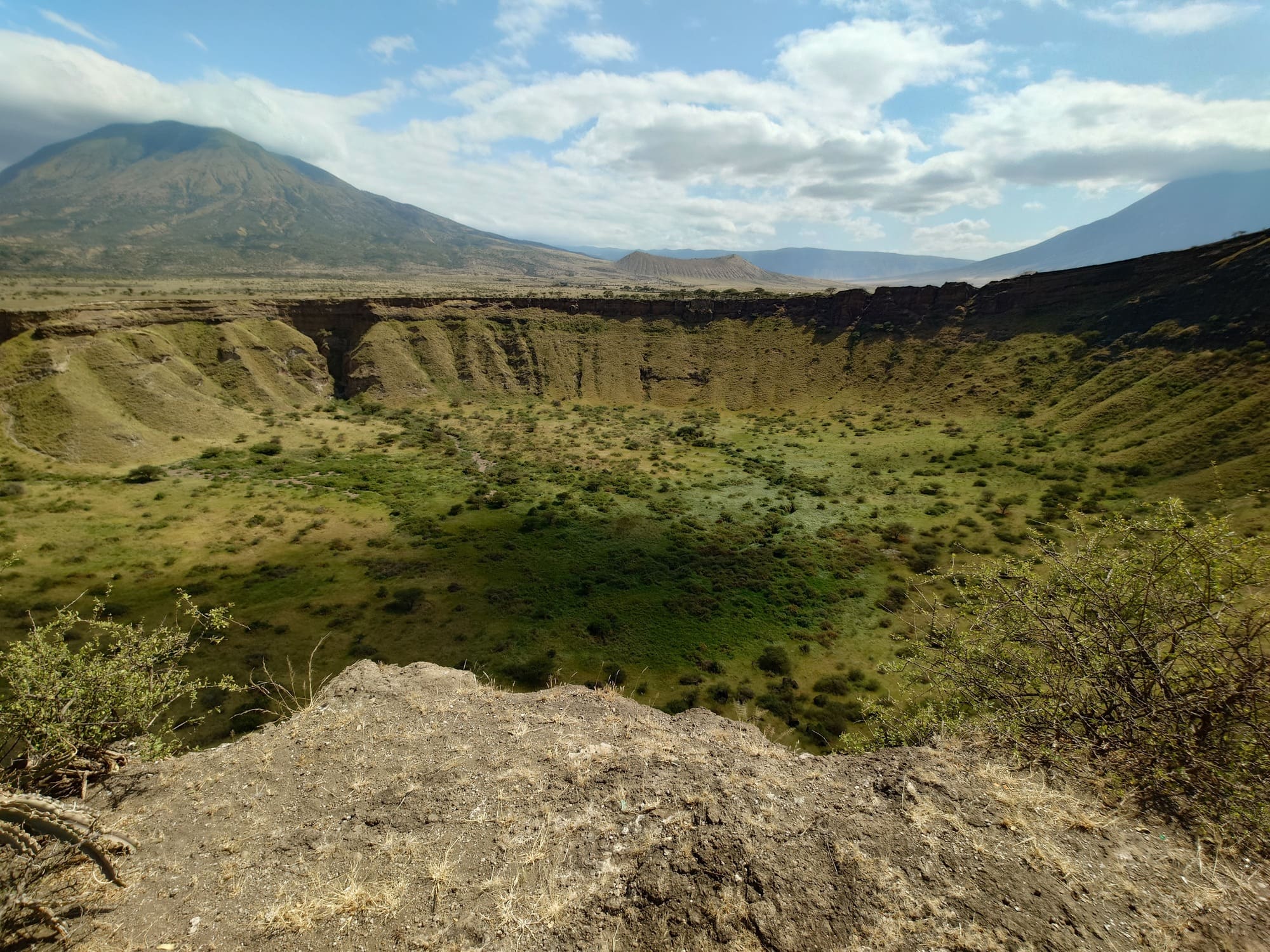
Out of the corner of my eye, I kept an eye on Ali throughout the hour-and-45-minute flight; as he later told me himself, he had a hard time coming to terms with traveling high in the air. Well, the ice was broken—it was Ali’s first flight—and we soon landed in the cool north of Tanzania. Yes, it was cold, but I say that solely from the perspective of an islander who is warmed most of the year by warm tropical winds and the intense equatorial sun. So, not so cold that any European would actually be freezing. We landed at an altitude of about 1,400 meters, where the northern Tanzanian highlands begin. A volcanic region where continents were formed millions of years ago, in the area of the Great East African Rift Valley, which I love so much.
Ali eagerly climbed into the safari vehicle and was definitely ready from the very first moment for a great tectonic adventure. And that’s exactly what it was—an adventure and a tireless drive through the extraordinary landscapes of northern Tanzania.
Aruna and I – two weeks earlier
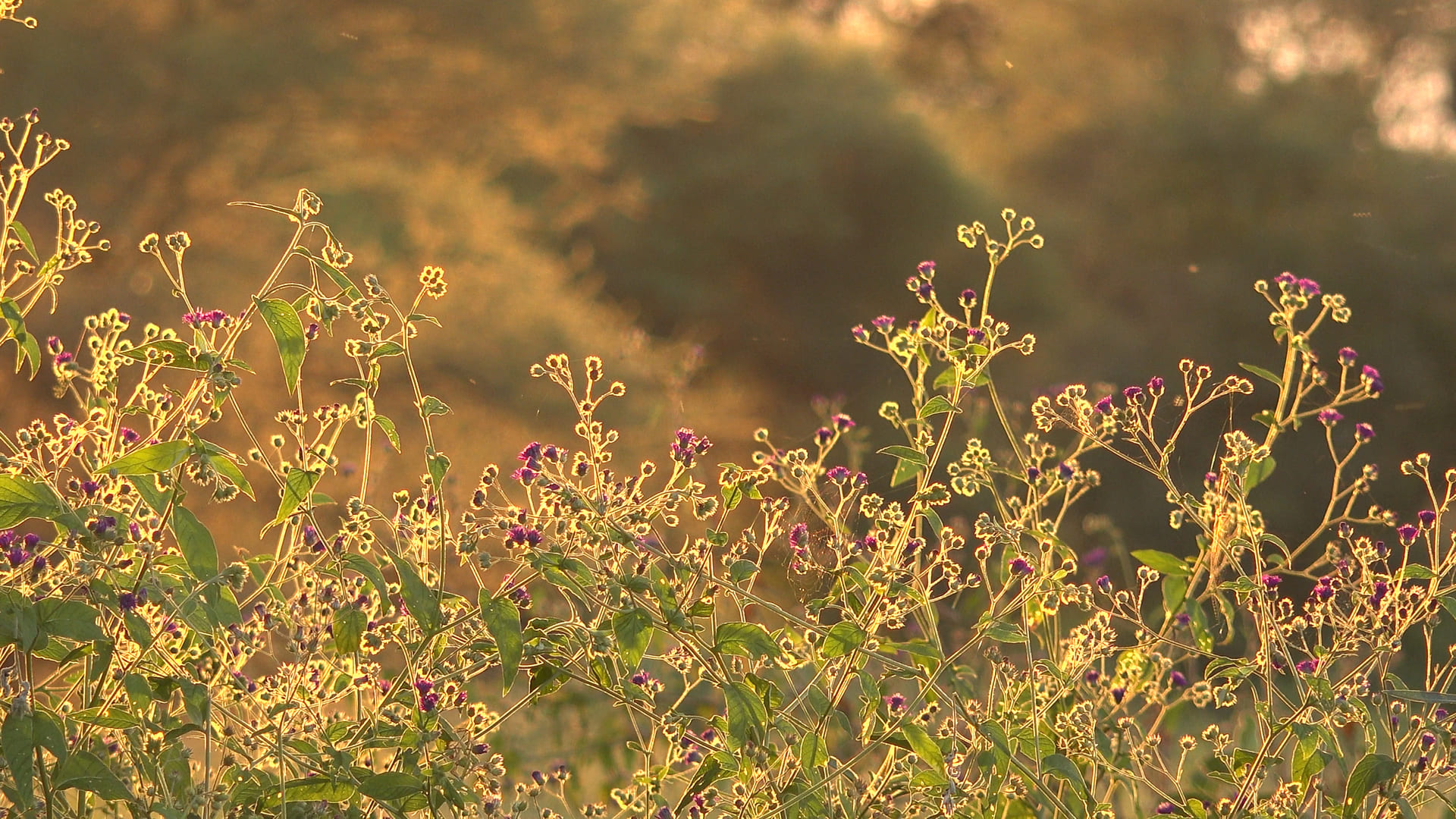
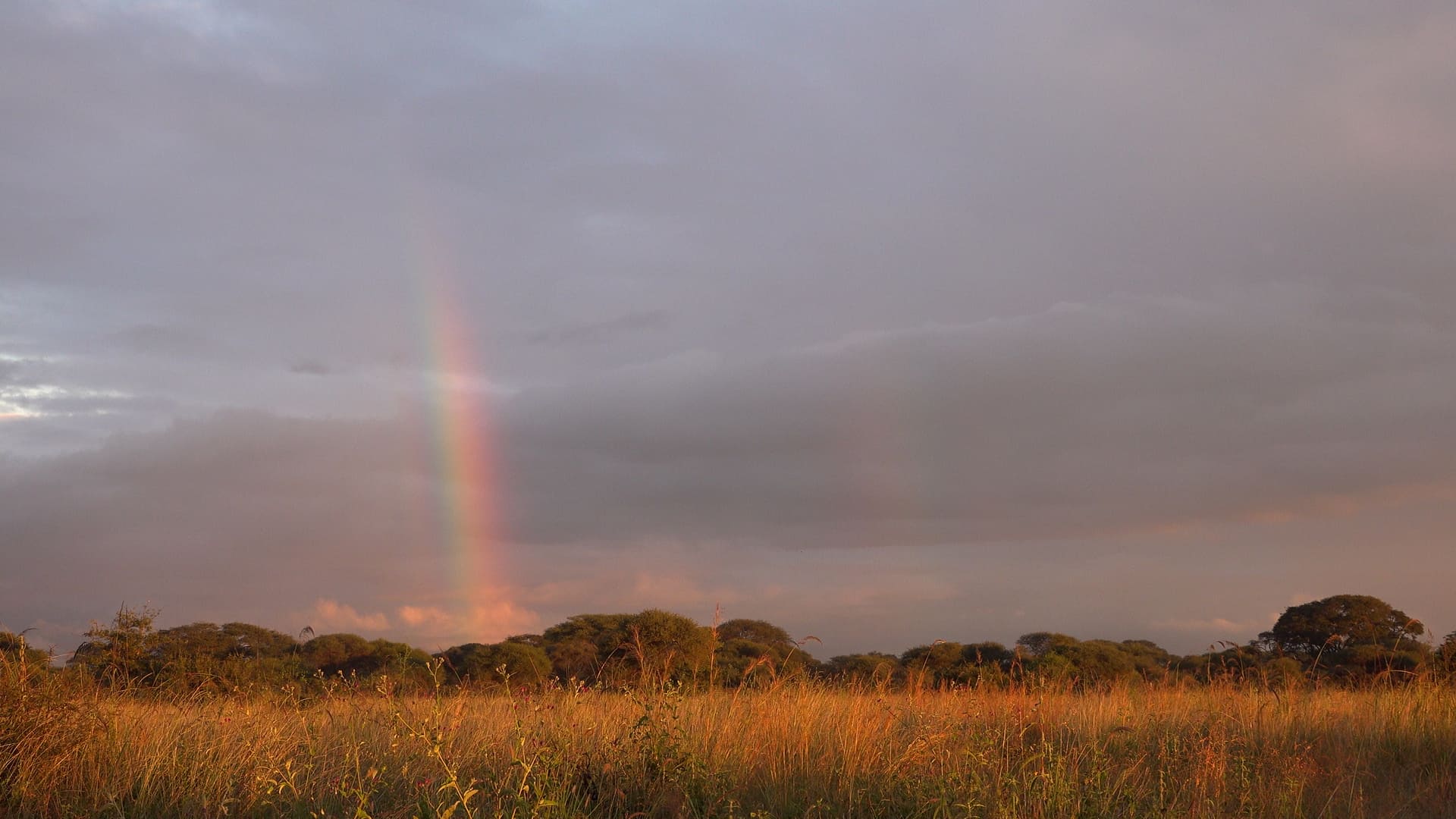
Let’s go back just a little bit in time… Two weeks earlier, at the end of May, Aruna and I visited part of this route together. I was truly struck by how quickly the wilderness changes. The end of May also marked the end of the rainy season over much of mainland Tanzania. Aruna and I still caught some dark clouds and even a bit of rain back then, though mixed with plenty of sunshine. Everything was in bloom. The grasses, the wildflowers—everything was bursting with life. The grasses were tall and a deep green. A wonderful experience, especially when compared to the parched grasses at the height of the dry season, somewhere between August and October. So, northern Tanzania in May offers an abundance of green, blooming plants, and the fragrant air given off by the grasses and wildflowers. And, of course, the birds…
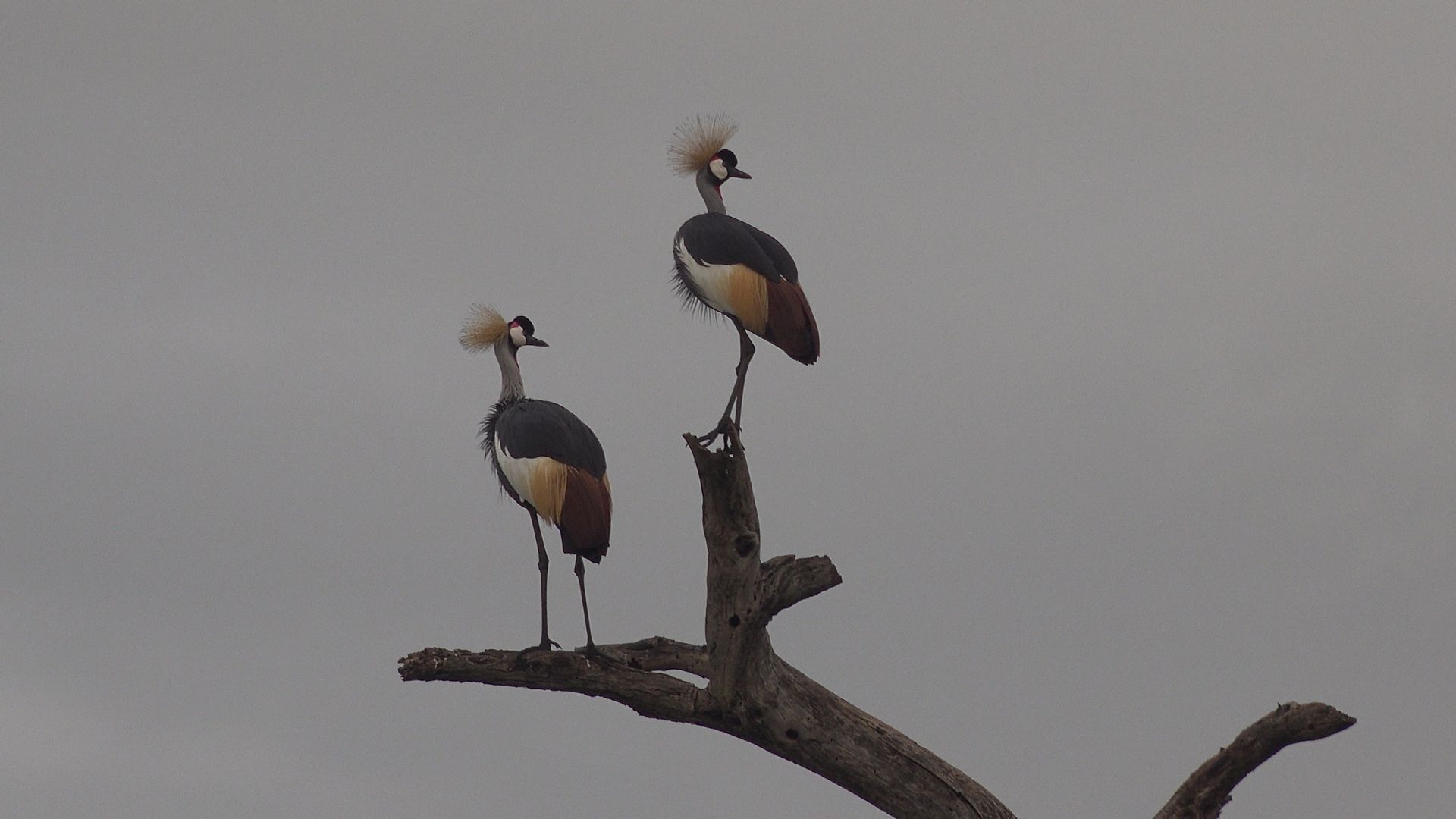
There are countless birds, both resident and migratory. The migratory birds arrive from all directions… From Central Africa, the Lake Victoria region, southern Africa, and even from Europe and Asia. Early mornings are especially beautiful. Around five in the morning—especially if you’re sleeping at a campsite in the park—you’re woken by an orchestra of thousands of birds. It’s incredibly beautiful, and definitely something I’d recommend everyone experience.
And the two of us slept in the park. In fact, we were the only guests at the campsite. The rainy season in Tanzania is the off-season, when there are far fewer tourists than, say, in August, when convoys of safari vehicles flock to the Serengeti to take “selfies” during the Great Migration. Well, I don’t know about that… We’ve always sought out quiet corners of the wilderness, steeped in silence and filled with unexpected, unplanned opportunities.
Expect the unexpected. That’s it. A thought that has stuck with me over the past few years of exploring the wilderness of northern Tanzania. Not because I wanted it to, but because nature and the trails here simply present themselves that way. Unexpected events—and also the willingness to change your planned route at the last minute—perhaps simply because, or perhaps primarily because, your intuition tells you to.
Every day in the wilderness is a lesson in intuition.
With a wounded lion
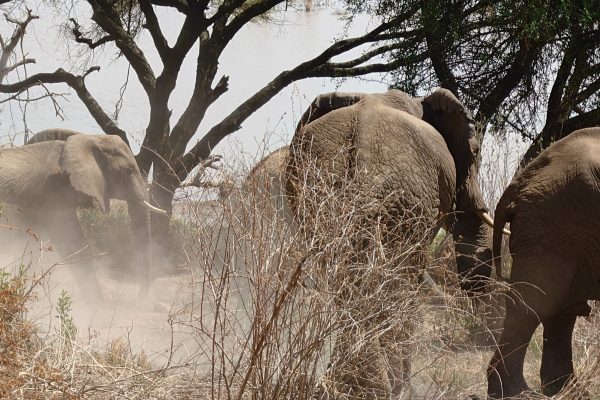
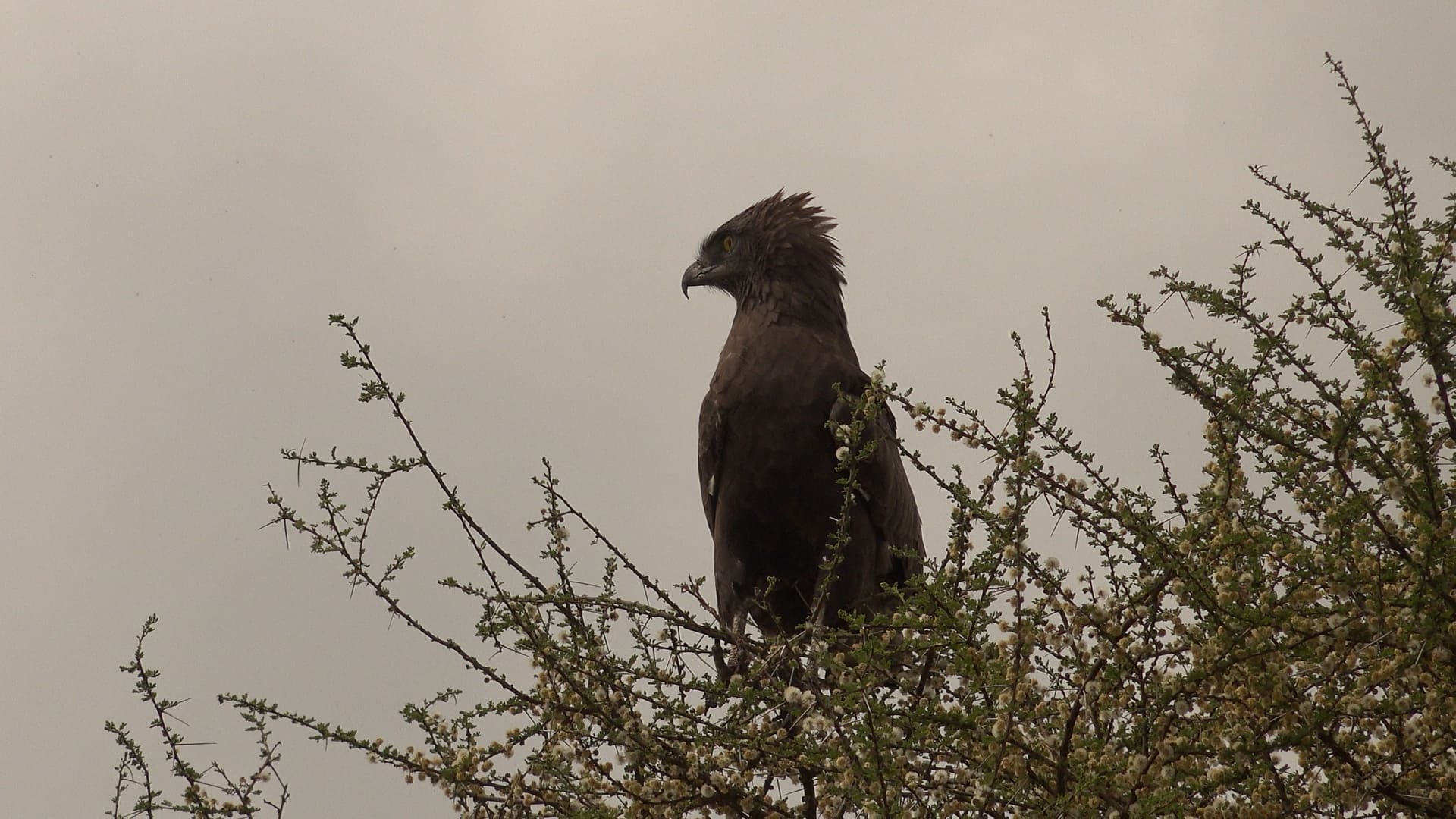
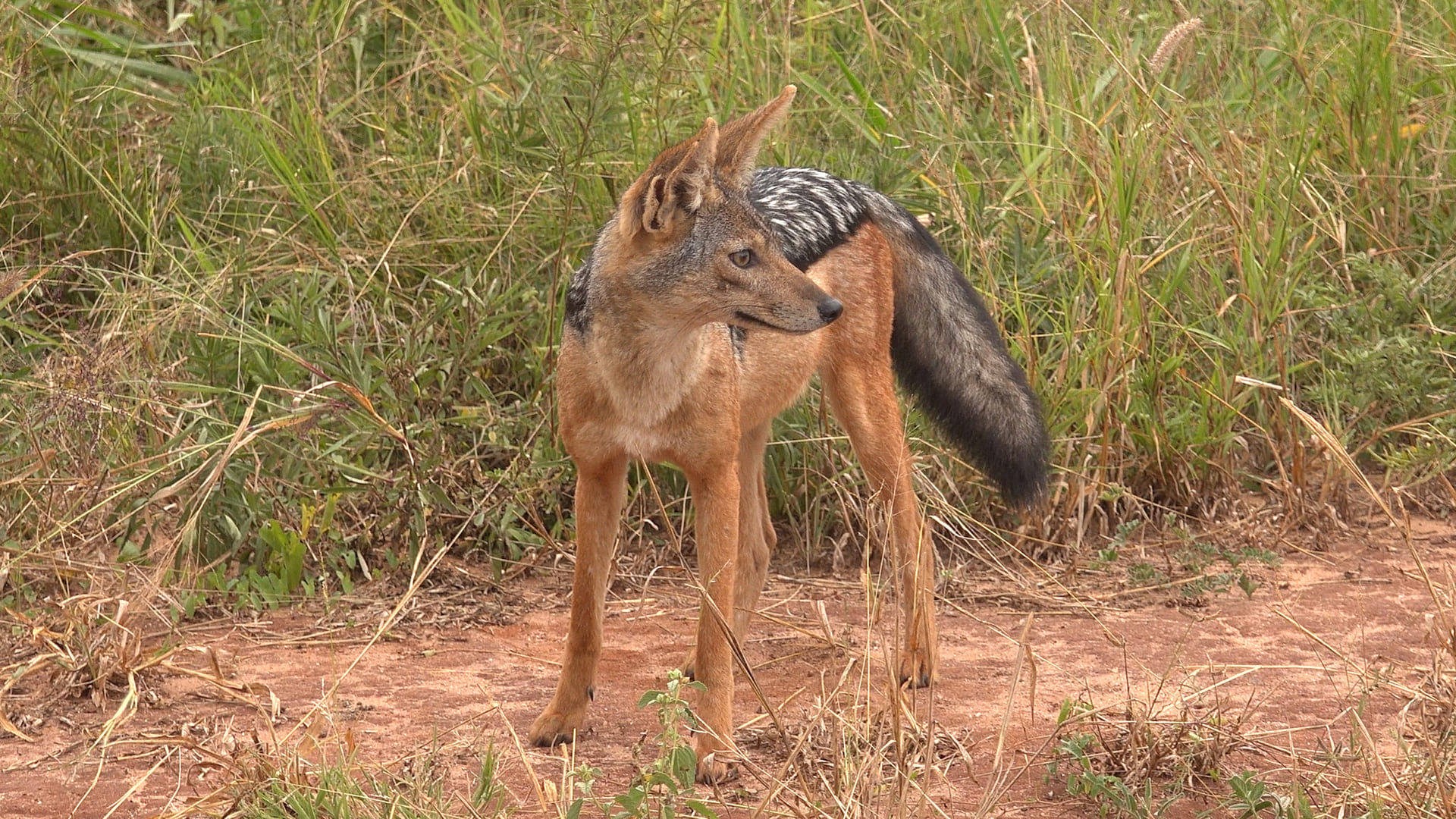
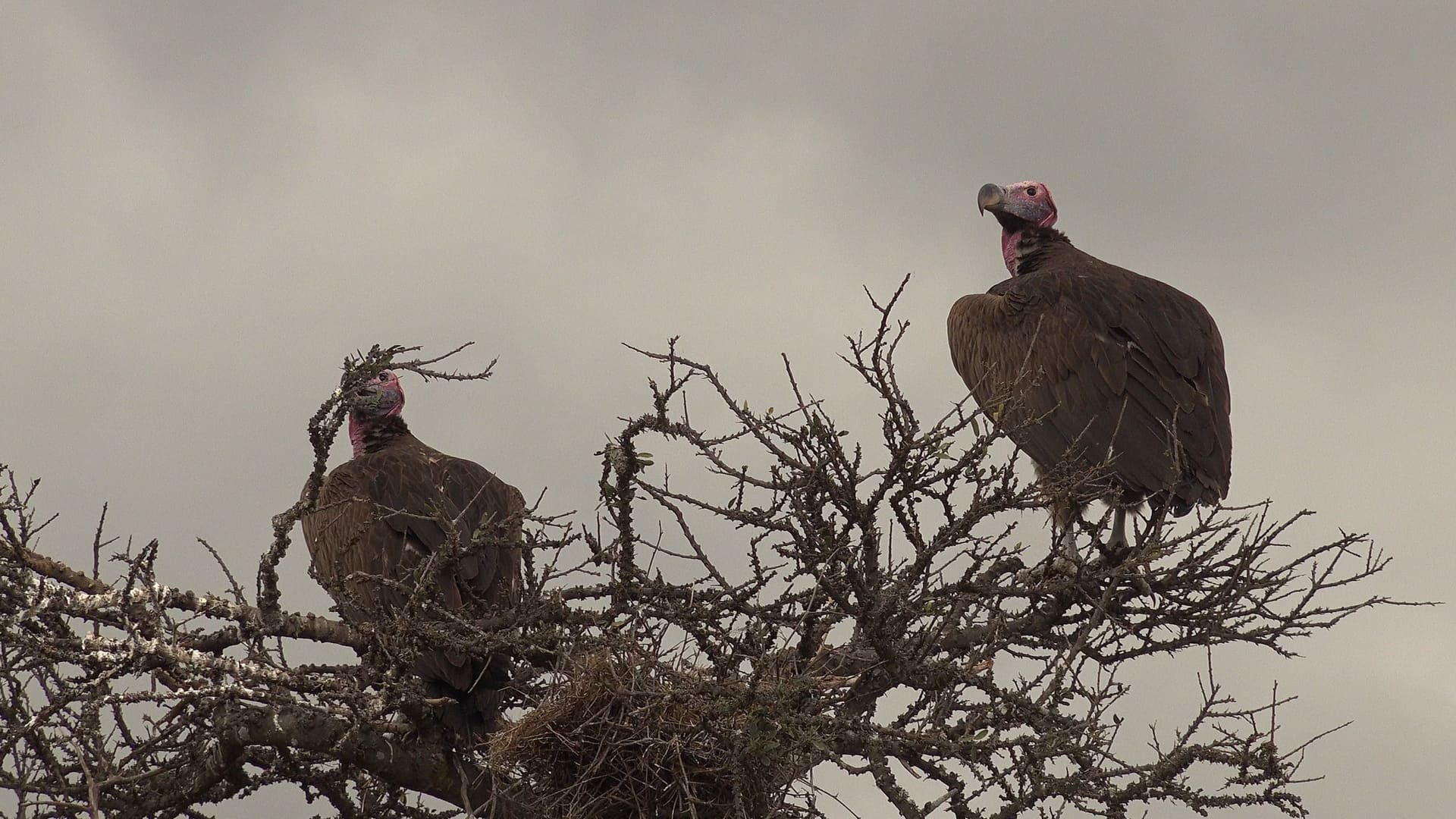
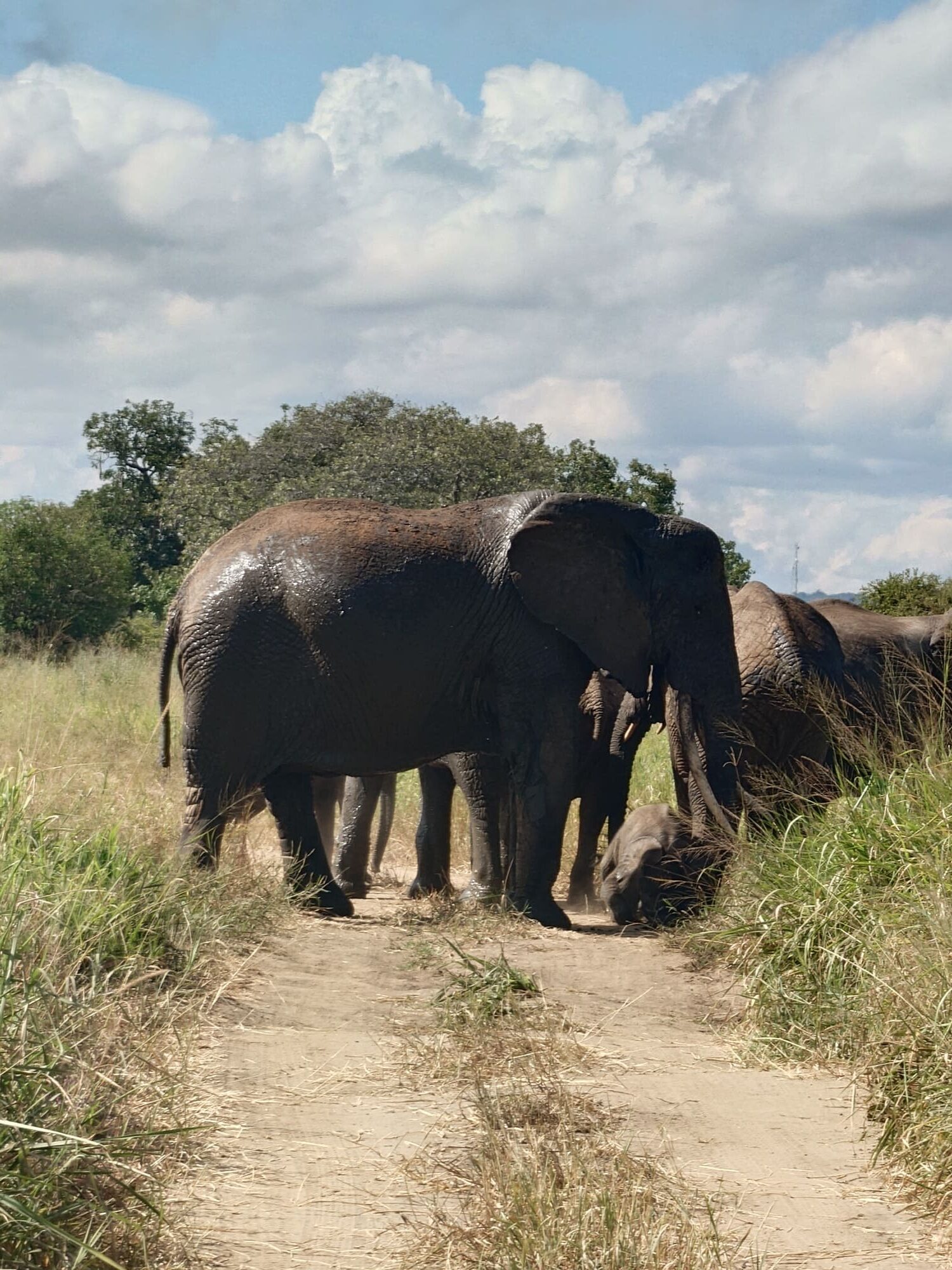
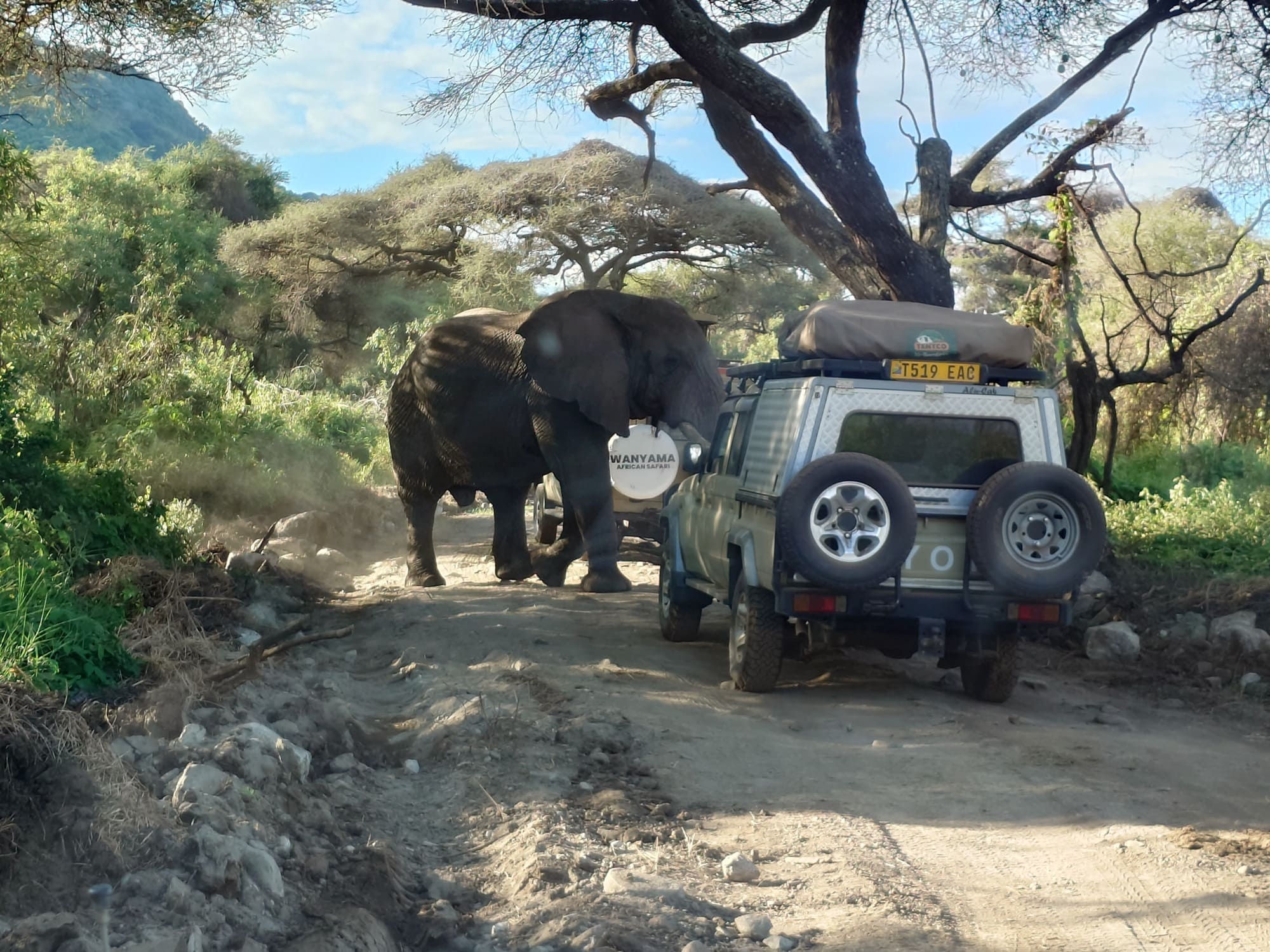
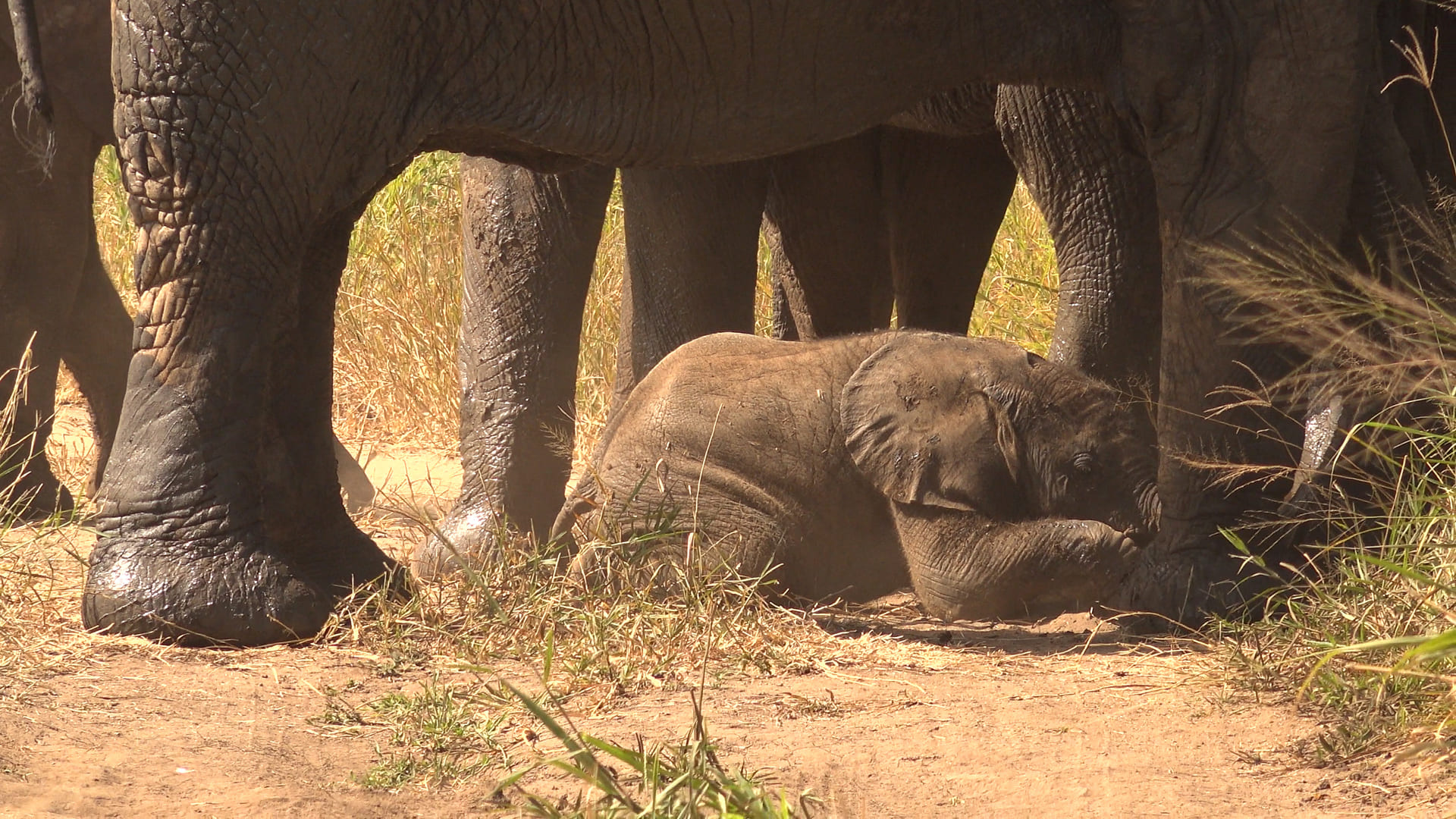
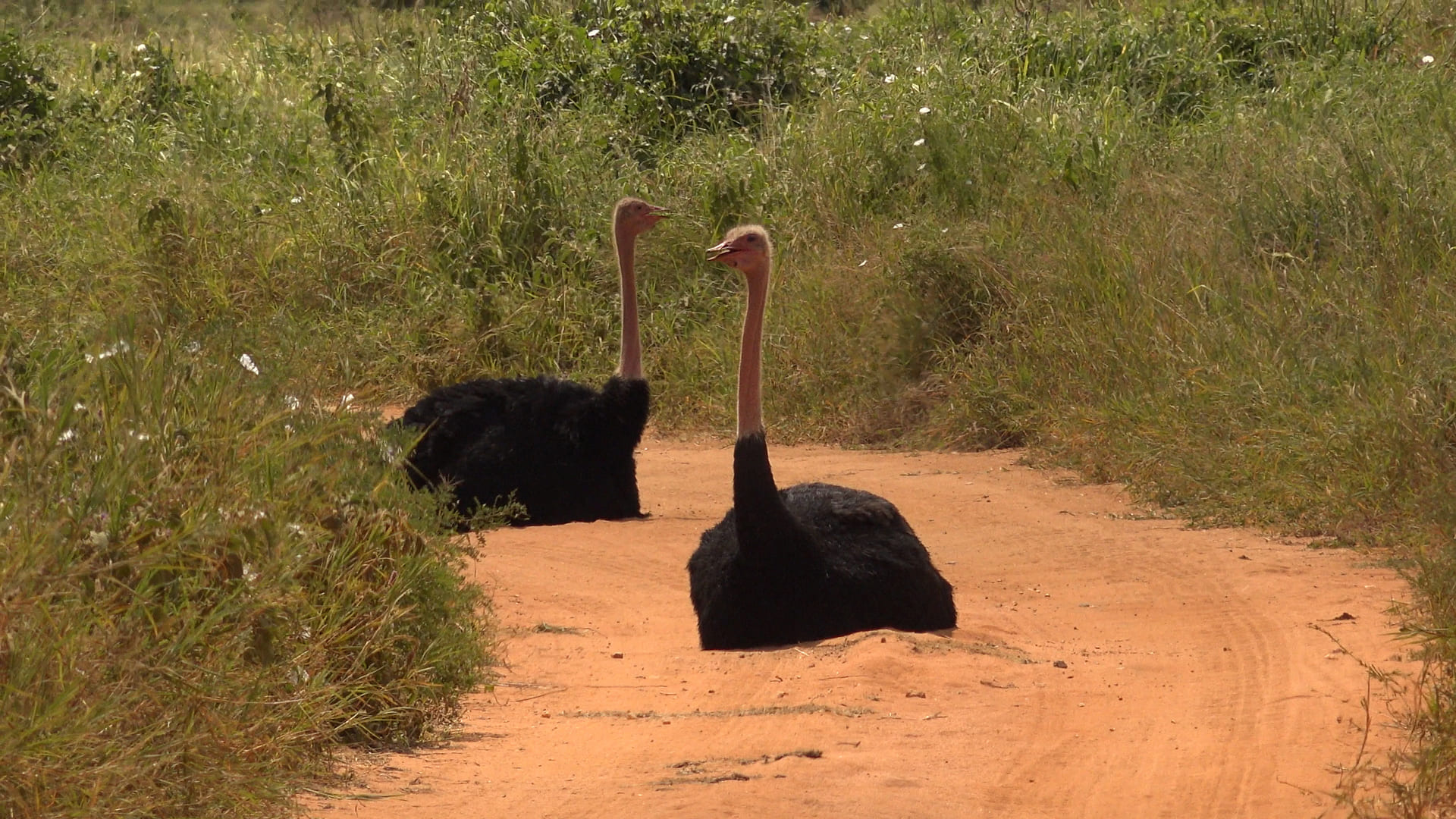
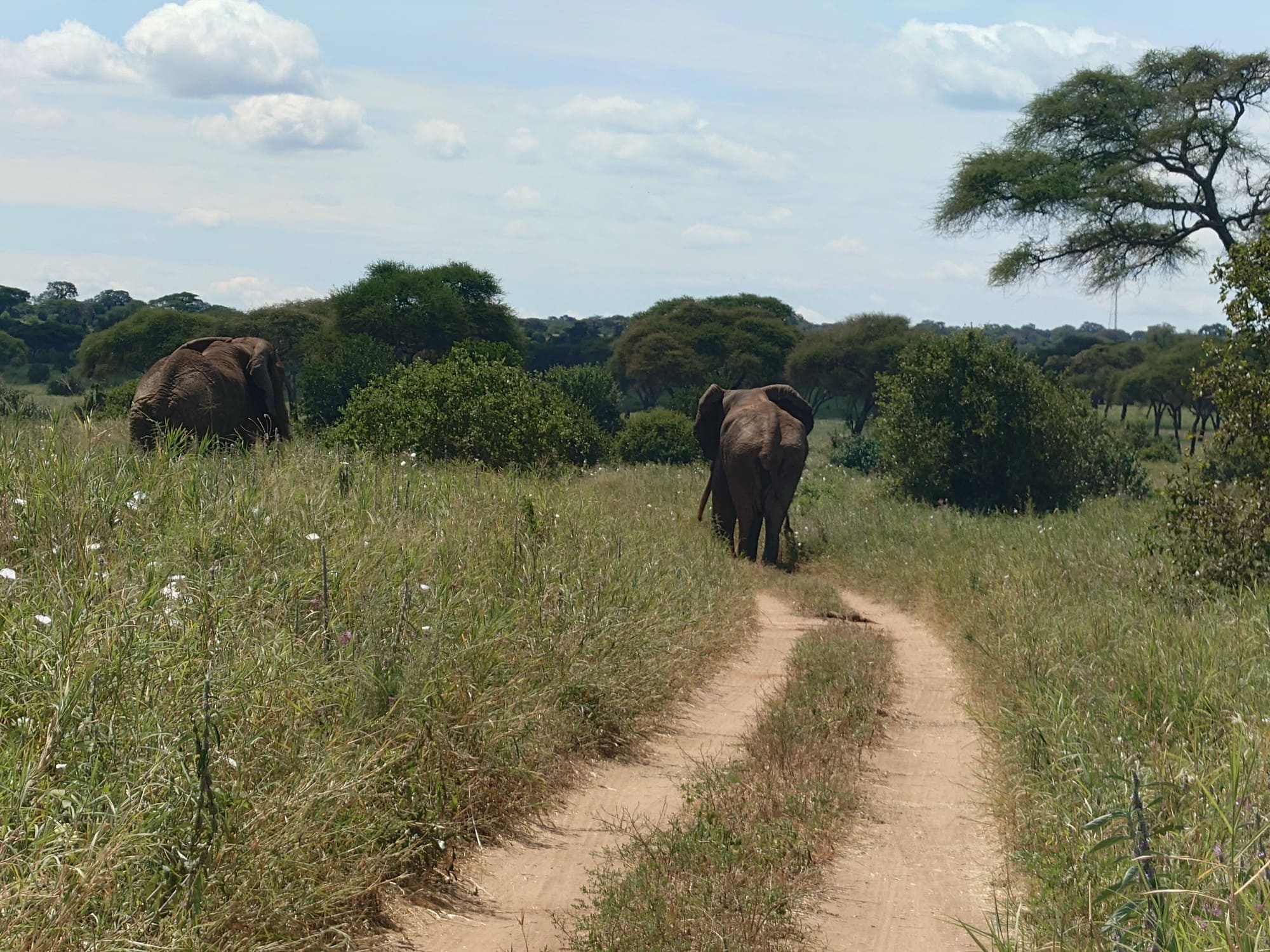
Throughout my own journeys and ours together, I’m always on the lookout for lions. How they move throughout the year, where the permanent lion prides are, where the large males roam, where the lionesses with their cubs make their dens… So in the early mornings, along with the first birdsong, I often get in the car and drive out of the camp in search of the king (or queen) of the animals, who often moves sleepily along the dusty trails of the national parks in the early morning. And I searched for four days, every morning. I followed the tracks of large paws that I found on the sandy road—still fresh. And yet, to no avail. The tall, fragrant grass at the end of the rainy season quickly hides the big cats, which blend in perfectly with their surroundings. Sometimes you miss them, even when they’re resting just a few meters away from you. That said, I wasn’t left unimpressed, for I encountered herds of elephants—mothers with their calves—who often approached curiously and sniffed at the car. And then there were giraffes, ostriches, jackals, several species of antelope, gazelles, impalas, eagles, and vultures… One morning, a leopard was even resting on a distant baobab tree after a night of hunting.
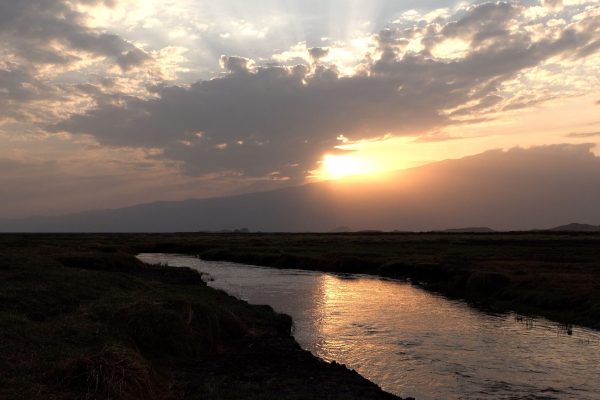
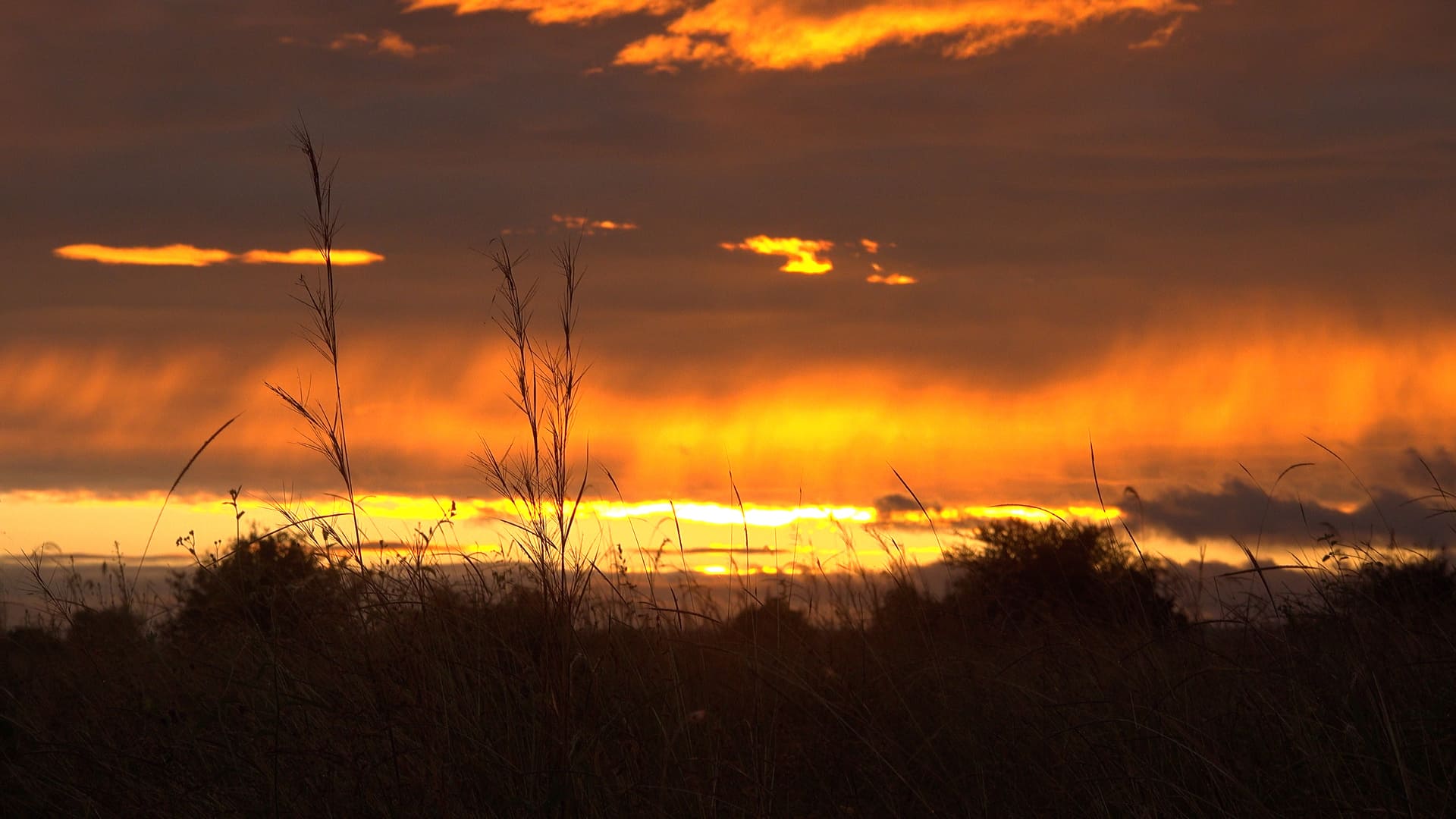
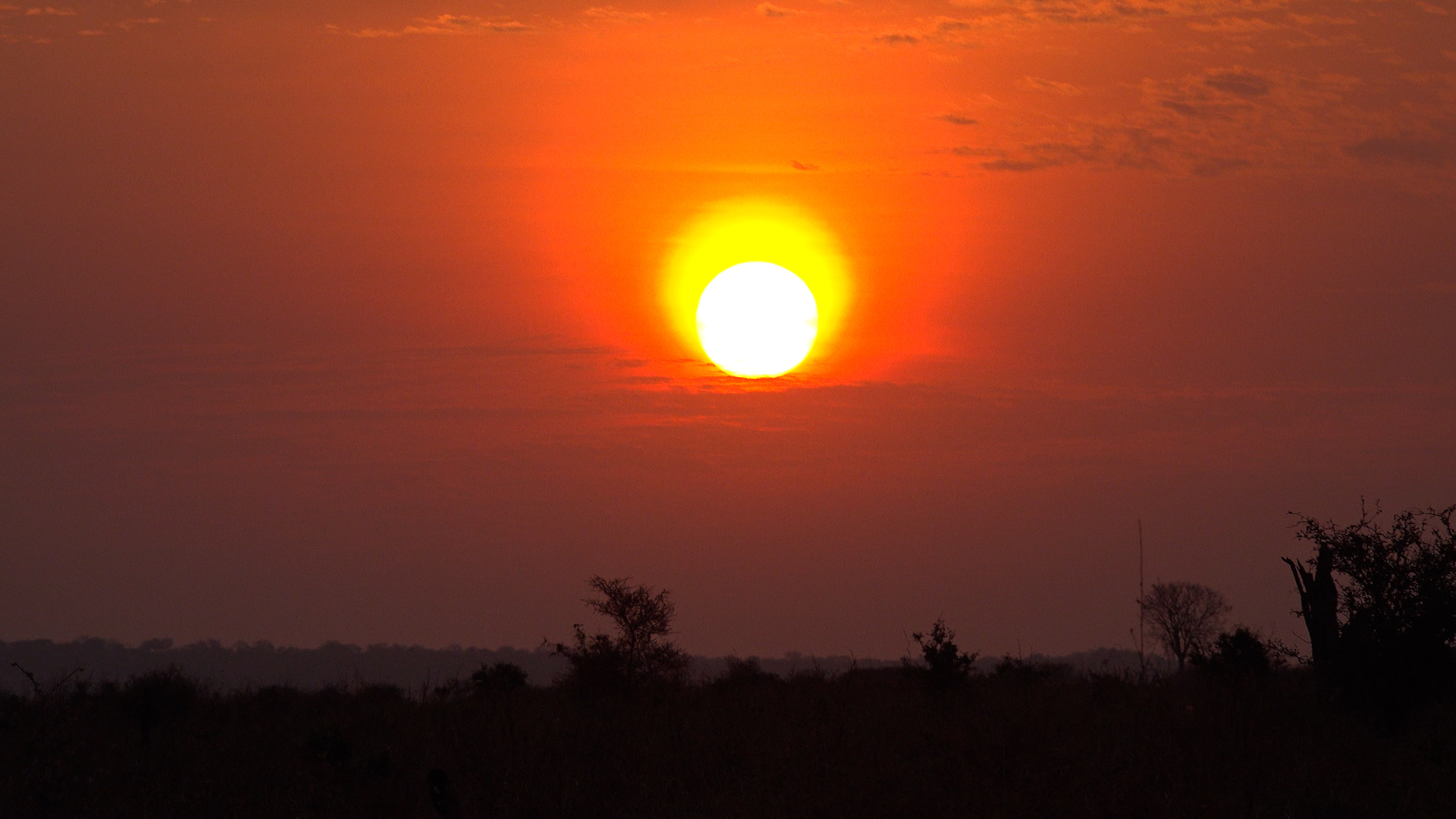
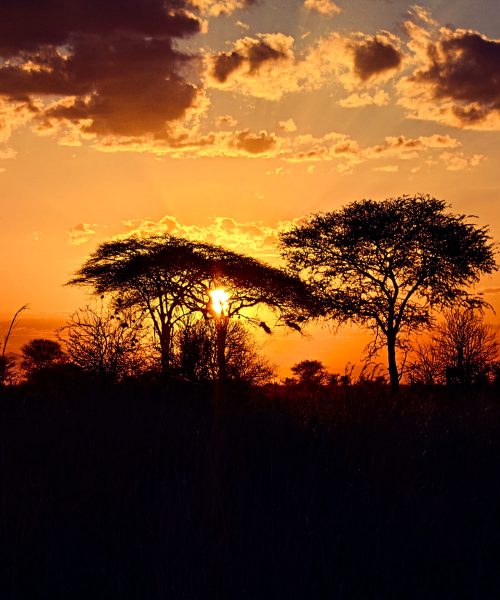
Just as I had resigned myself to the fact that I wouldn’t see a lion (or lioness) this time, on the second-to-last day of our trip, Aruna decided to join me on a morning drive. In a typically relaxed and lighthearted atmosphere, we got into the car together and admired the sunrise over the African savanna. No words, just a play of colors and the intense surge of nature’s vital energy. Wonderful. The desire to encounter a lion had already faded from my thoughts; all that remained was a sense of wonder at nature and the scent of the fragrant late-May air. We were alone, no other safari vehicles around us—just the two of us, the savanna, the trees, the animals, and my usual banter, which only Aruna laughs at…
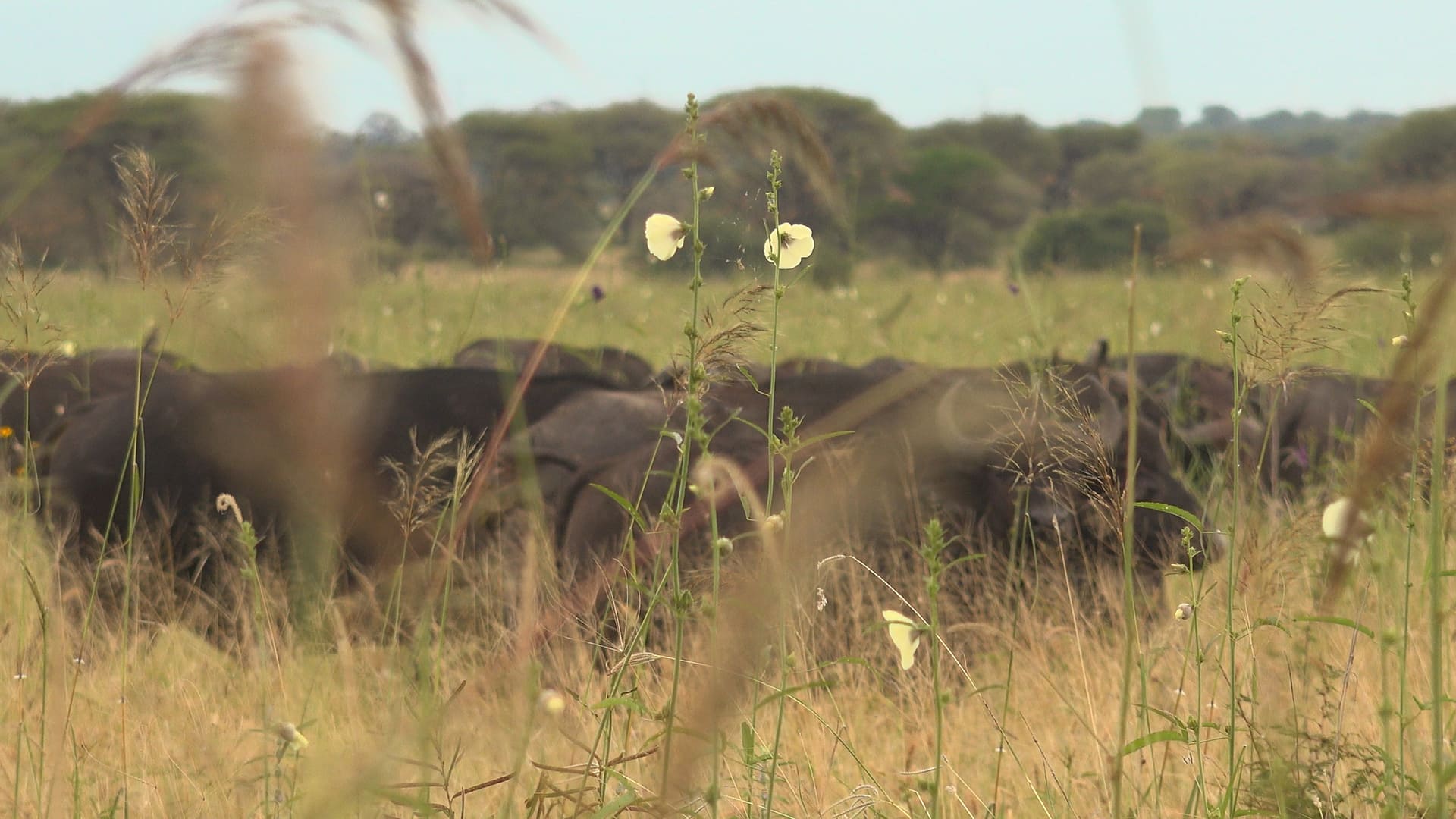
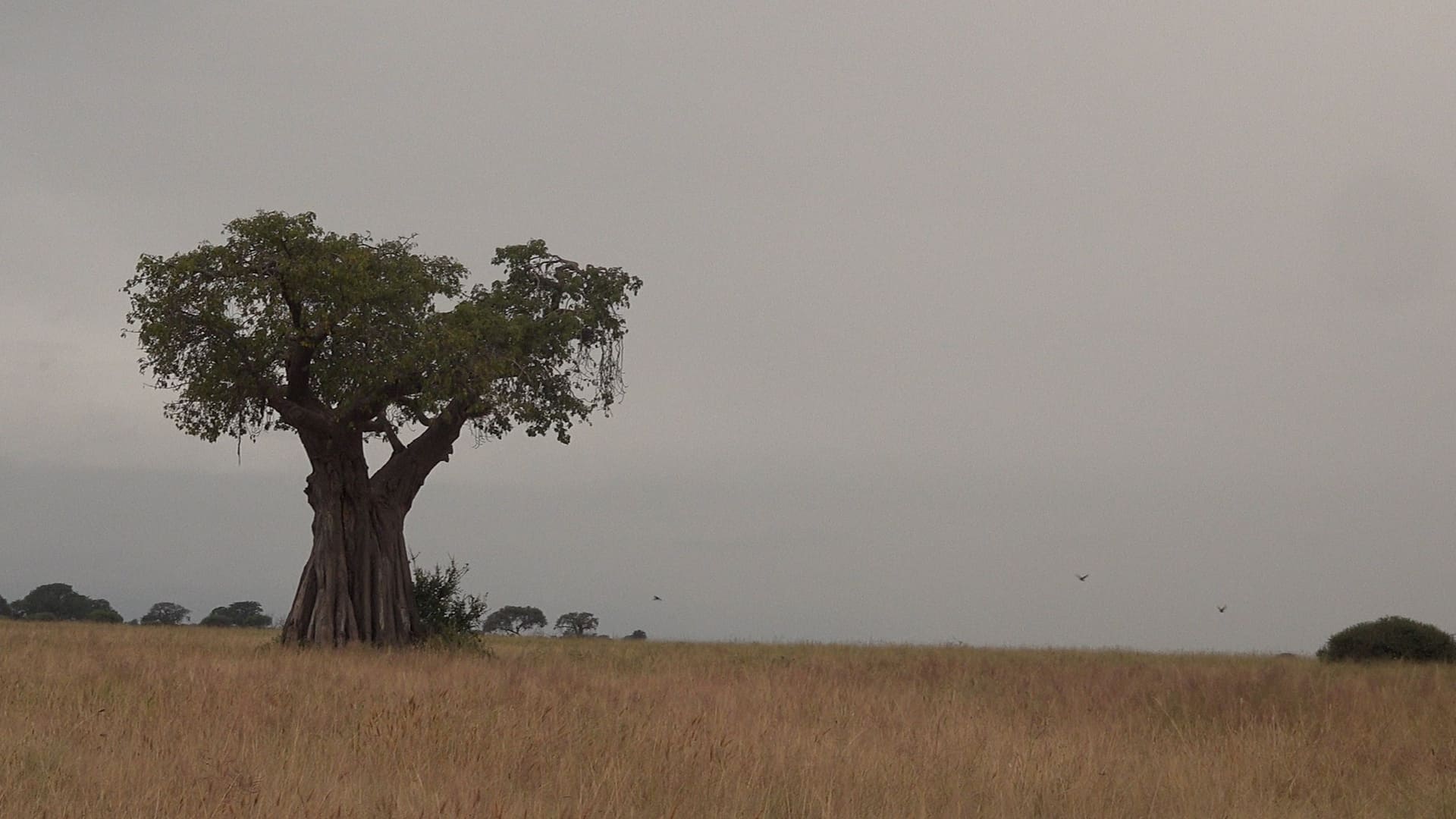
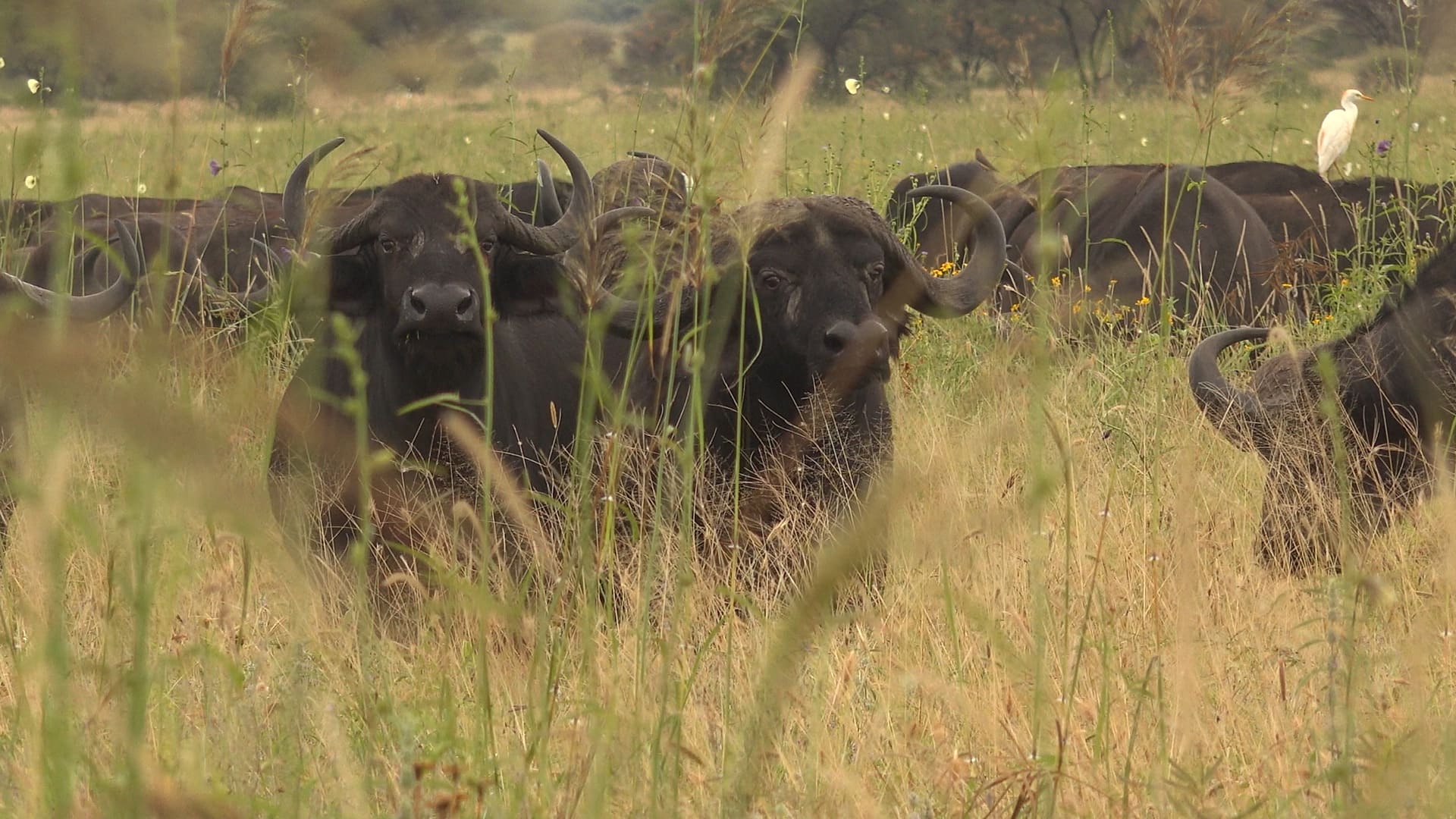
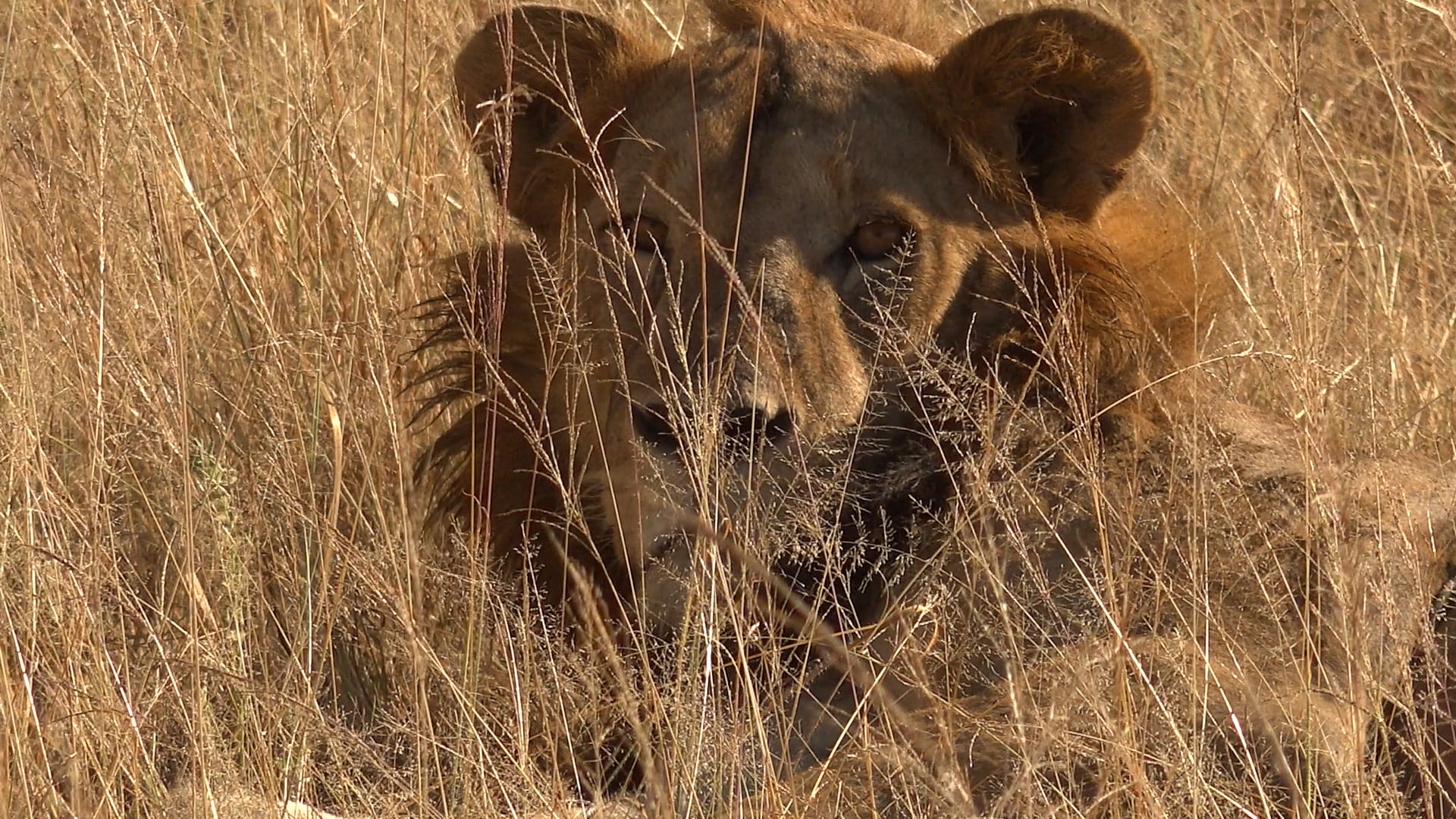
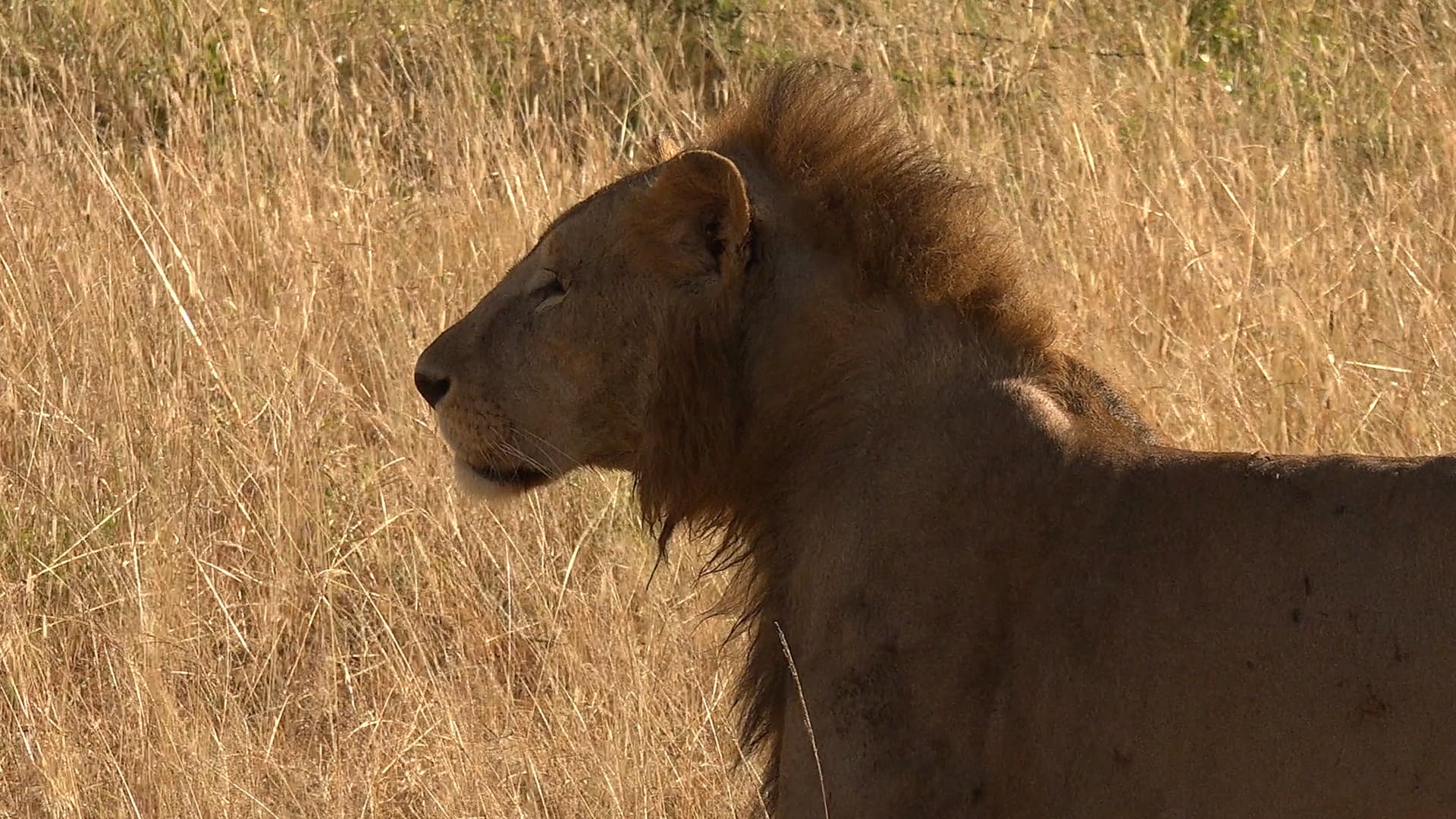
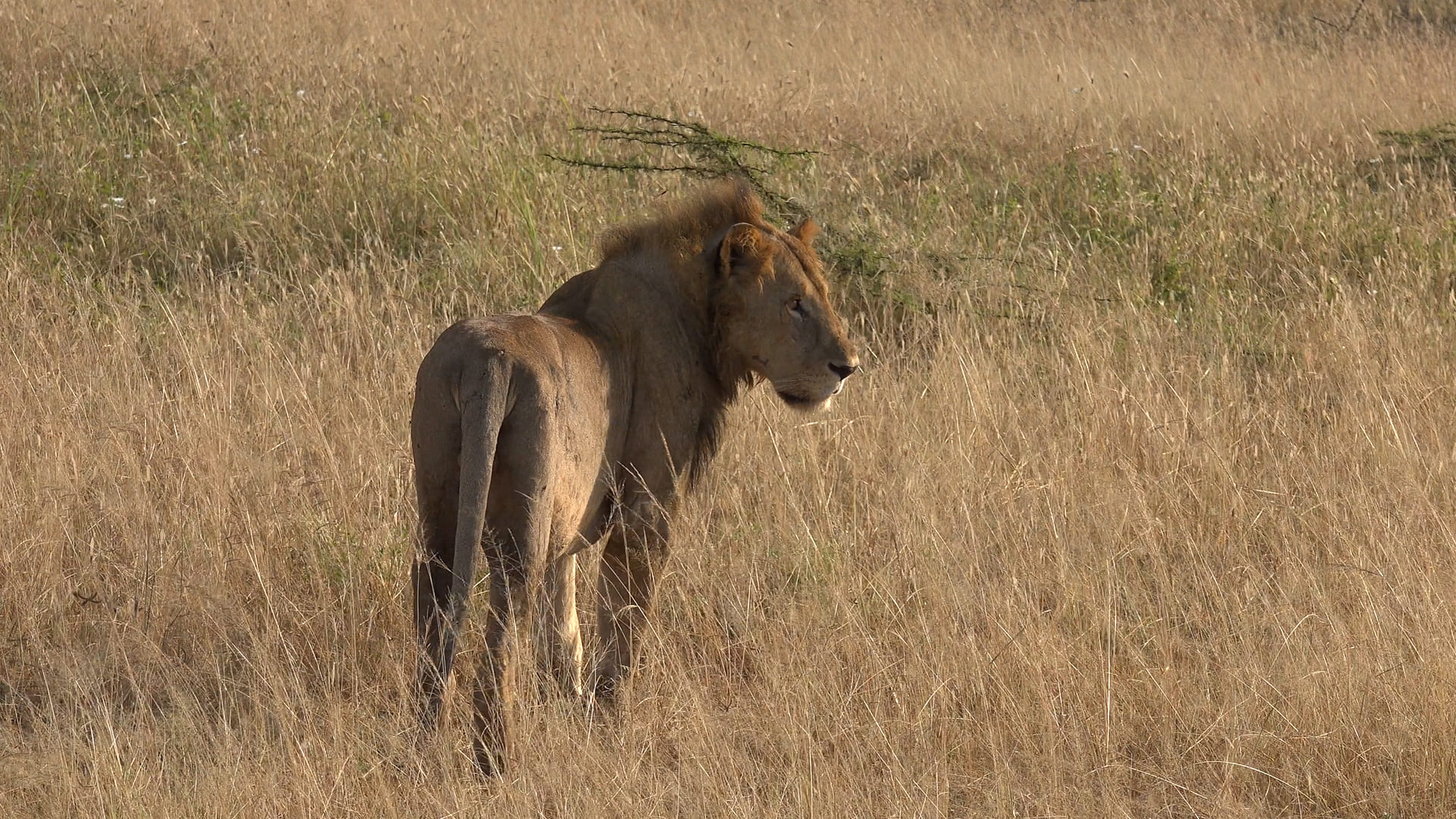
At one point, Aruna suggested we turn off the main road and head east. We came to a grassy area where a baobab tree stood majestically every hundred meters. And then on, to a marshy area where water from the heavy rains of the past months still lingered. We greeted a herd of water buffalo, who stared at us motionlessly, warning us not to get too close. And on we went through a landscape that was somewhat magical, where low grass in shades of gold grew from the white sandy soil. Flocks of birds flew overhead in the morning joy, and the buffalo called to one another with piercing sounds not far away… And suddenly, right in front of us, right next to the car, a light brown head with a mane rose up—the mane growing in a narrow line along the crown like a “mohawk.” Yes, he was there. A lion. Alone. It was an unusual encounter, quite a ways off the beaten path of the classic safari routes. He looked at us wearily; I turned off the car myself, and we sat there in silence.
He was basically resting in the morning sun, letting his head drop and looking at us again, sort of in waves. Then he decided to get up and slowly made his way a few meters forward. Limping and exhausted, he covered those few meters and lay down again. Lions can generally seem very tired in the mornings, especially after intense nighttime hunts. A nearby herd of buffalo hinted at a turbulent night. In large groups, buffalo can quickly injure predators, and large male buffalo will by no means easily allow a lion to catch a calf. It often happens that buffalo injure or kill lions during attacks. It is also not necessarily the case that the lion was alone; females with cubs could very well have been resting somewhere in the surrounding shade. Another possible explanation for this lion’s vulnerability was that he had been driven out of his pride by other aggressive males. Lone male lions often band together with other loners to attack existing prides and take control of them. The attackers typically try to kill the ousted males to eliminate the possibility of future counterattacks by “reinforcements.” They may also kill the cubs of the previous males, thereby making room for their own “genetic legacy.” These conflicts can lead to various outcomes in the ceaseless cycle of life and death in the magical yet cruel wilderness.
In any case, there he was, the lion, bathed in the late-morning sunlight. And he was moving slowly across the golden savanna. His story remained a mystery to us; we could only speculate about the possible reasons for his limping. He rose several more times and watched us intently before we decided to leave him to his solitude, to lick his wounds and rest. I was immensely grateful to Aruna and her intuitive guidance that morning, which led us to a new friend, to the “Mohawk,” who surely remembered us as well. In the silence, in solitude, with no other visitors, just the three of us…
The next day, I returned to that area. The buffalo were gone, and there was no sign of the lions either. A good sign. We’ll meet again, “Mohawk.”
Two weeks later...
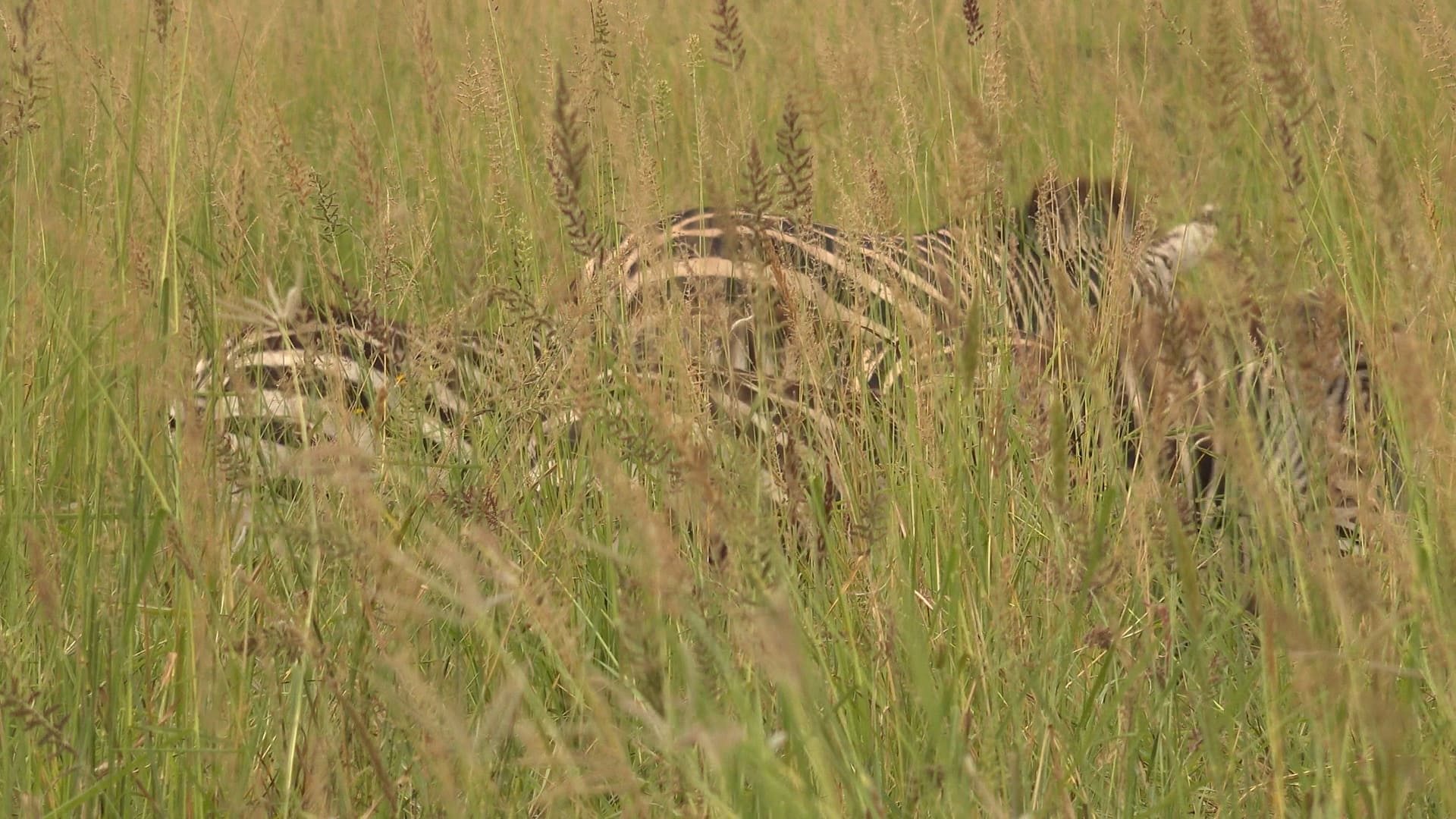
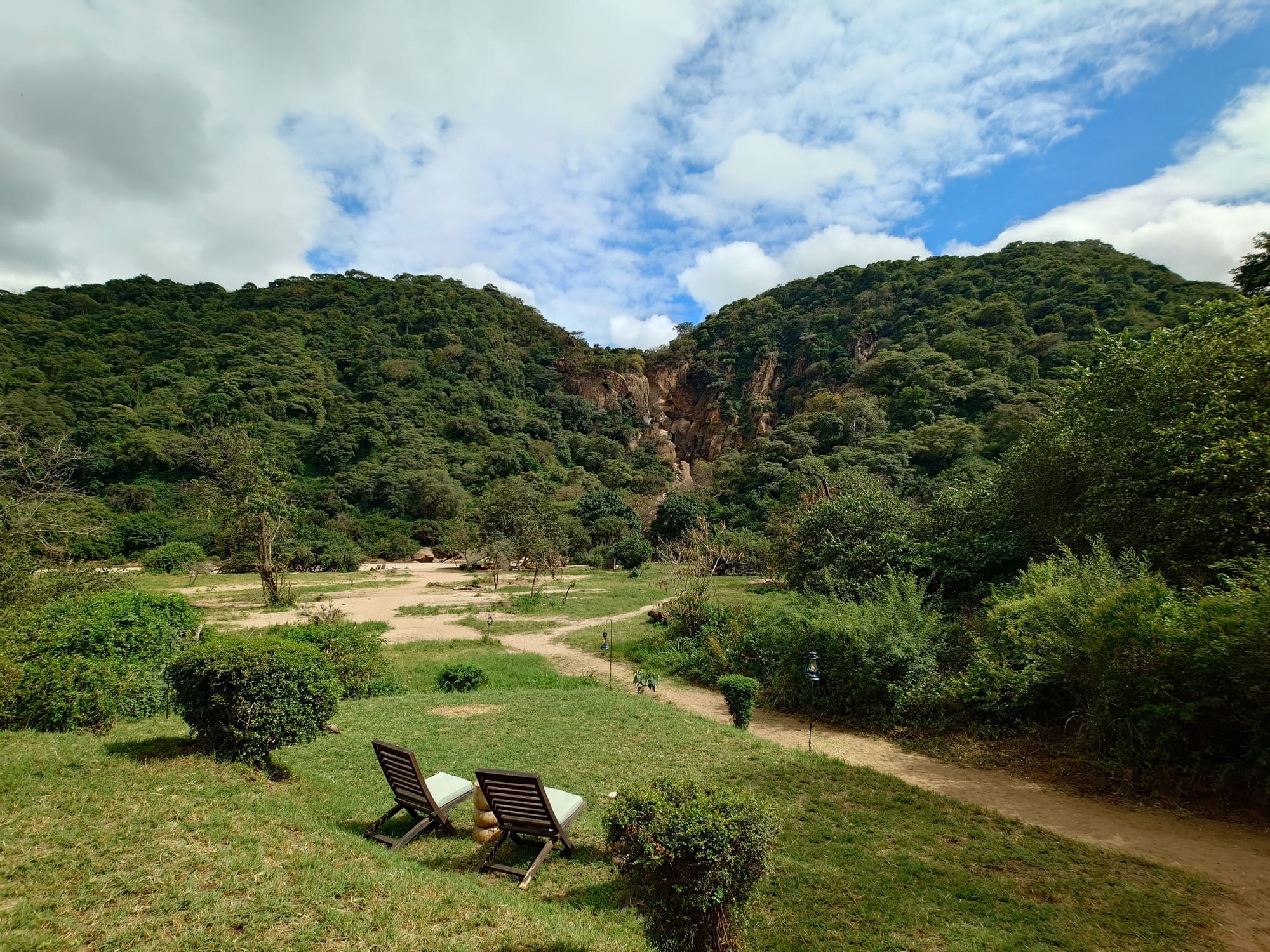
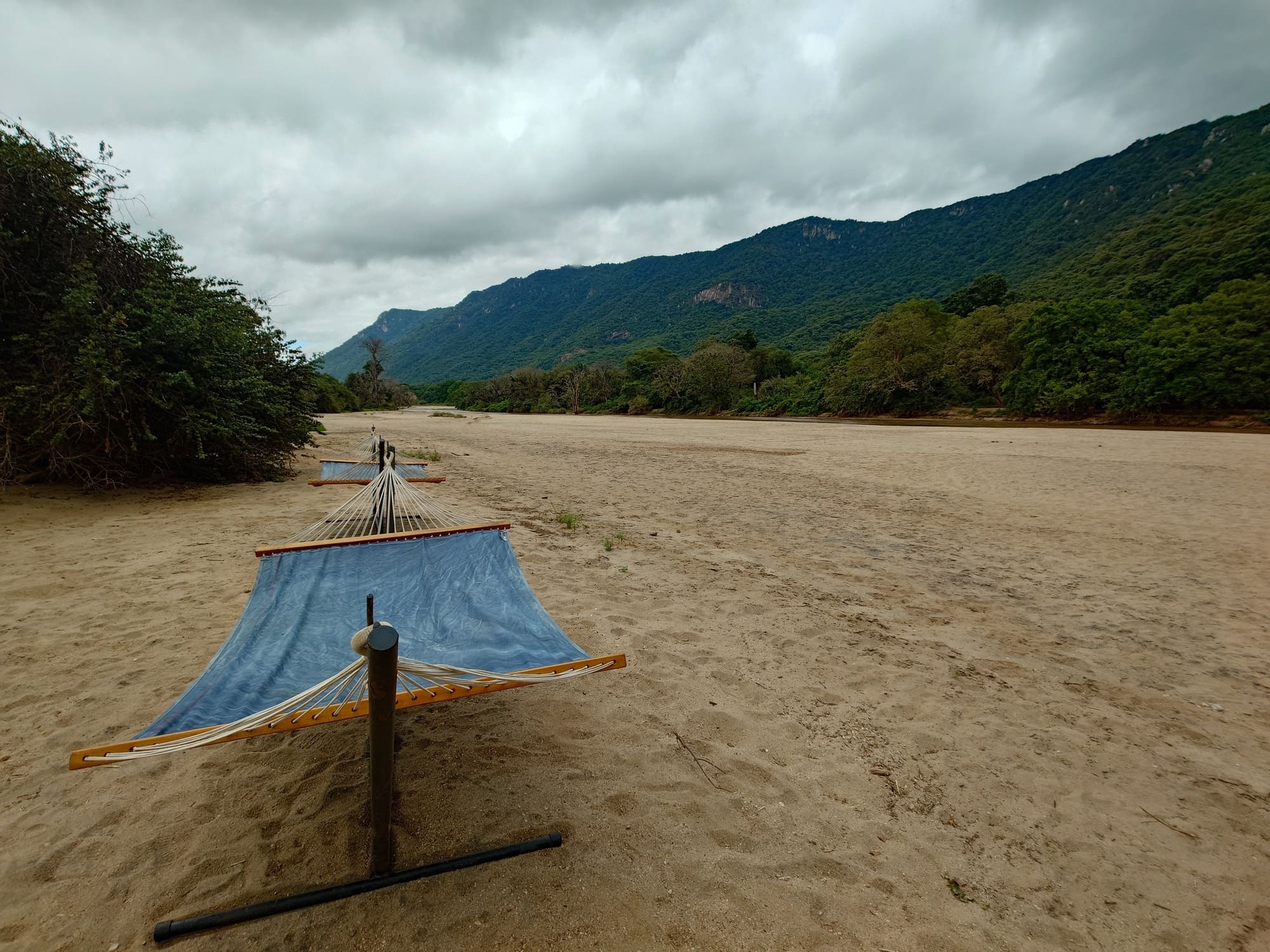
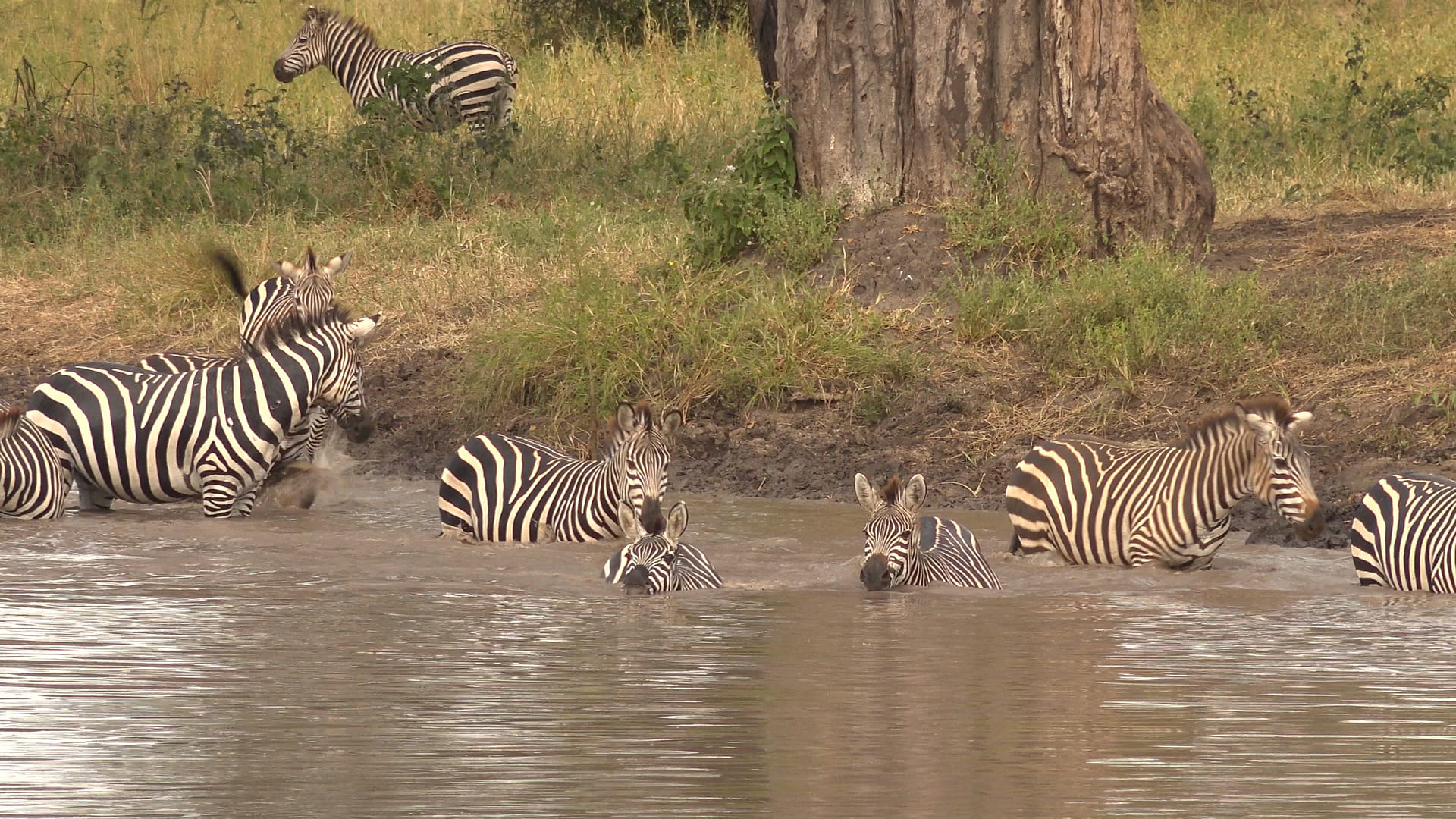
…Ali and I set out on our safari in the same area where Aruna and I had admired the sunrises and formed a new friendship with the lions. The area had changed dramatically in such a short time. The rain had stopped, and the nights were exceptionally cold. Yes, in these parts, they call June “winter.” When the temperature drops to 16 degrees Celsius at night, and the days can be quite cloudy and not too hot—around 26 degrees—these are wonderful days for a safari. Elephants began returning in large numbers to the river, where there is a constant supply of water. The surrounding grasslands, as well as those further afield, had served their purpose during the rainy season. Zebras, too, were arriving in endless herds in the heart of the national park. And antelopes, gazelles, impalas… The animal kingdom of this region had grown in both number and density at an incredible rate over the past two weeks. The wildflowers had almost finished blooming, but the natural grasslands were still quite lush and a deep green—just under a month before they would begin to dry out. Even the marshy areas where rainwater had pooled were slowly shrinking. Everything was changing. But one thing remained the same: the drives at sunrise.
Ali is a true Zanzibari, a Muslim, who woke up every day for the first prayer before five in the morning anyway—and was thus ready for the first rays of the sun every morning. At six, we drank the coffee they’d prepared for us as a “wake-up call,” and then we were already on our way—even before breakfast. Ali, his mouth agape, marveled at the wonders of his homeland, which he was seeing for the first time, and he just wouldn’t get out of the car. And so we drove on…
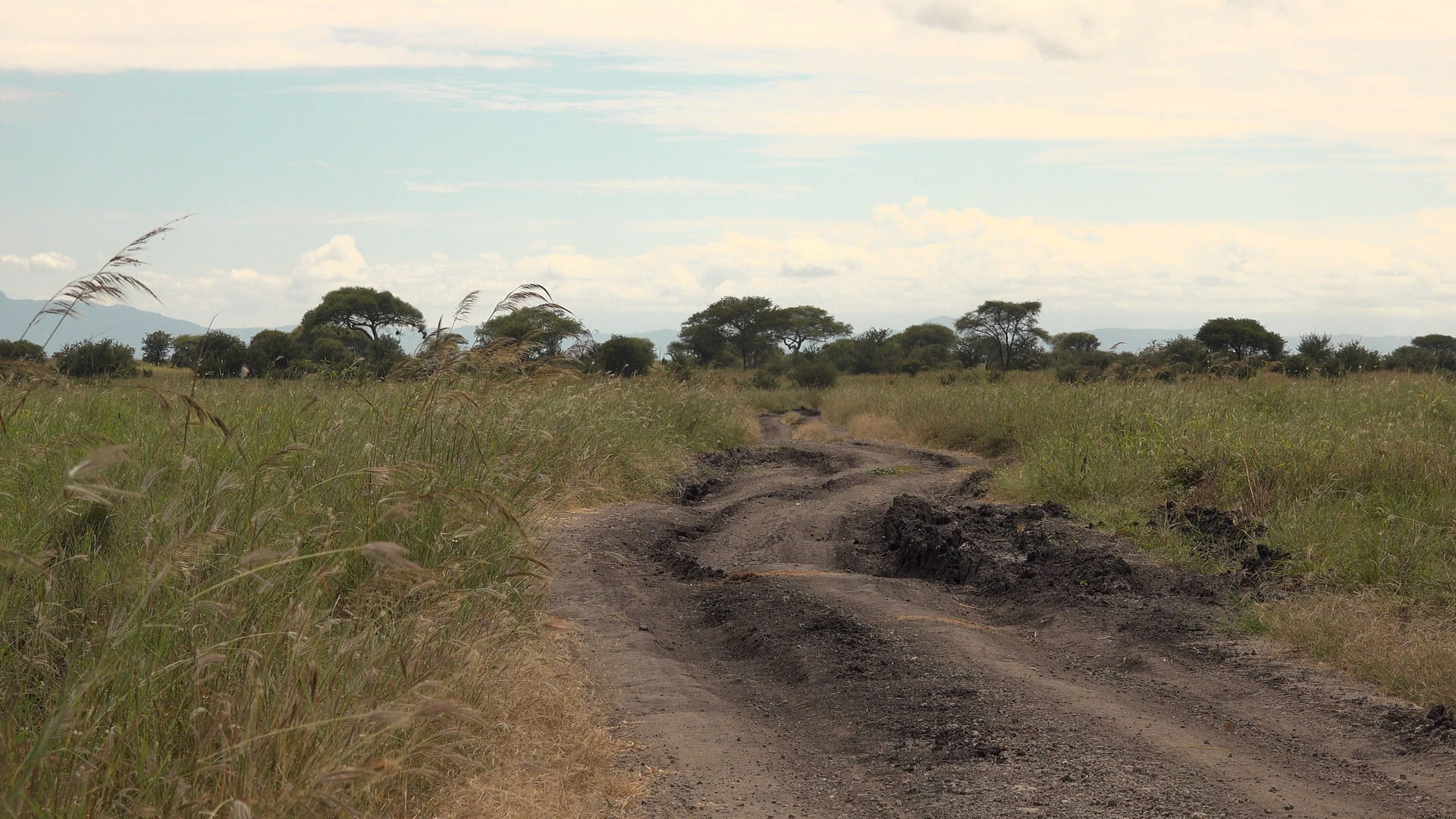
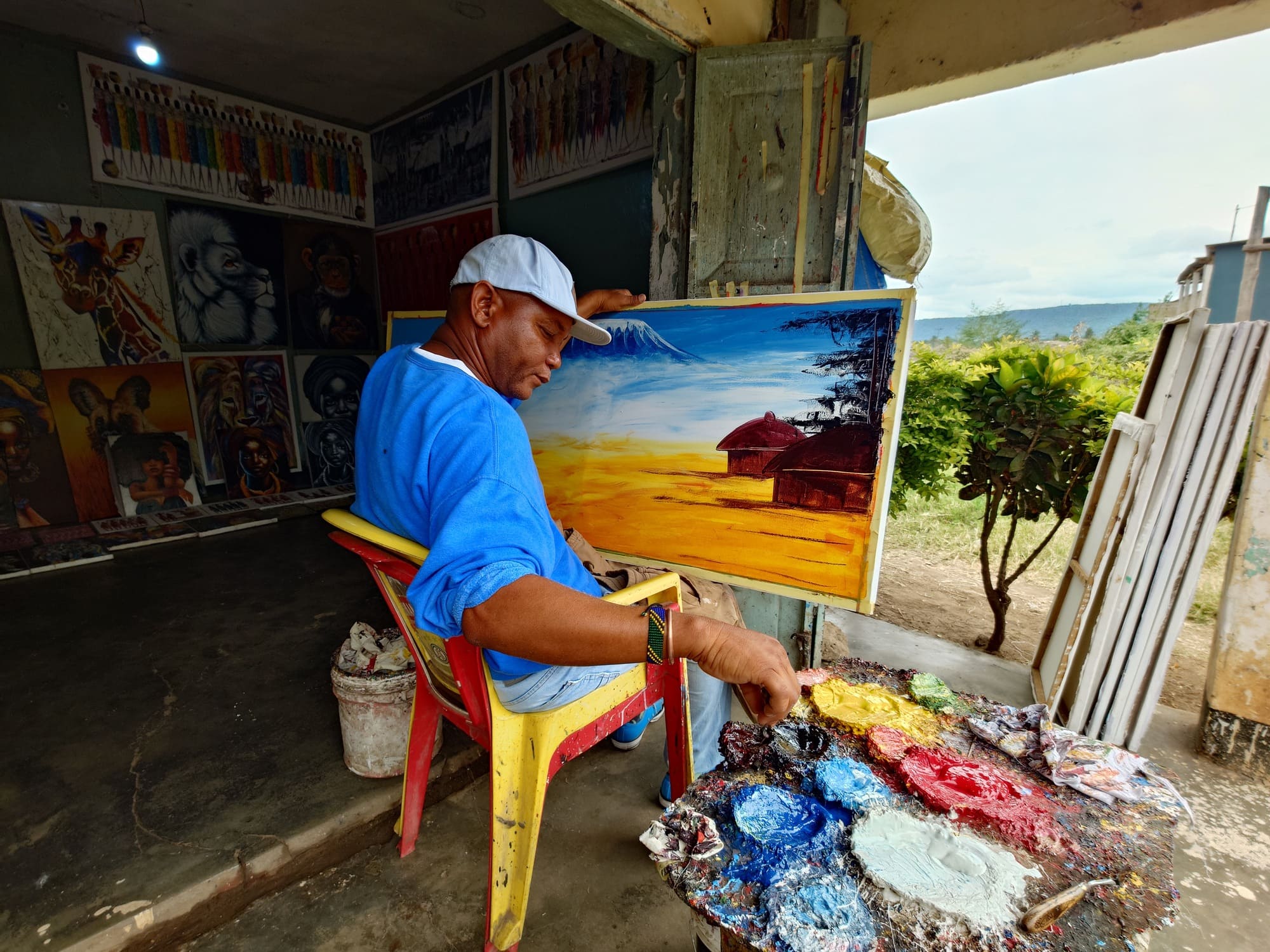
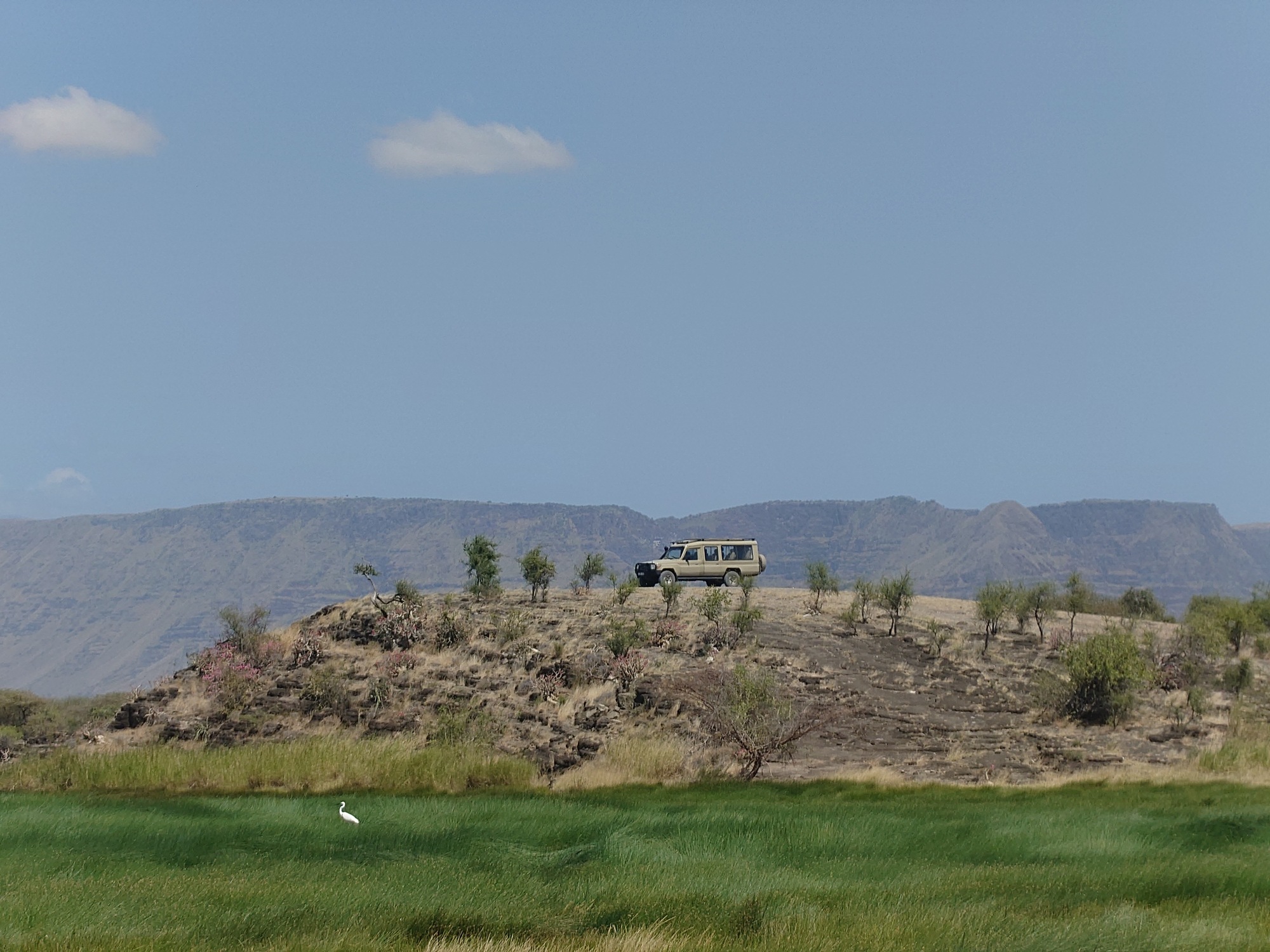
In seven days, we covered about 750 km, much more than I had imagined at the start of the trip. Much of the driving was on trails through the wilderness, and only a few roads were paved. One day, I drove our good old Toyota for 17 hours. Tiring? Yes. Worth the trip? Absolutely! We drove through most of the northern part of the great tectonic rift in Tanzania, through dramatic, breathtaking scenery where savannas, lakes, mahogany forests, steppes, and rocky volcanic landscapes alternate with large dormant stratovolcanoes—constantly reminding you of the time of tectonic shifts (both past and future). We drove through villages and visited some artist friends of mine—painters who immortalize the Tanzanian landscape in their daily work.
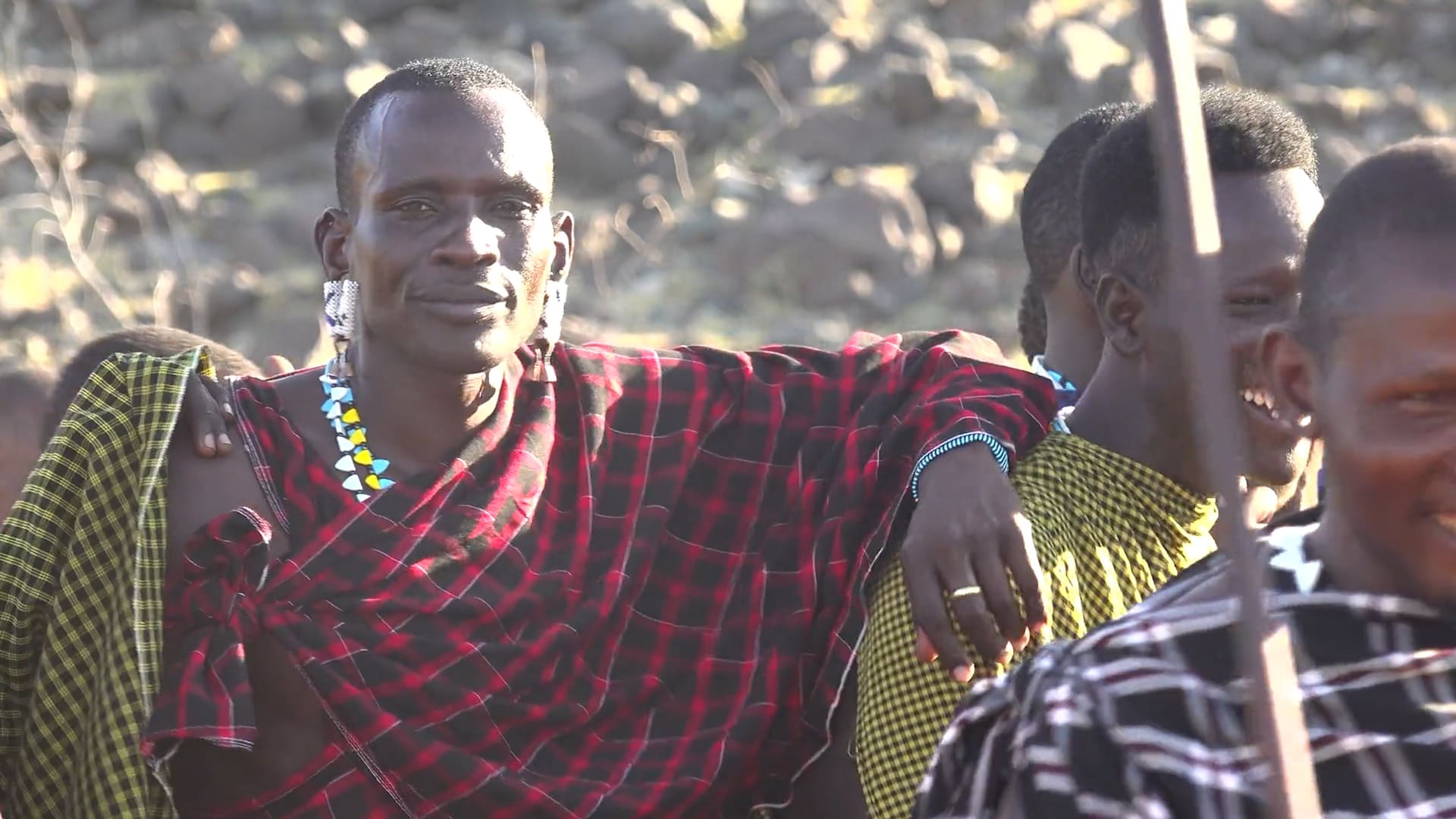
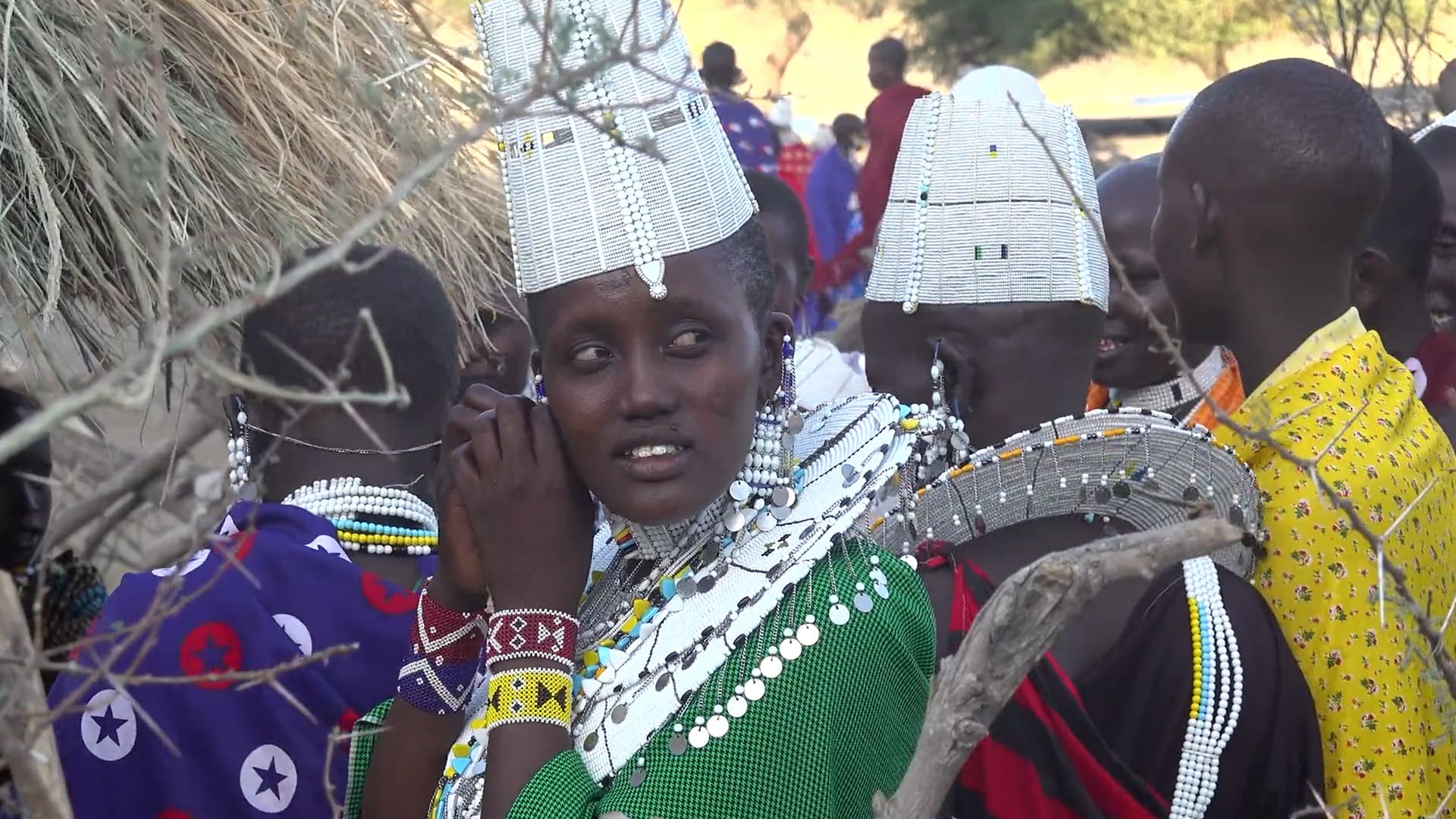
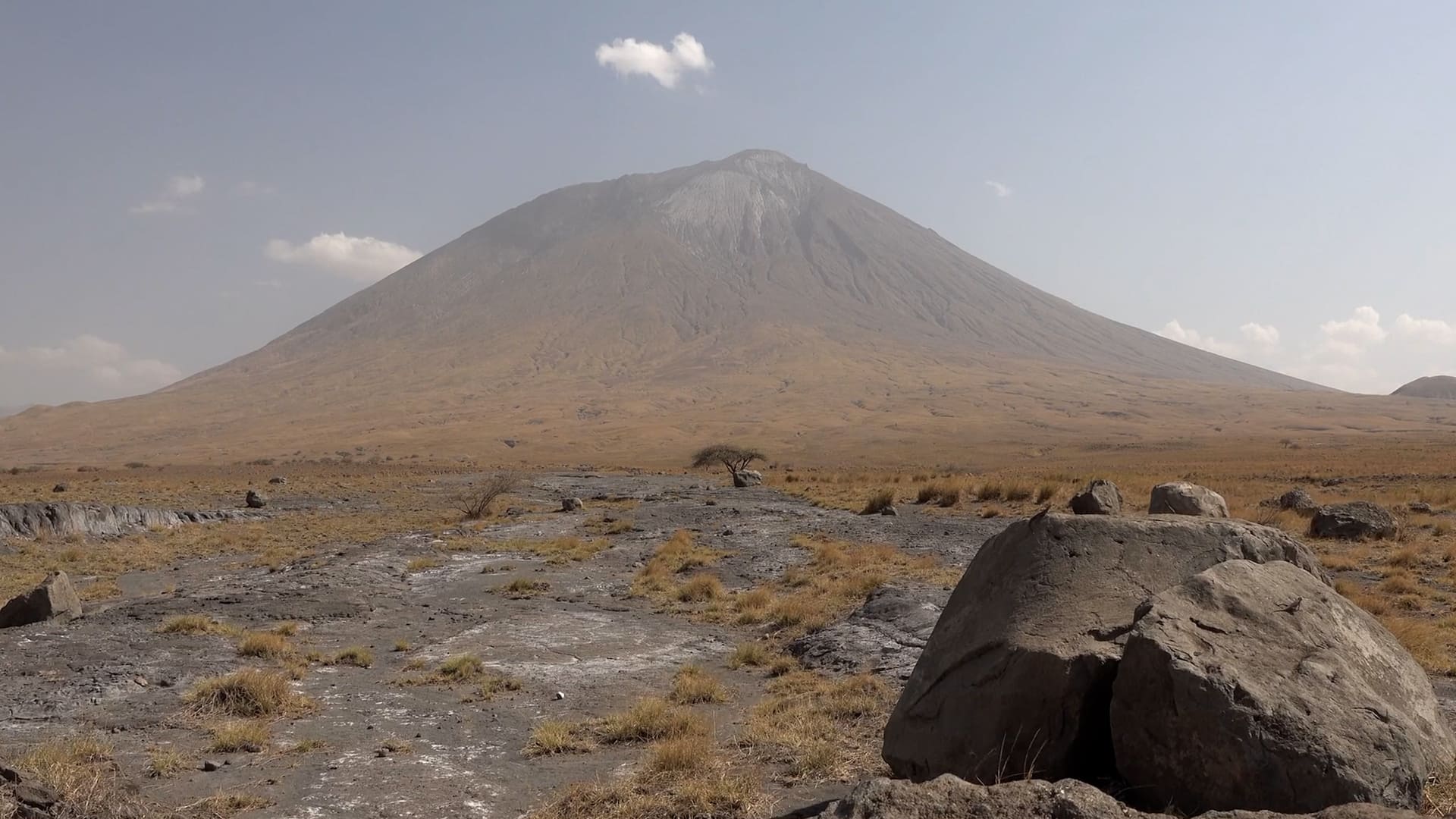
We saw a huge number of animals and also visited my Maasai friends in the Lake Natron area, at the foot of the Maasai sacred mountain Ol Doinyo Lengai (the Mountain of God).
Theater in the Wilderness
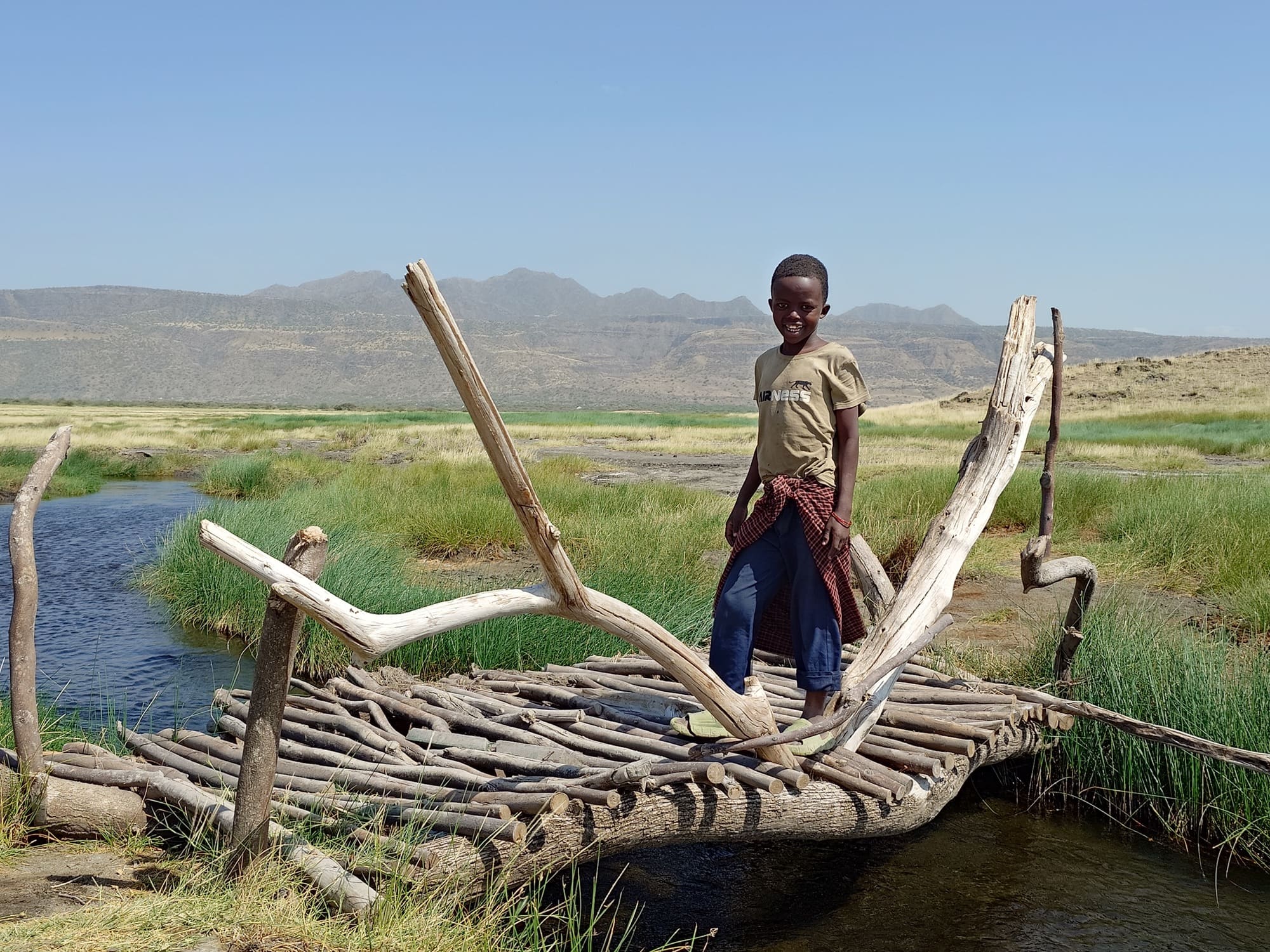
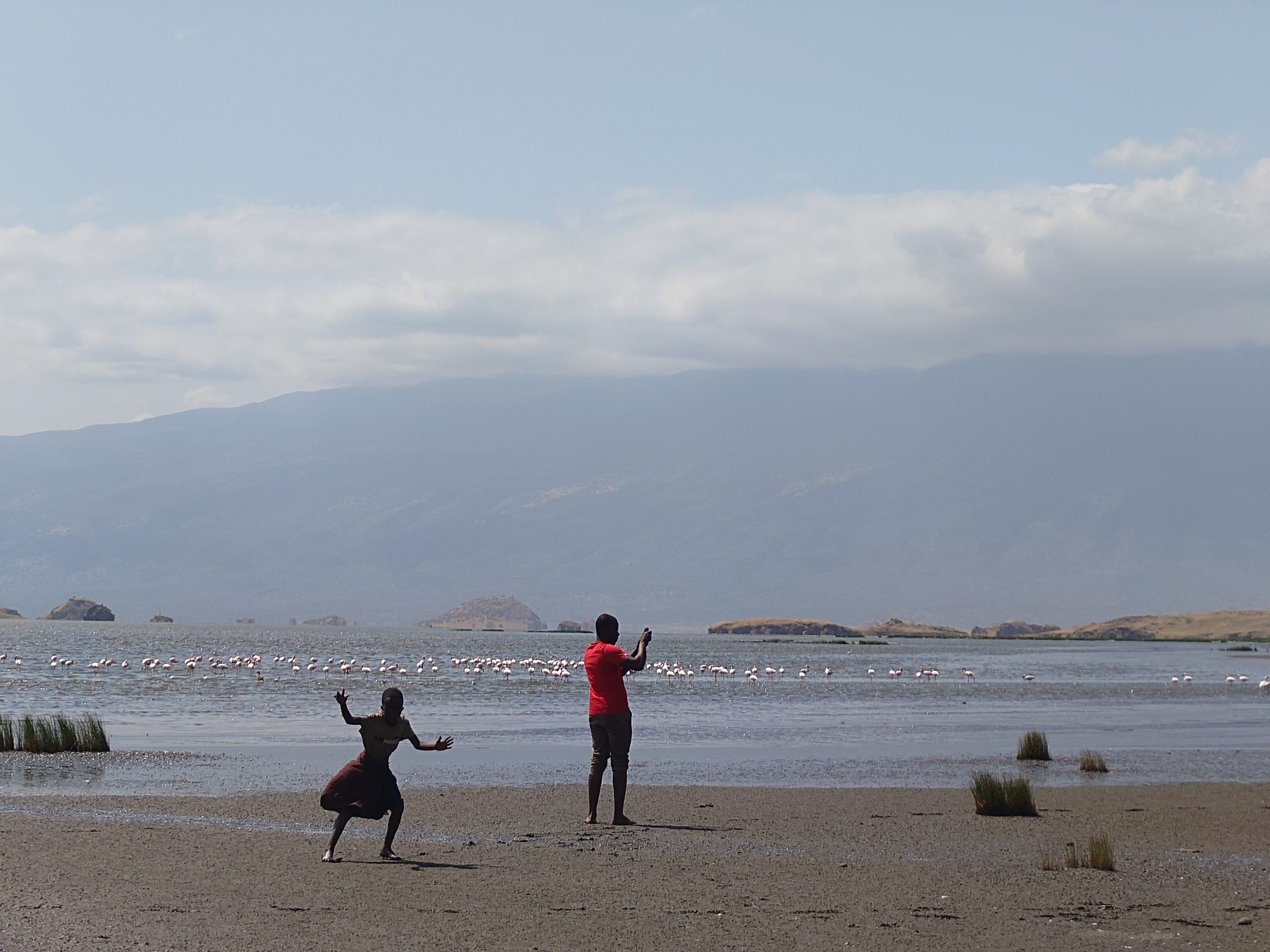
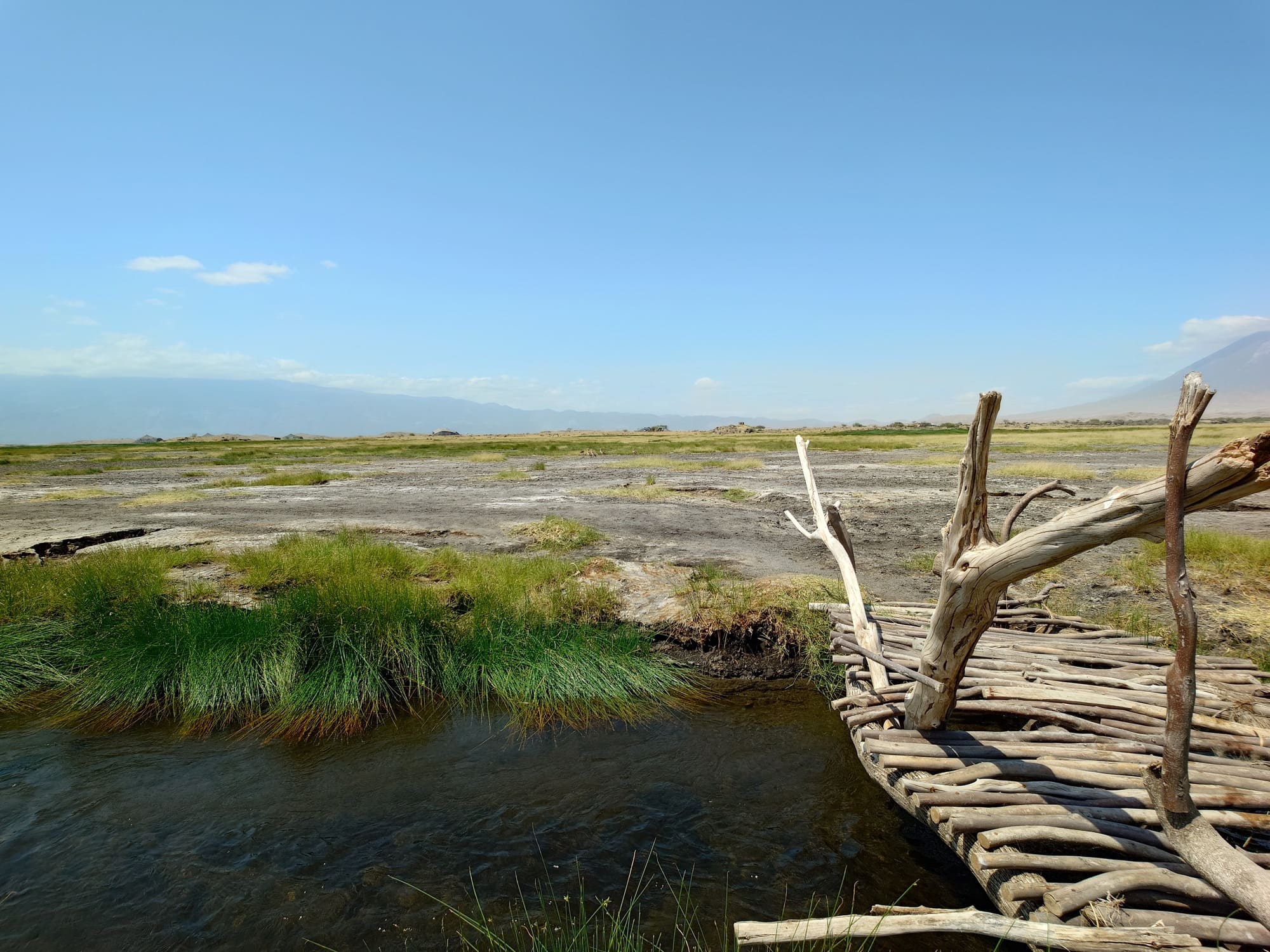
As we were walking along the shore of Lake Natron, we were joined by Luka, a Maasai boy whom I’ve been seeing in this part of the lake for quite some time. Luka is part of a group of young boys and girls who sell Maasai jewelry and souvenirs by the lake. I rarely experience so much joy, vitality, and good cheer in one place—even by African standards. Every time I go there, they get excited and call out from afar: “Aljaž from Zanzibar!!!” or “The gentleman from Zanzibar! Where’s your wife? Where’s Aruna?” Well, Aruna wasn’t with us this time; it was just the three of us guys—Ali, Luka, and me—the three musketeers on the shores of Lake Natron.
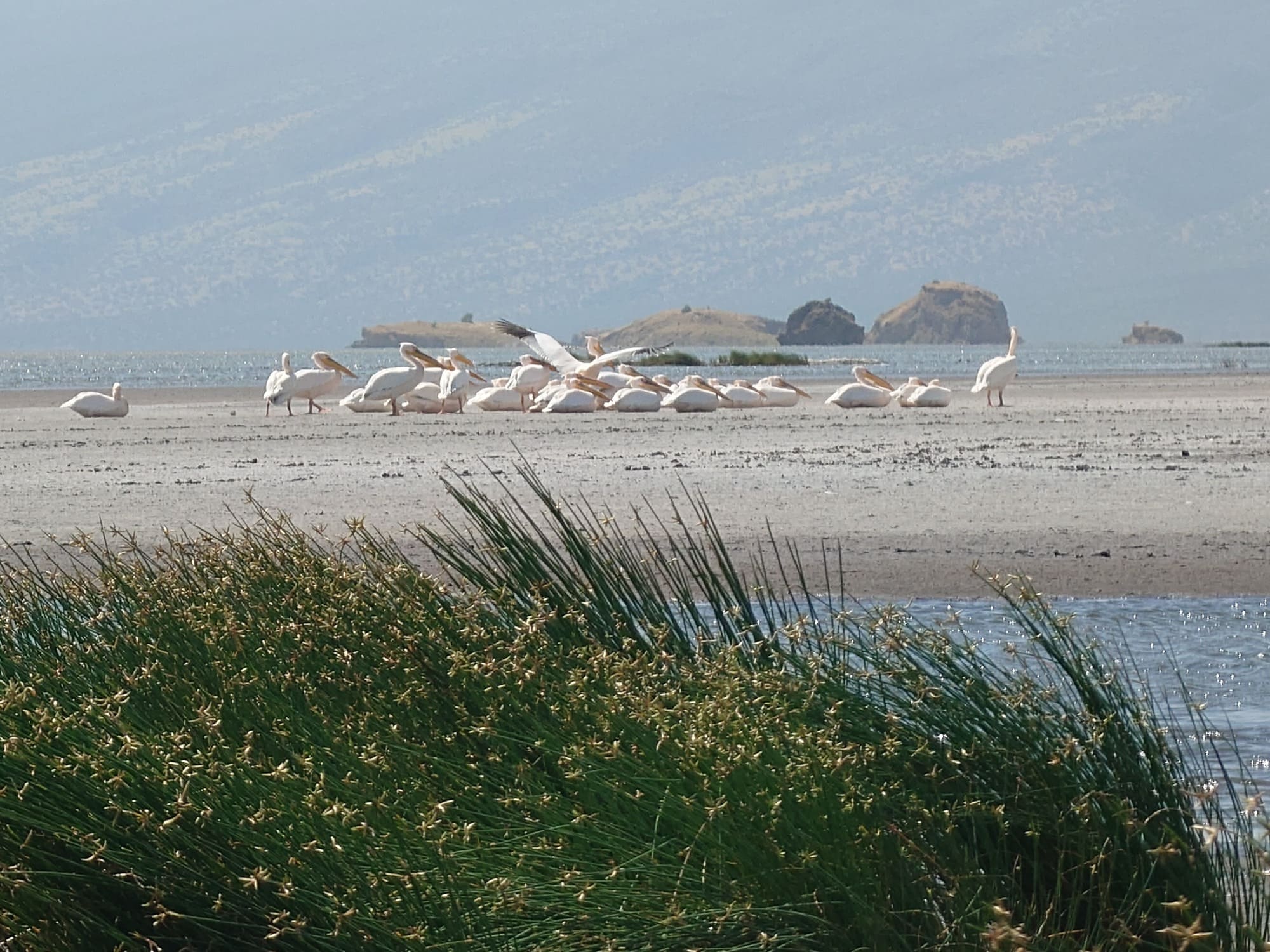
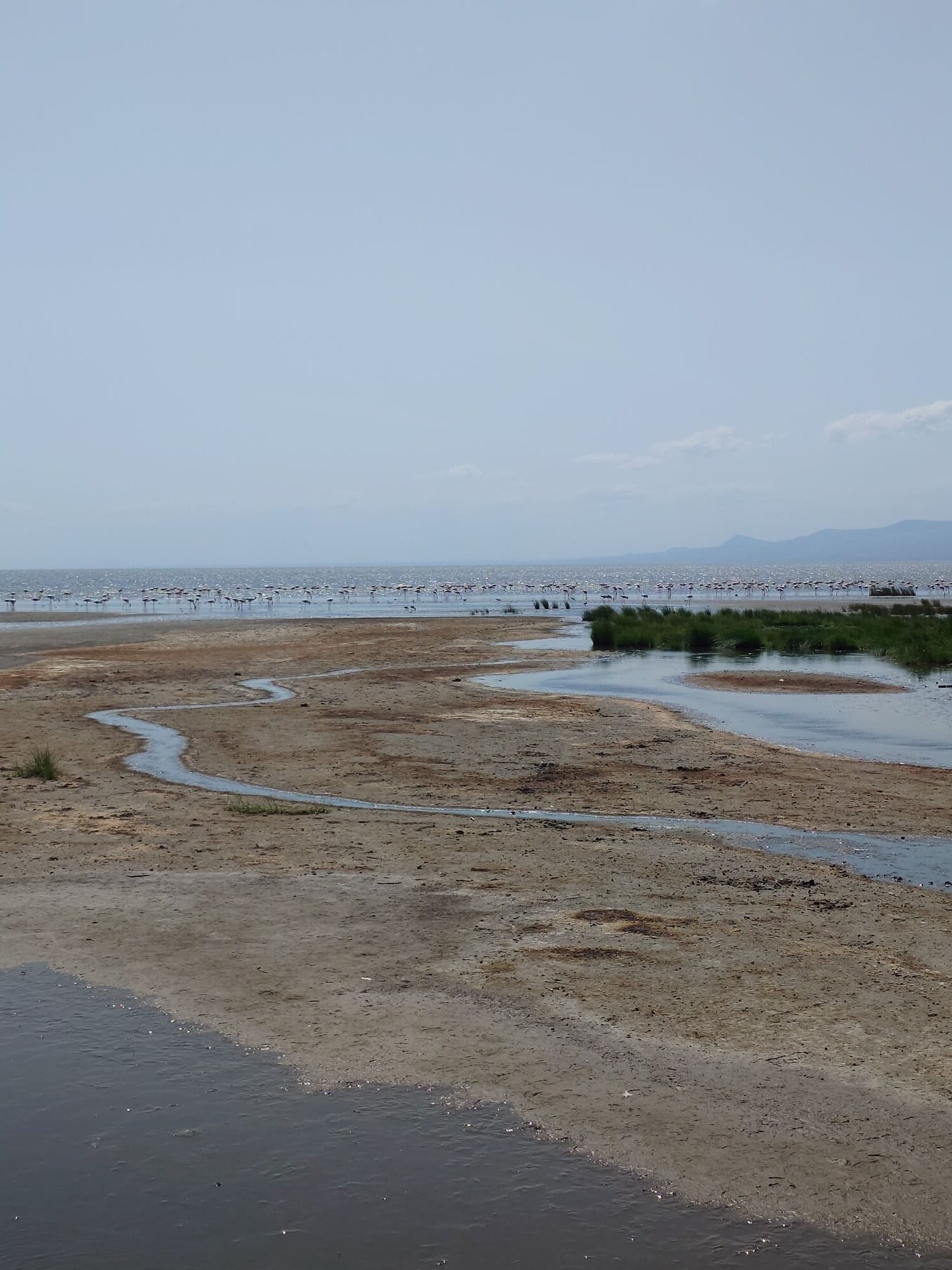
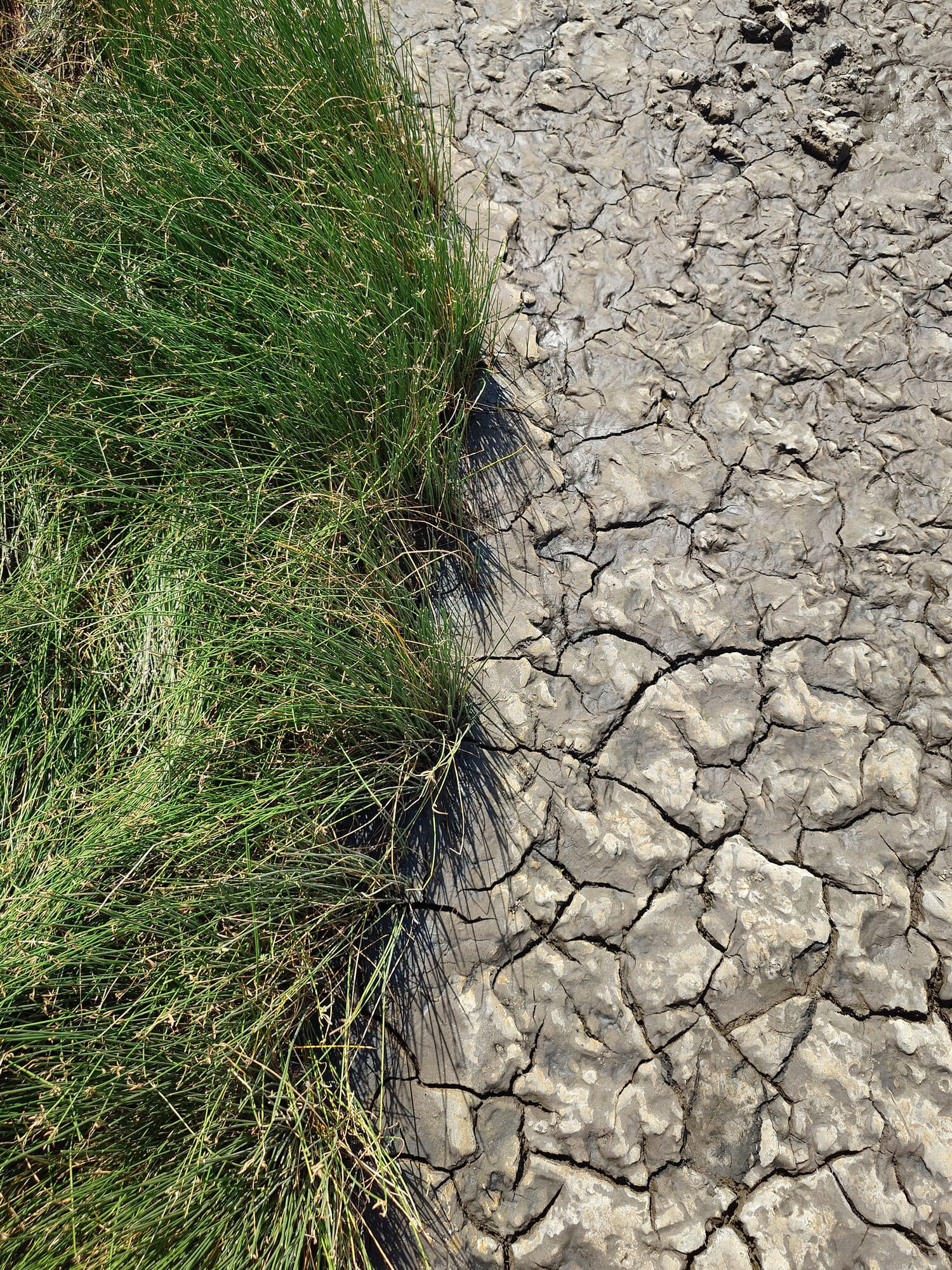
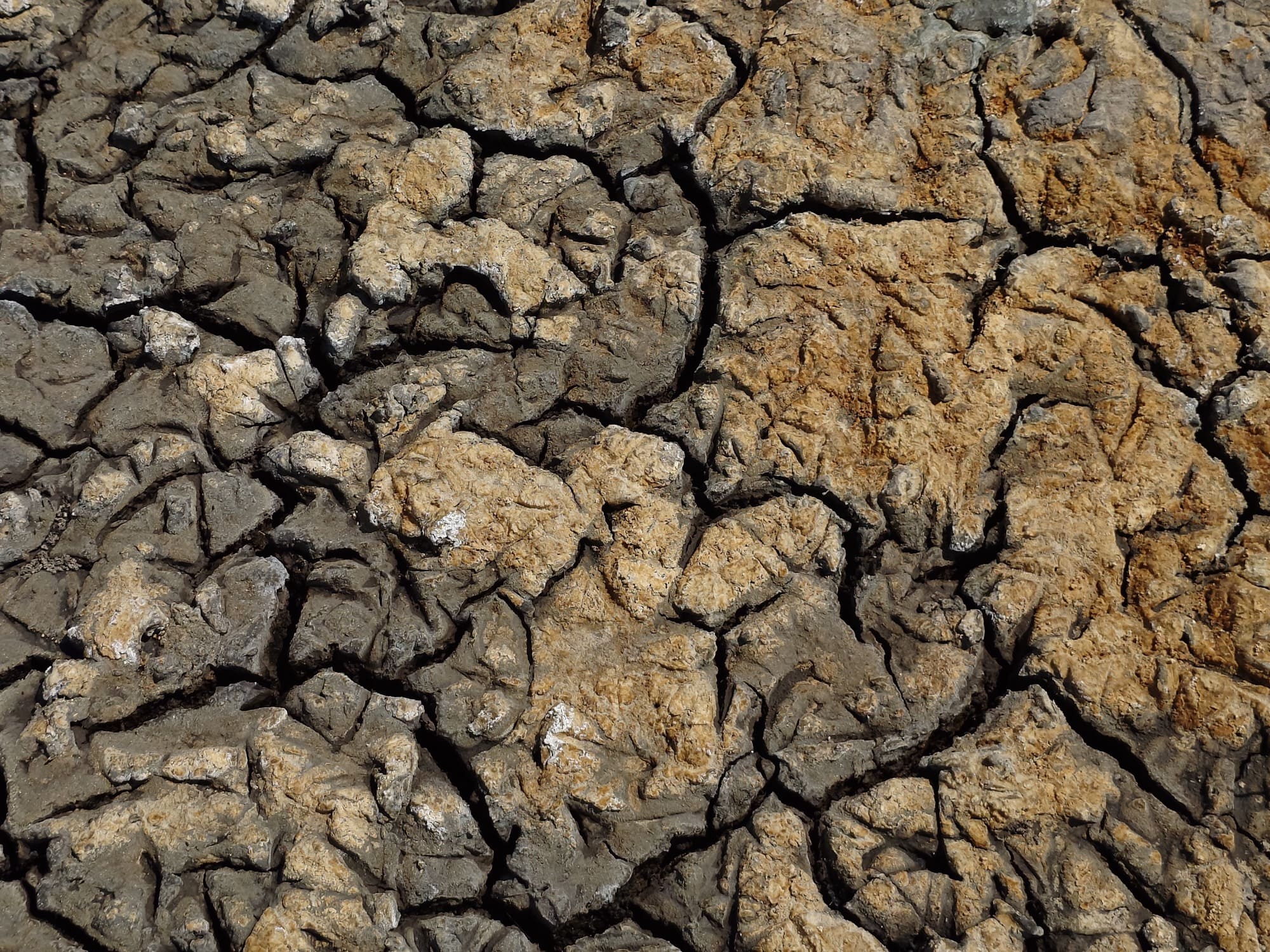
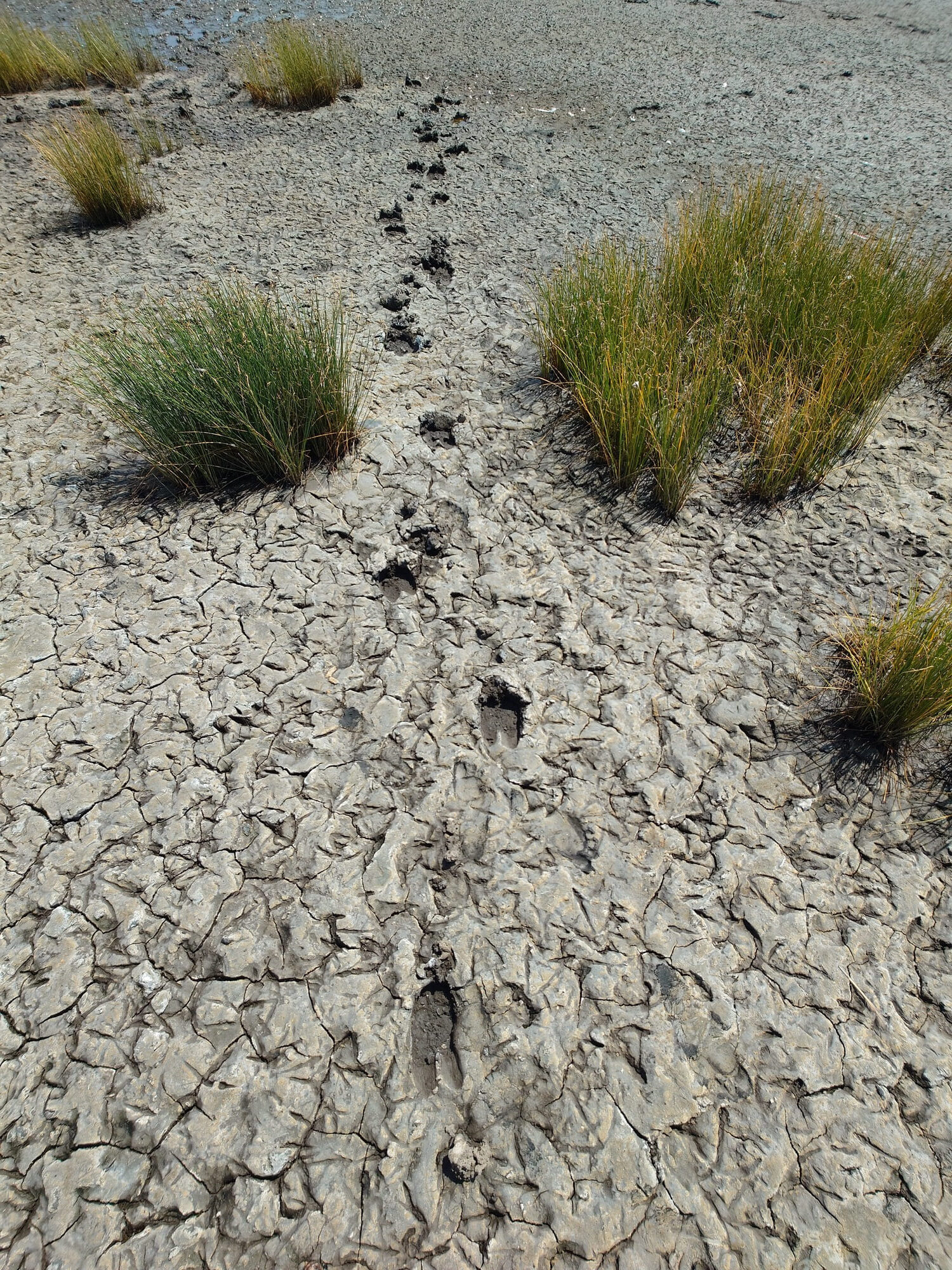
Ali was enjoying the views of the lake, the colonies of Lesser flamingos, Egyptian geese, vultures, and numerous flocks of smaller birds, while little Luka suddenly started his “show.” All on his own, barefoot, he began dancing across the dried-up lake mud, instantly creating a dance symphony—an unusual mix of expressive dance, imitations of animal movements, and gymnastic moves. The weary vibe of the long journey and drive instantly transformed into pure playfulness and joy, as if the entire surroundings were dancing with him as he merged and became one with the rhythm of Mother Africa.
With his dance, Luka, like a sort of shaman, set the tone for the rest of our journey: playfulness, relaxation, living in the moment, joy.
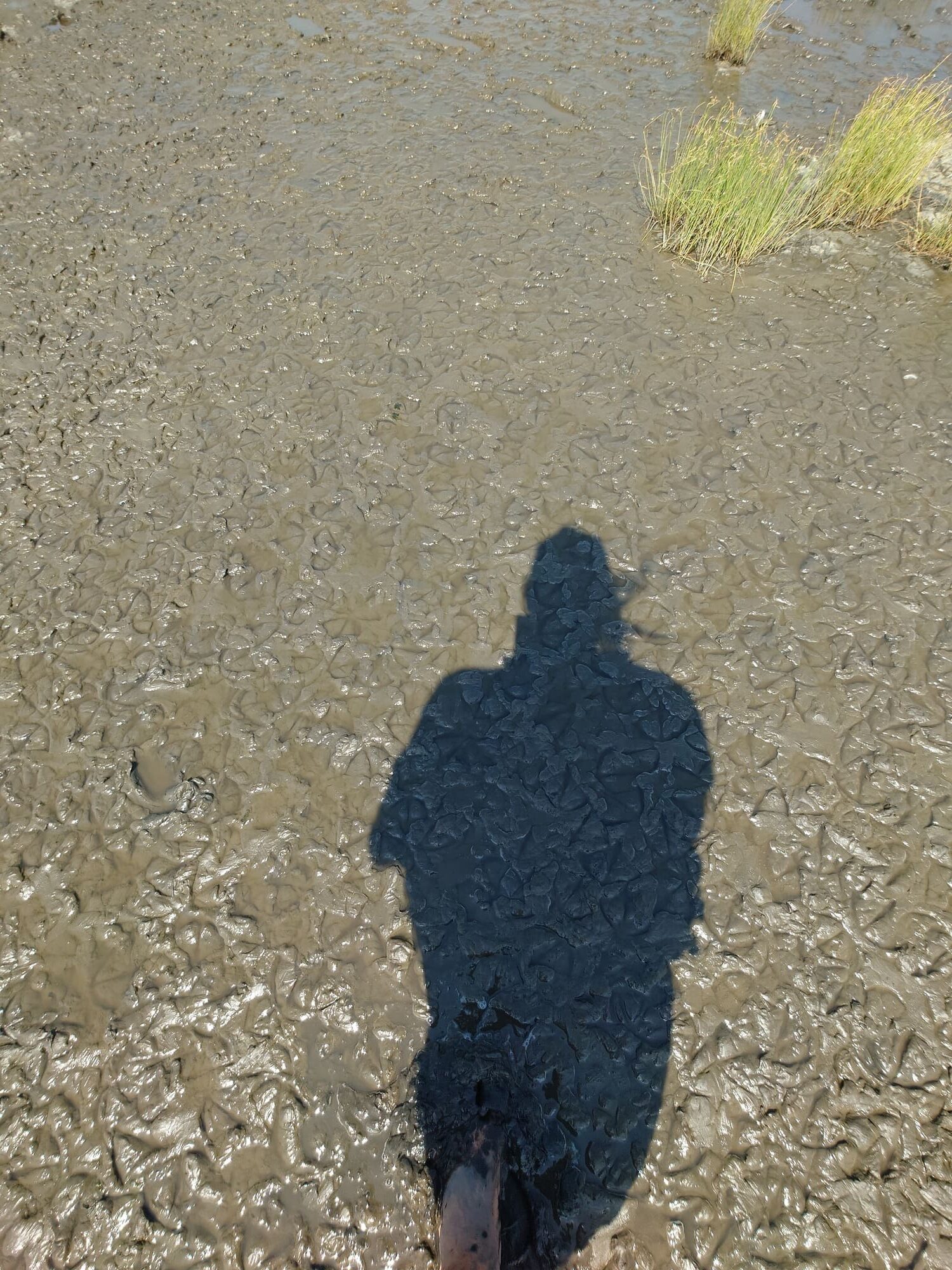
Ali and I both took off our shoes, and we all walked barefoot along the lake’s shore, not giving up even when our feet sank into the mud up to our knees. I even waded into one of the many streams that feed the lake. The slightly salty, mineral-rich water flowing down from the Ngorongoro Highlands was just the right refreshment on a hot day. These are the real safari moments… Moments I love to share and bring to life for our guests. Africa unplugged. These are the moments that define a true safari. The moments I love sharing with our guests—the ones that can't be planned, only experienced. Africa, unplugged.
Unexpectedly North – Joachim
…is an acquaintance whom Aruna and I met a few years ago. He works as a manager at one of the lodges and invited me some time ago to visit an exceptionally interesting area near Serengeti National Park, close to the Kenyan border. The area, which is protected as a wildlife reserve, is part of the Serengeti ecosystem and, above all, an extremely important area for animal migrations.
Given the route Ali and I had chosen—that is, without stopping and always heading toward new adventures—it seemed like the perfect moment to set out from the valleys of the tectonic rift and Lake Natron for a few more hours’ drive into the heart of the North Tanzanian Highlands… to visit our friend Joachim.
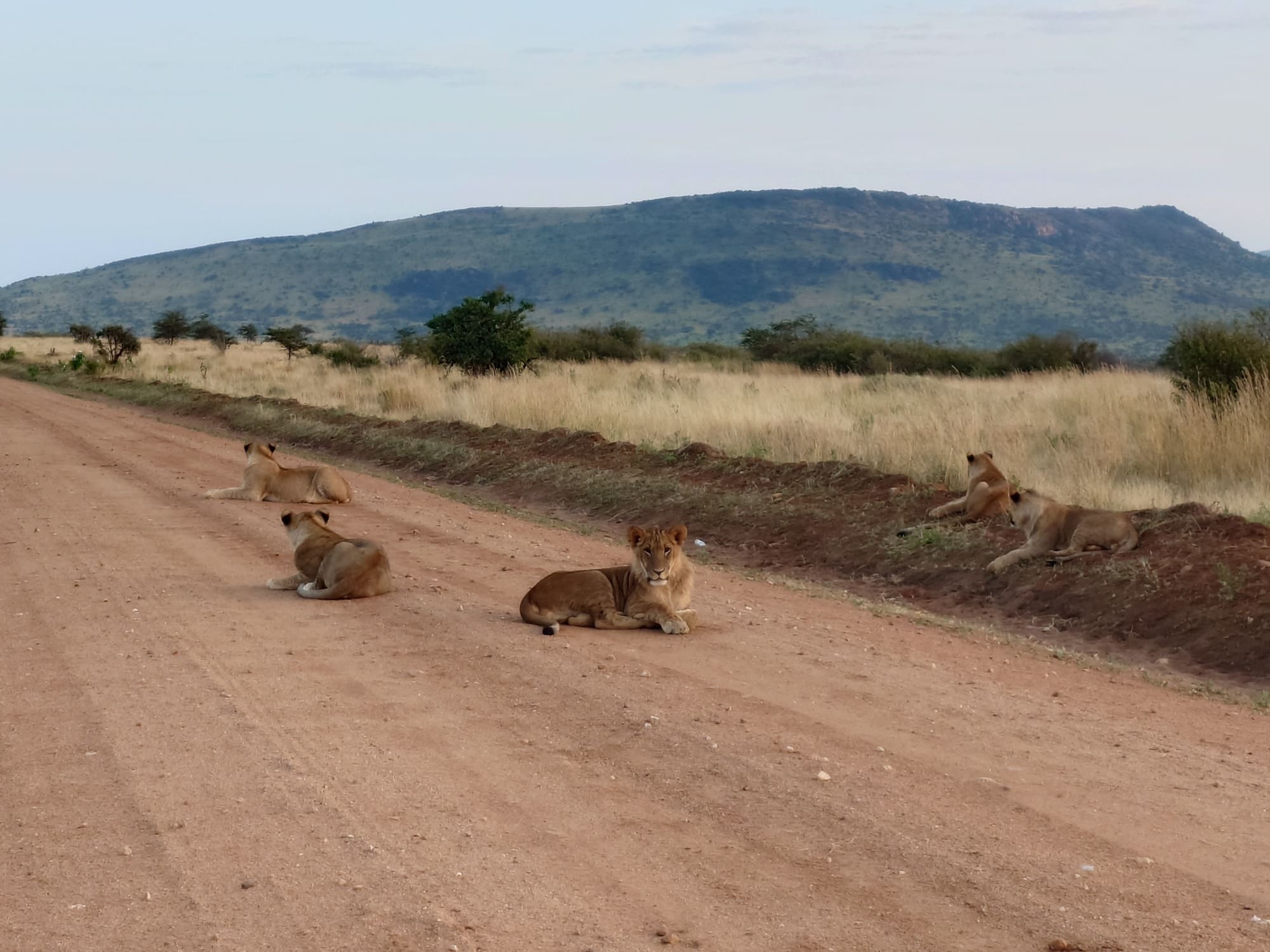
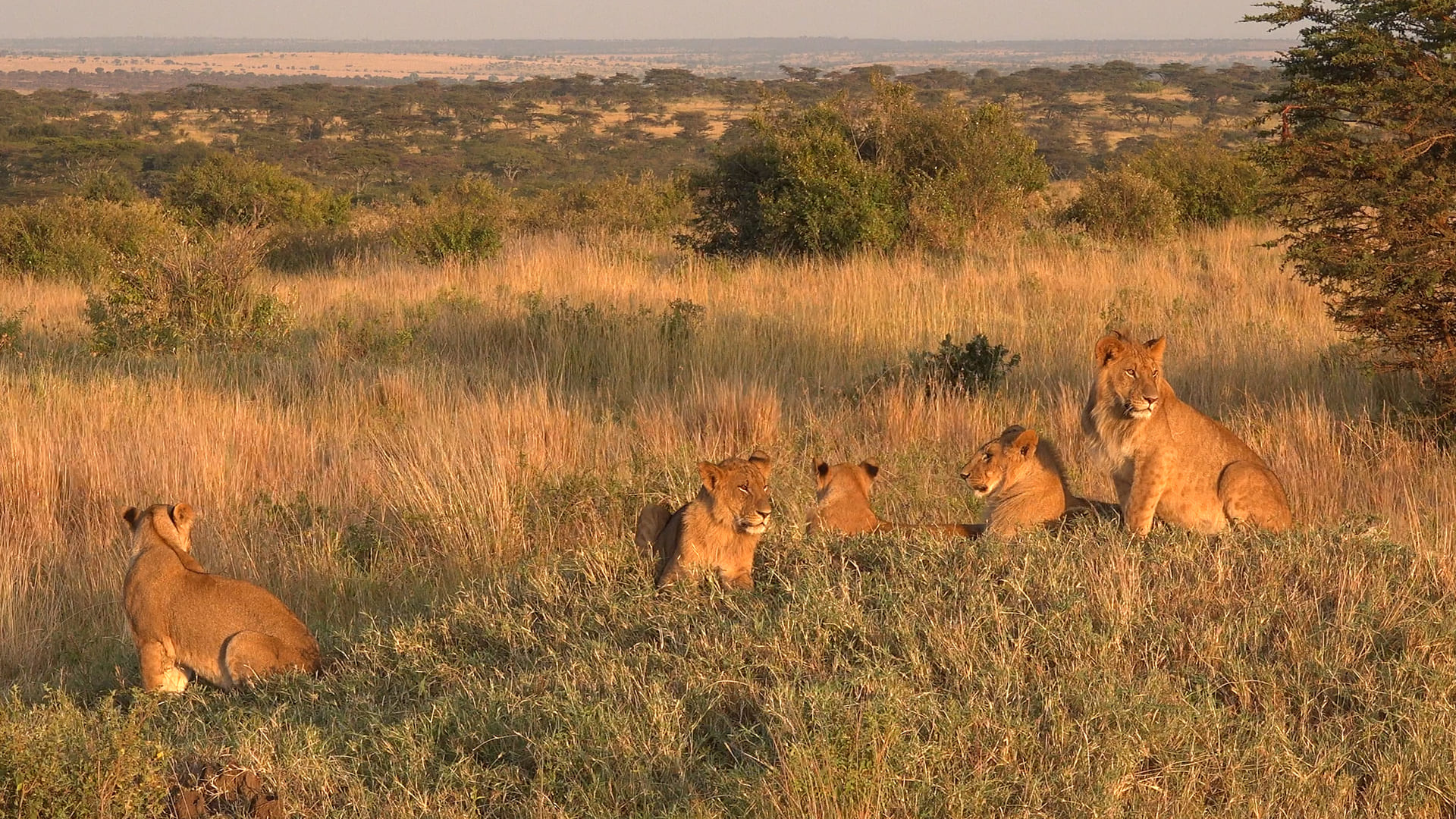
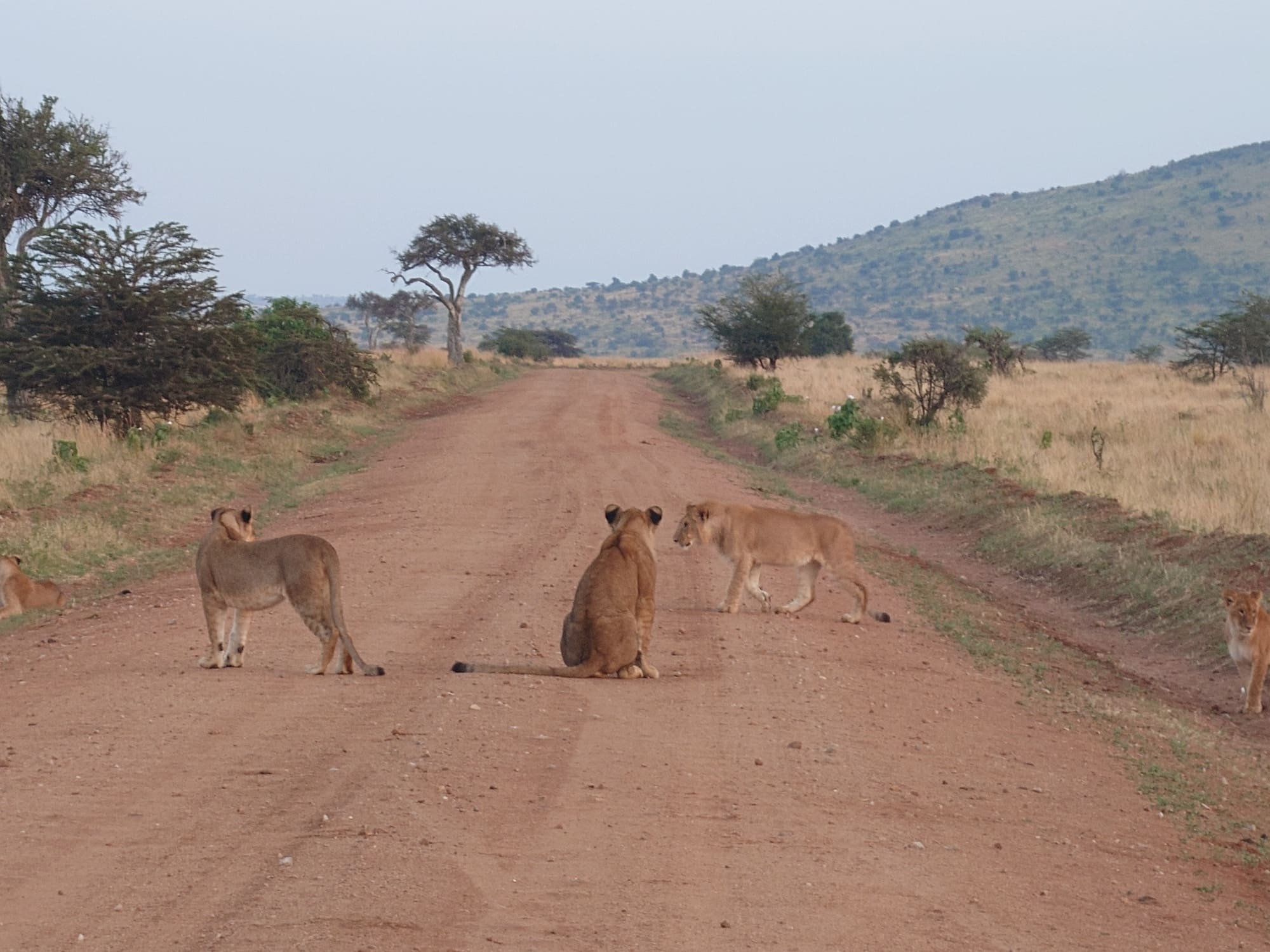
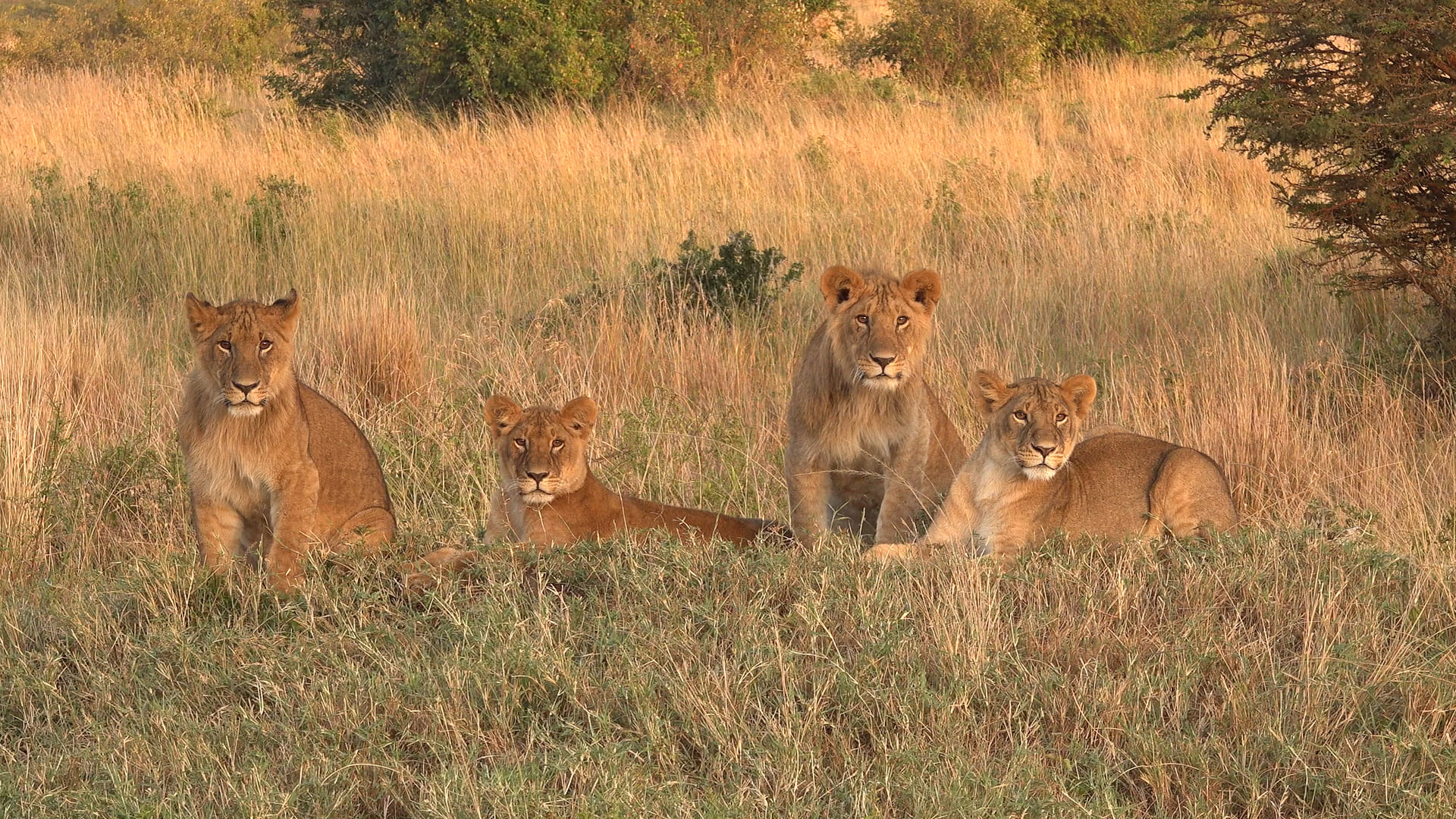
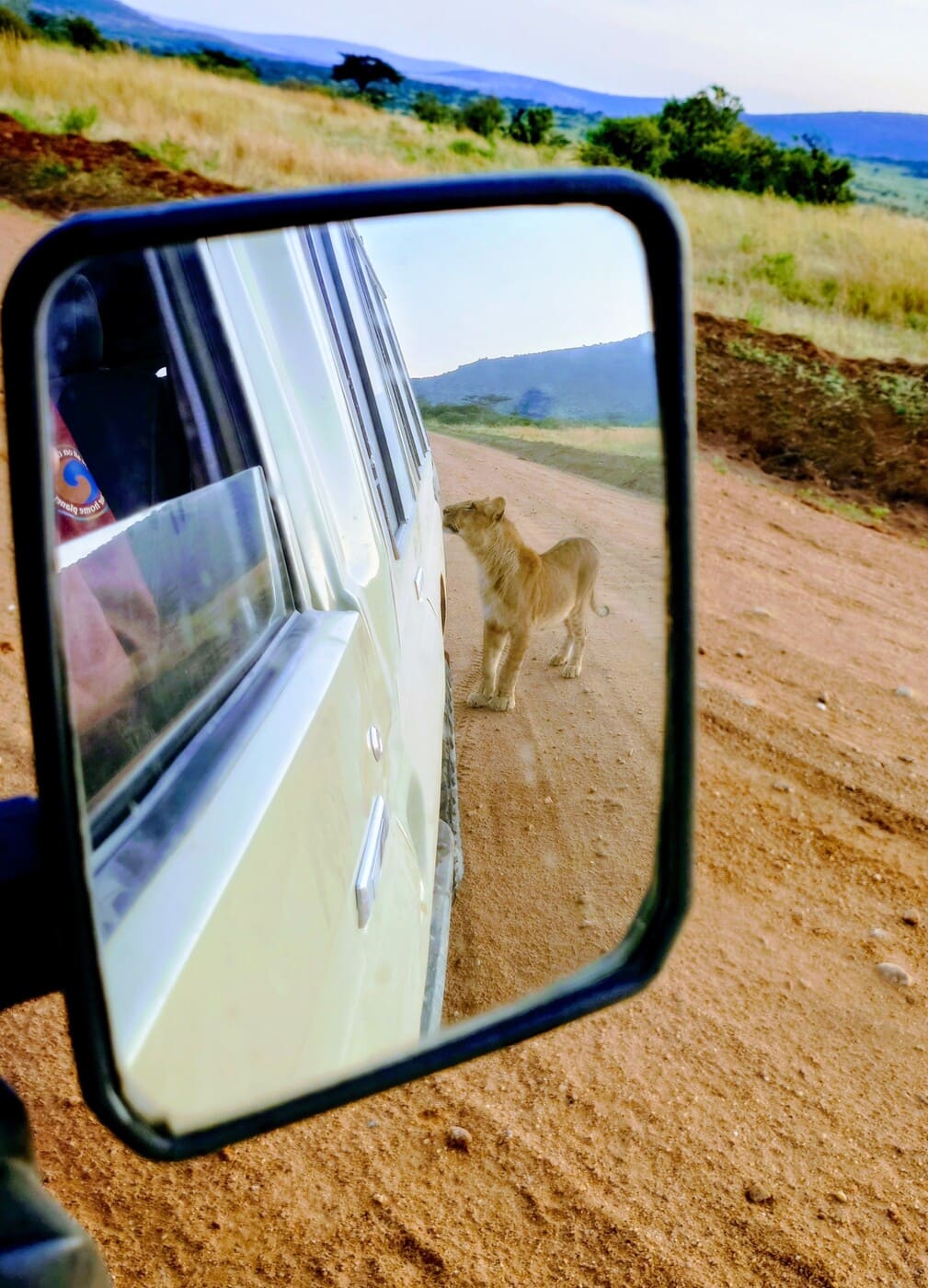
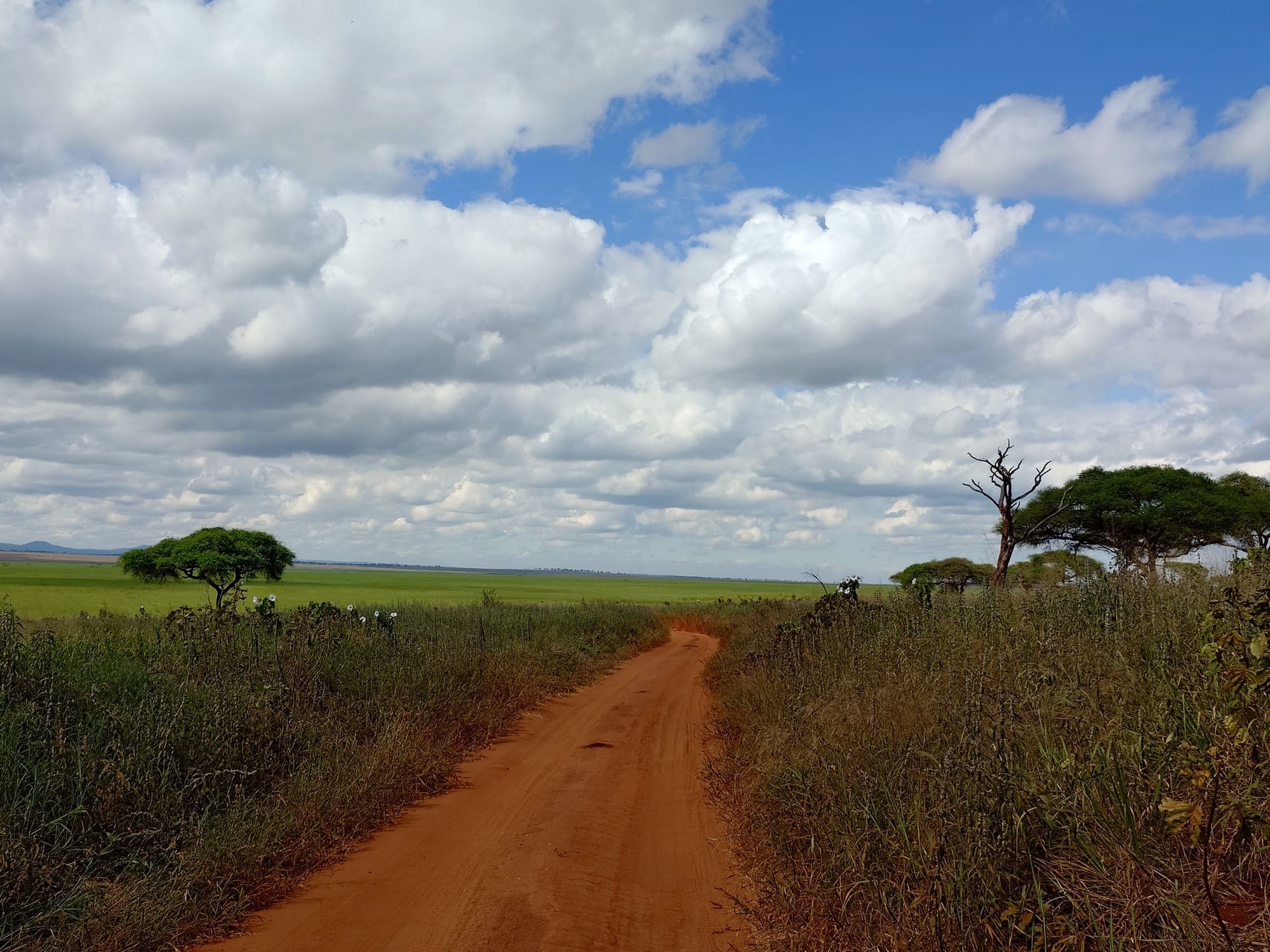
In the middle of the night, we got into the car; the air grew colder and colder as we climbed higher and higher up the hills above the watershed. The road led across dried-up streams, then even over a short stretch of asphalt, and then back into the wilderness, across the plateau… Dawn was slowly breaking. An endless plain stretched out before us. The savanna, dotted with scattered trees, was waking up to a cloudy, cold morning. We were driving along a flat road of red earth when, all of a sudden, Ali exclaimed, “Look, there are cats!” And sure enough, right there in the middle of the road, a pride of lion cubs was playing. In human terms, you could call them teenagers. Their mother was nowhere in sight, nor were any of the large male lions; just a playful group of young lions chasing each other across the red earth. I stopped the car right next to them, and suddenly we became part of their game. They cautiously circled the car, sniffed it, then forgot about us again and continued playing as if we weren’t there. A wonderful sight. Once again, we were alone in the early morning, right around sunrise. I couldn’t have imagined a better introduction to a place I hadn’t known until that day.
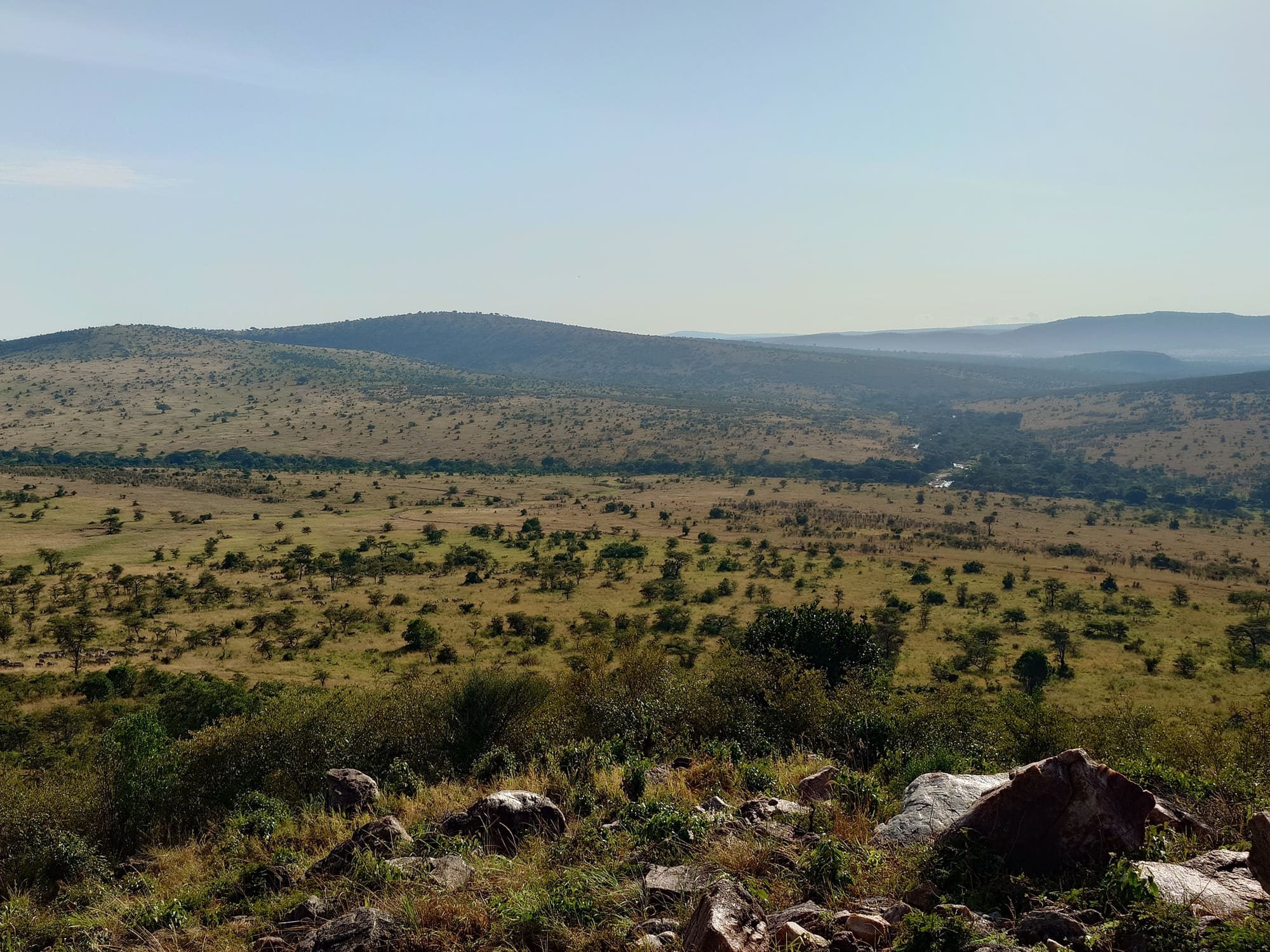
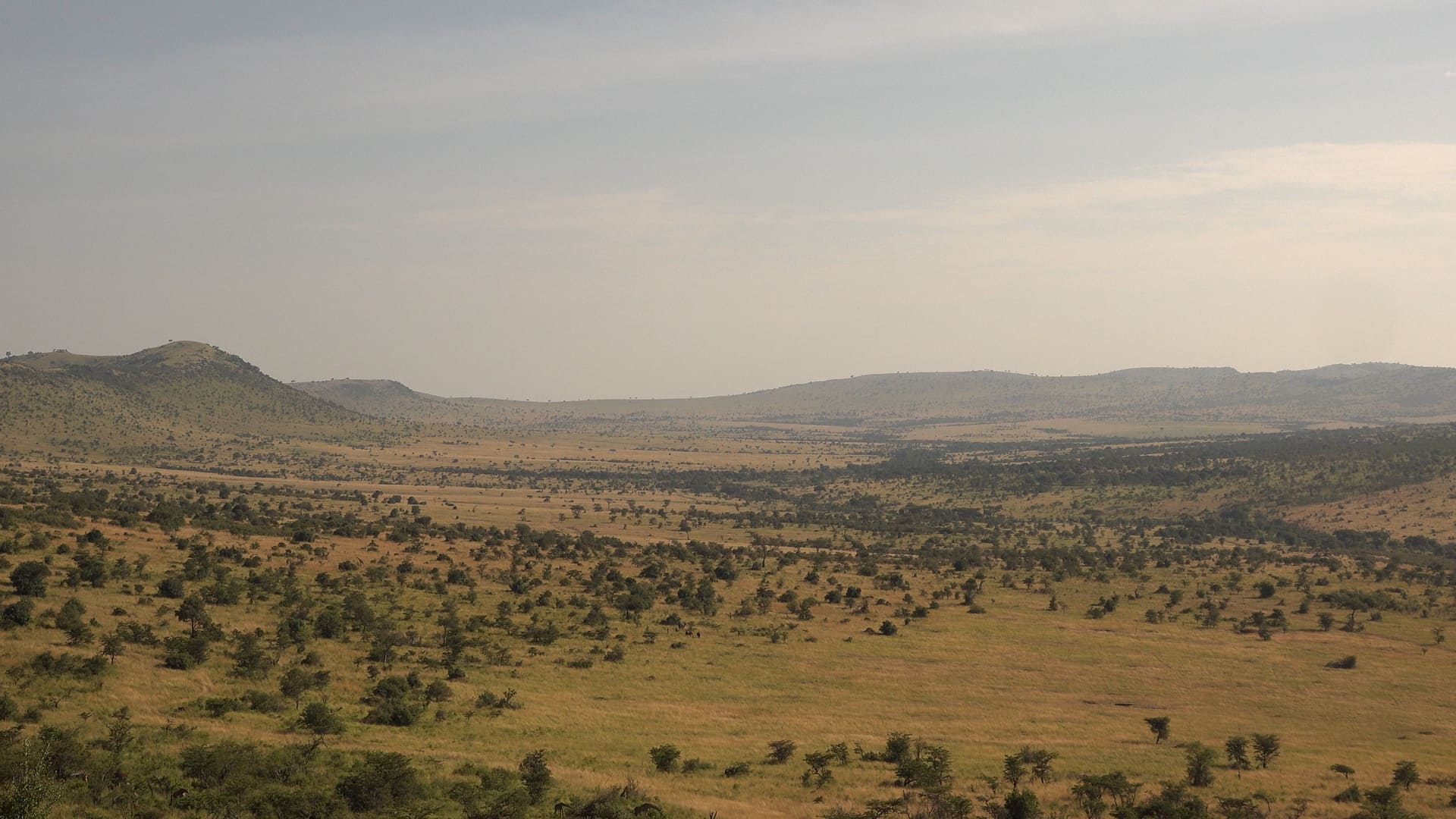
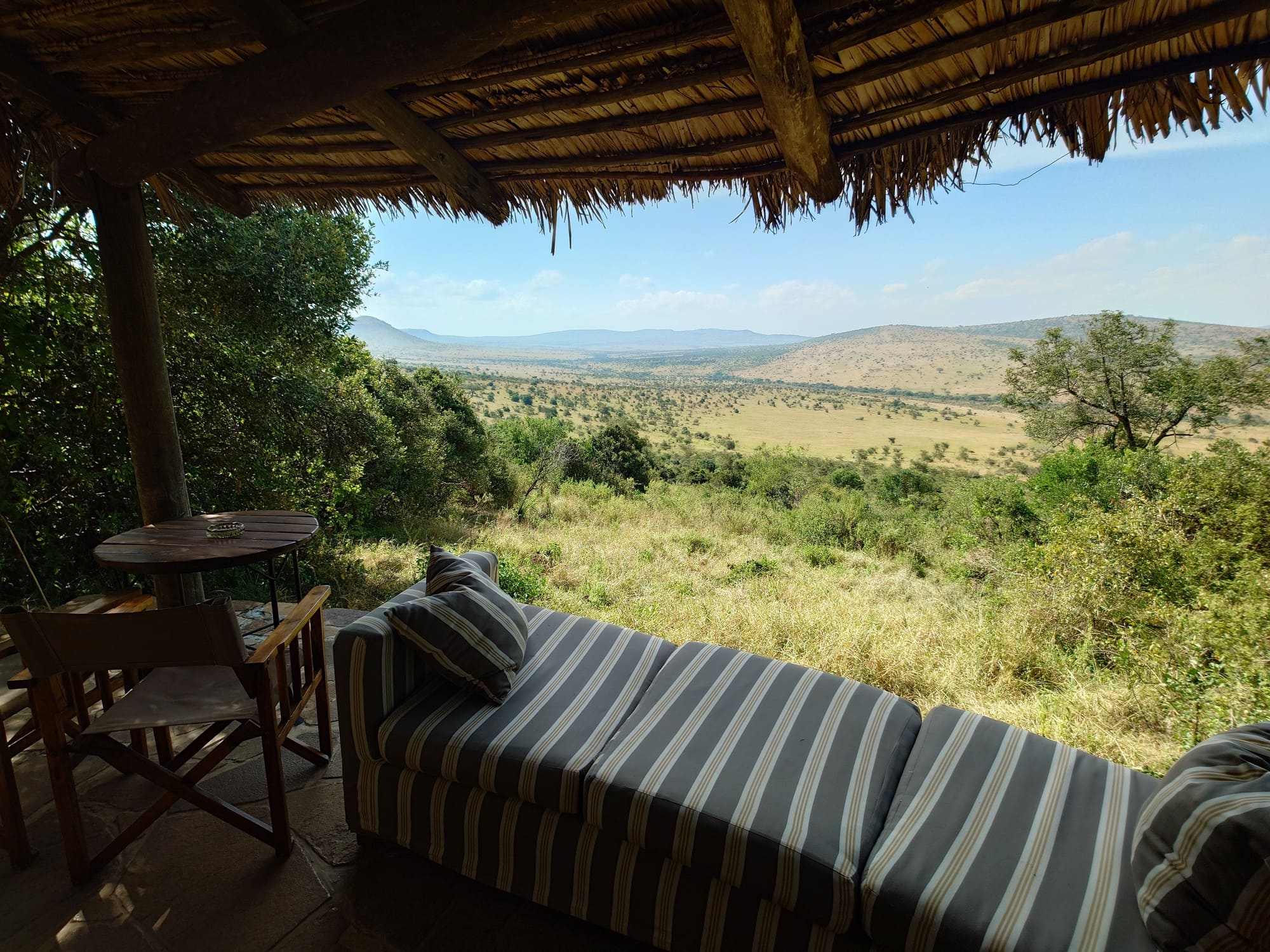
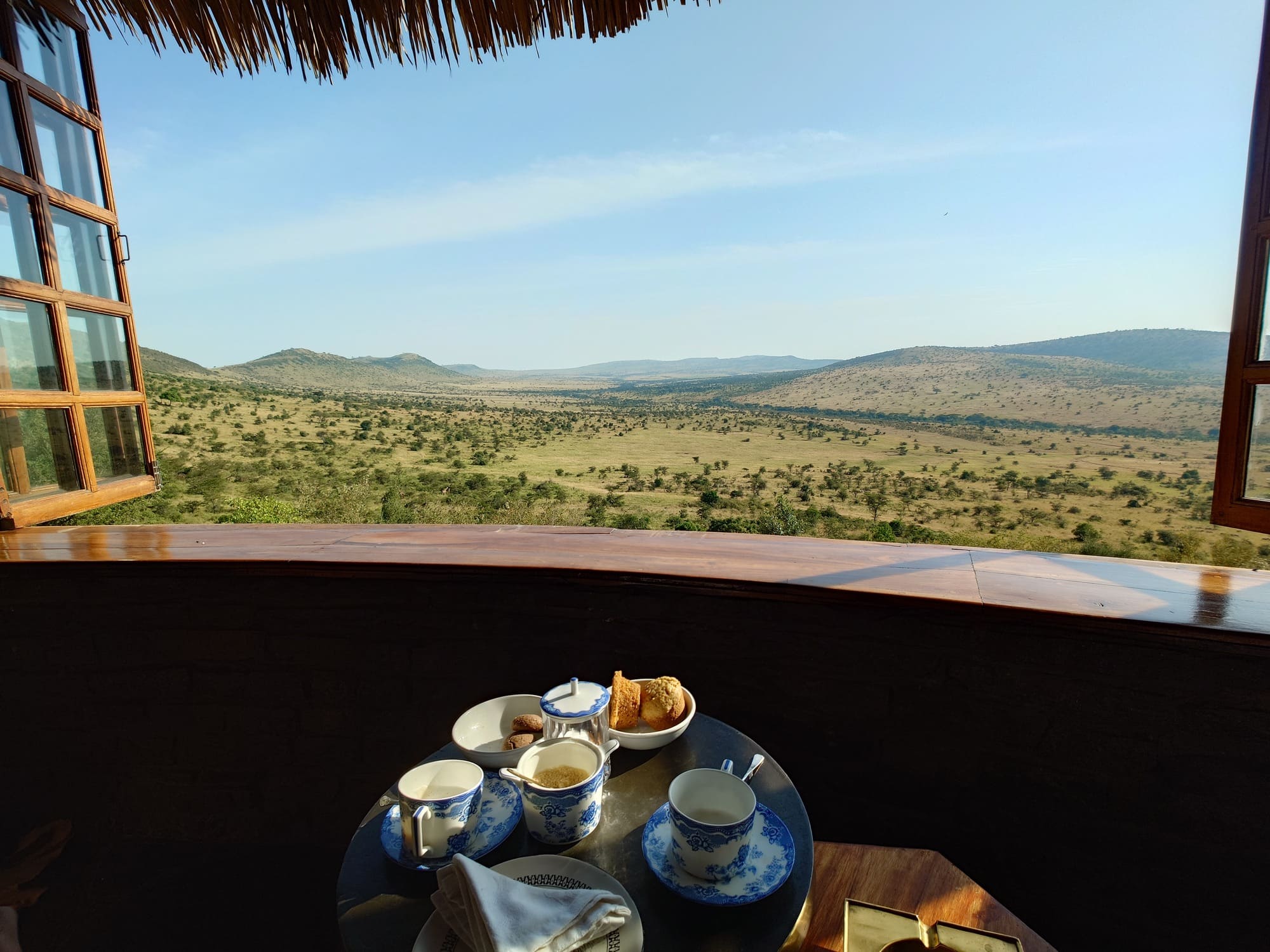
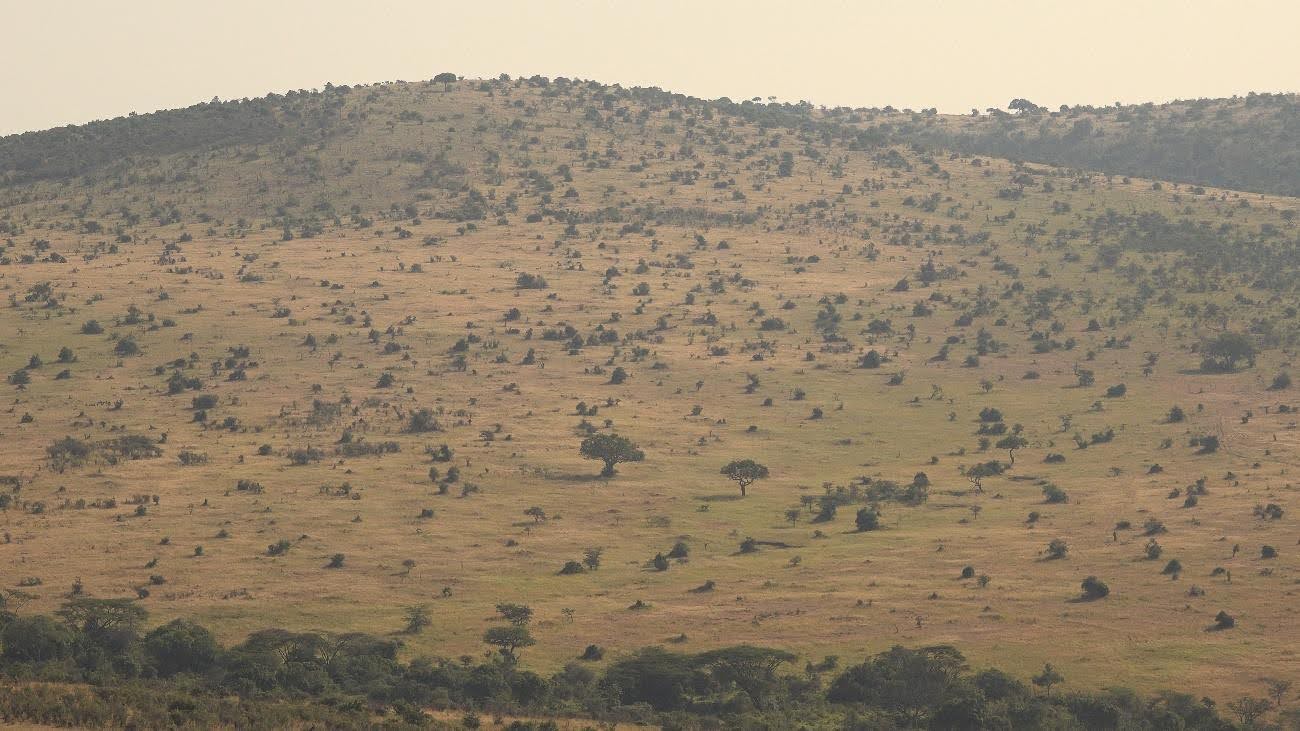
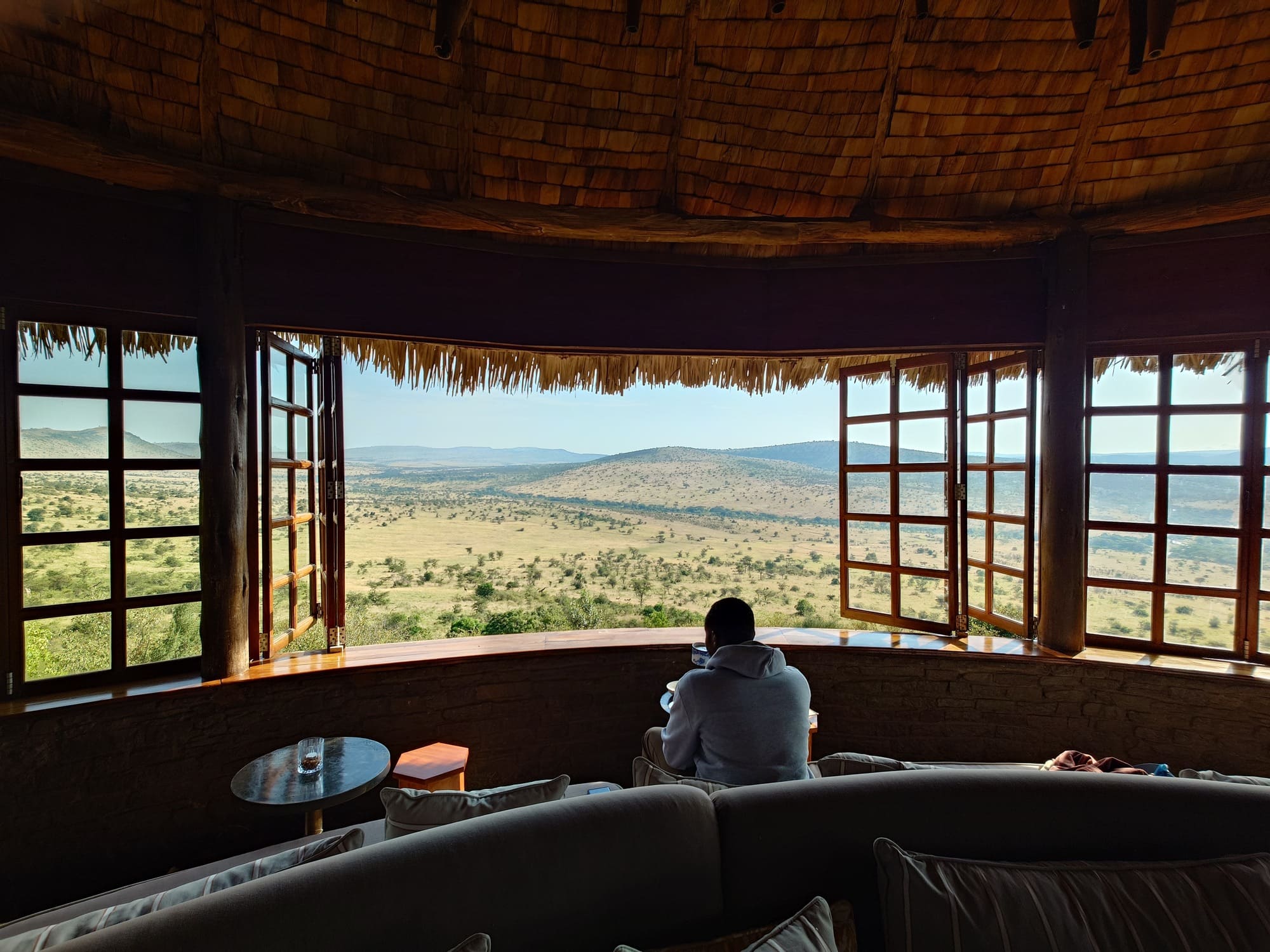
The lion cubs’ play was becoming more and more intense. They were chasing each other, growling at one another, rolling around… At that moment, I thought that all of this was simply a continuation of the magical dance of the young Masai boy Luke from Natron. At least that’s how it was for me. Pure joy and vitality—nature’s play at sunrise. When the lion cubs retreated a little further into the tall grass, we too continued on our way to our lodging—the “lodge,” where Joachim was waiting for us. The “lodge” stands atop a hill, and all around it… words fail me… a valley stretching far into the distance and the surrounding ridges dotted with scattered trees. On one side, the landscape leads into the Serengeti; on the other, into Kenya—more precisely, into the Masai Mara. Awed by the wonders of nature and also by the exceptional natural setting of this “lodge,” I simply asked if a guide could accompany us, so we could get a closer look at the valley below and the ridges across from us. I didn’t have to wait long; soon an older Maasai guide stood before us, introducing himself as Joseph. Actually, “guide” isn’t quite the right word—Joseph is more of a tracker, someone who follows trails. Someone who knows the area and the animals’ movements exceptionally well. Yes, he was just the right person for us!
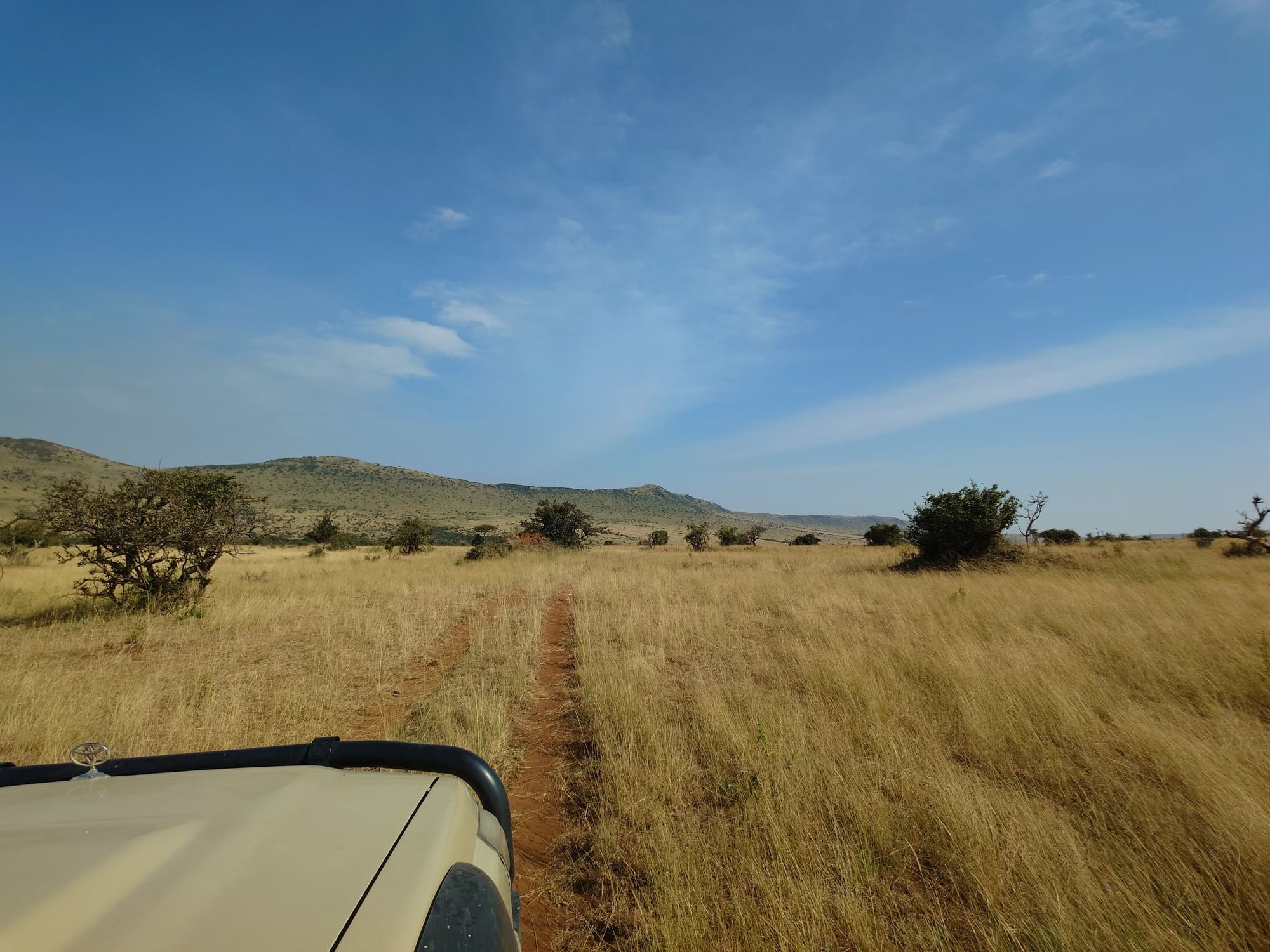
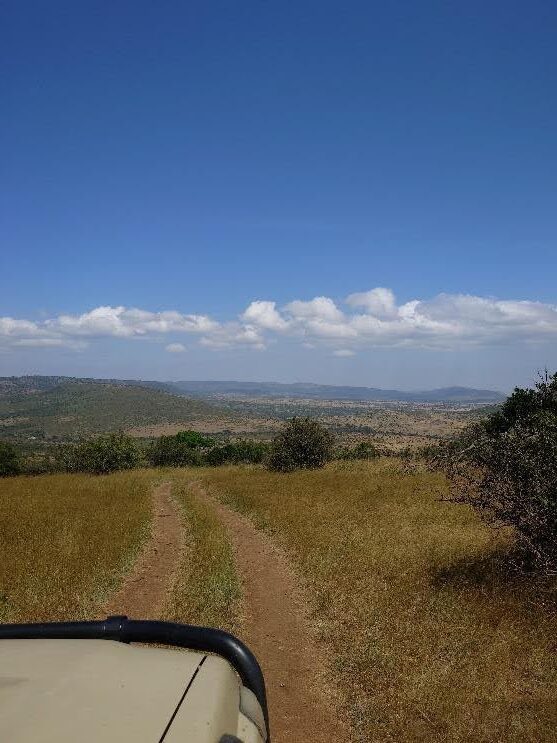
Together, we set out to explore the area that morning. I was the driver, and it was a driving lesson for me, too. First, we drove along the main road, and then Joseph led me into the tall grass, under the large acacia trees. There were no trails, no roads—I could only see about a meter in front of me—but Joseph used his hand to signal where to turn and roughly where we needed to go. Suddenly, he stopped me and directed my gaze ahead into the thick grass…
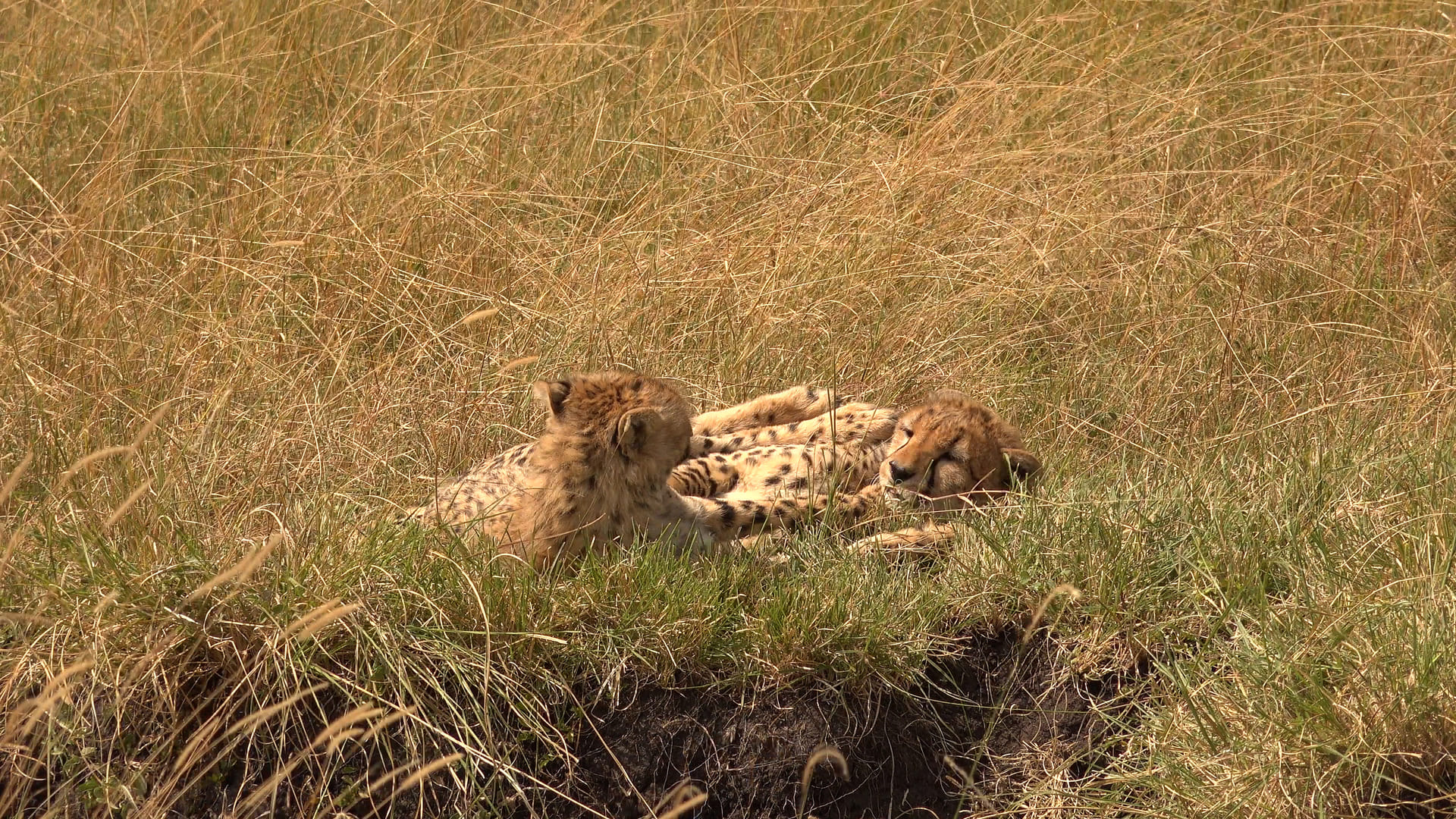
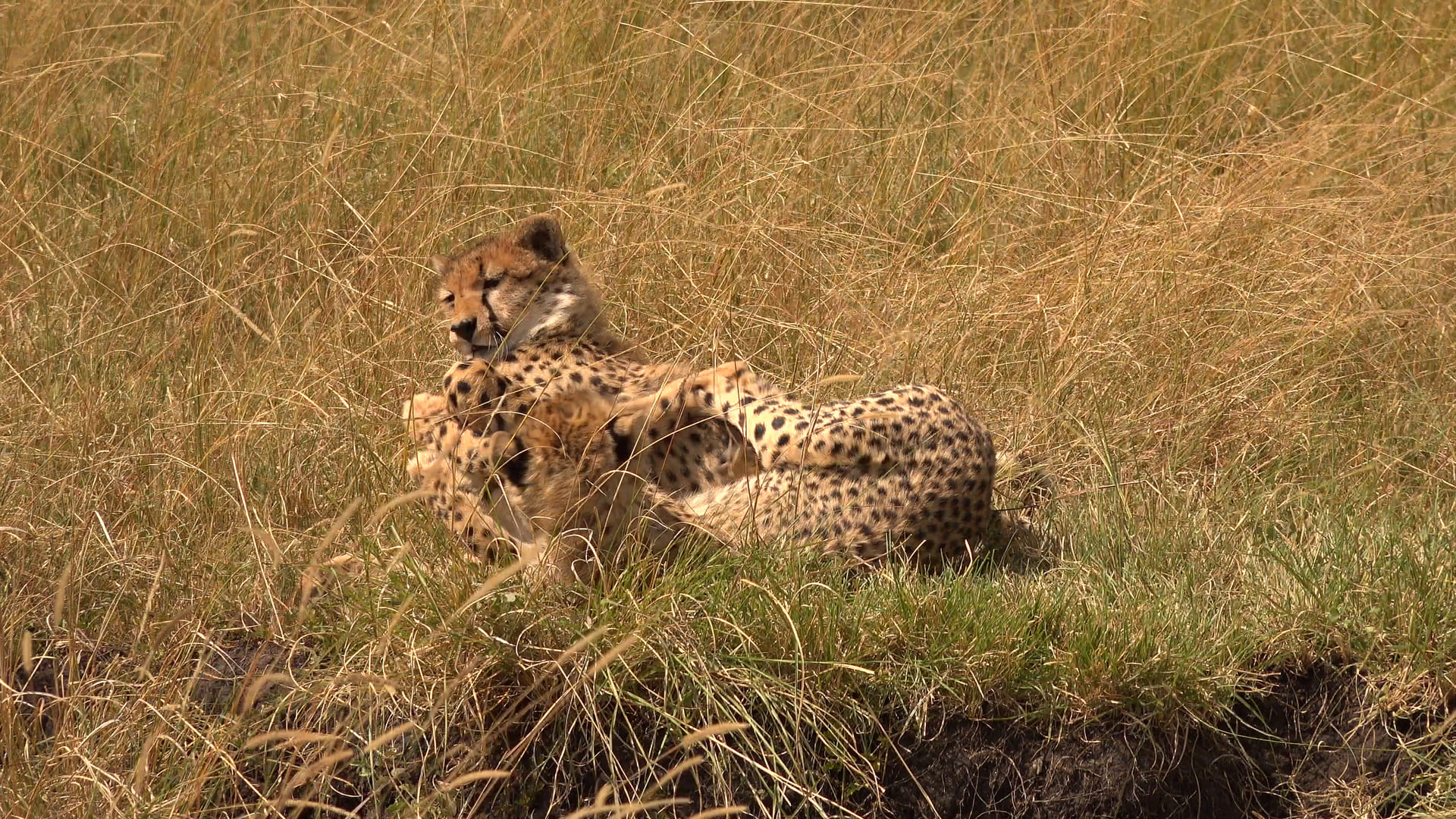
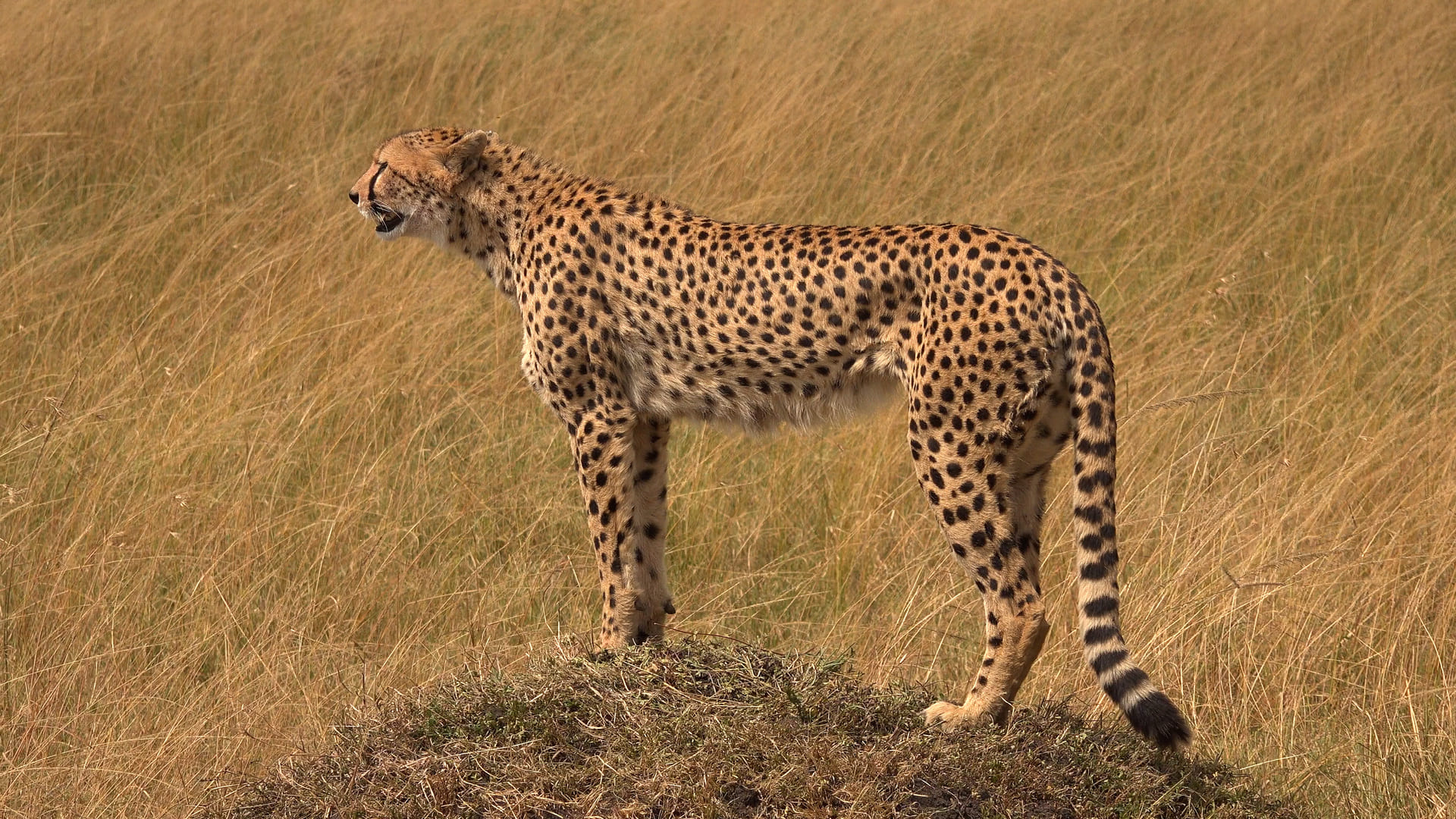
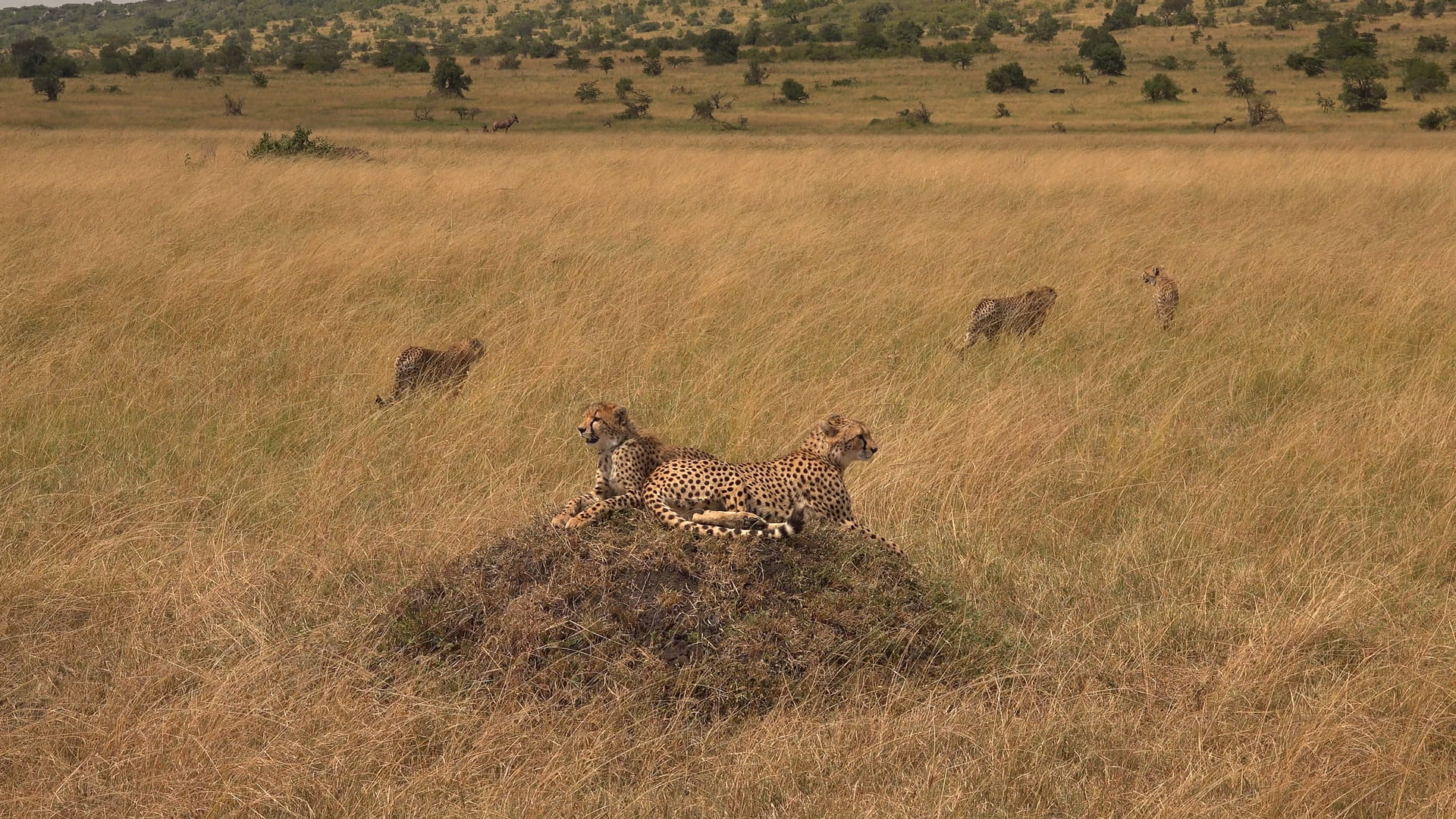
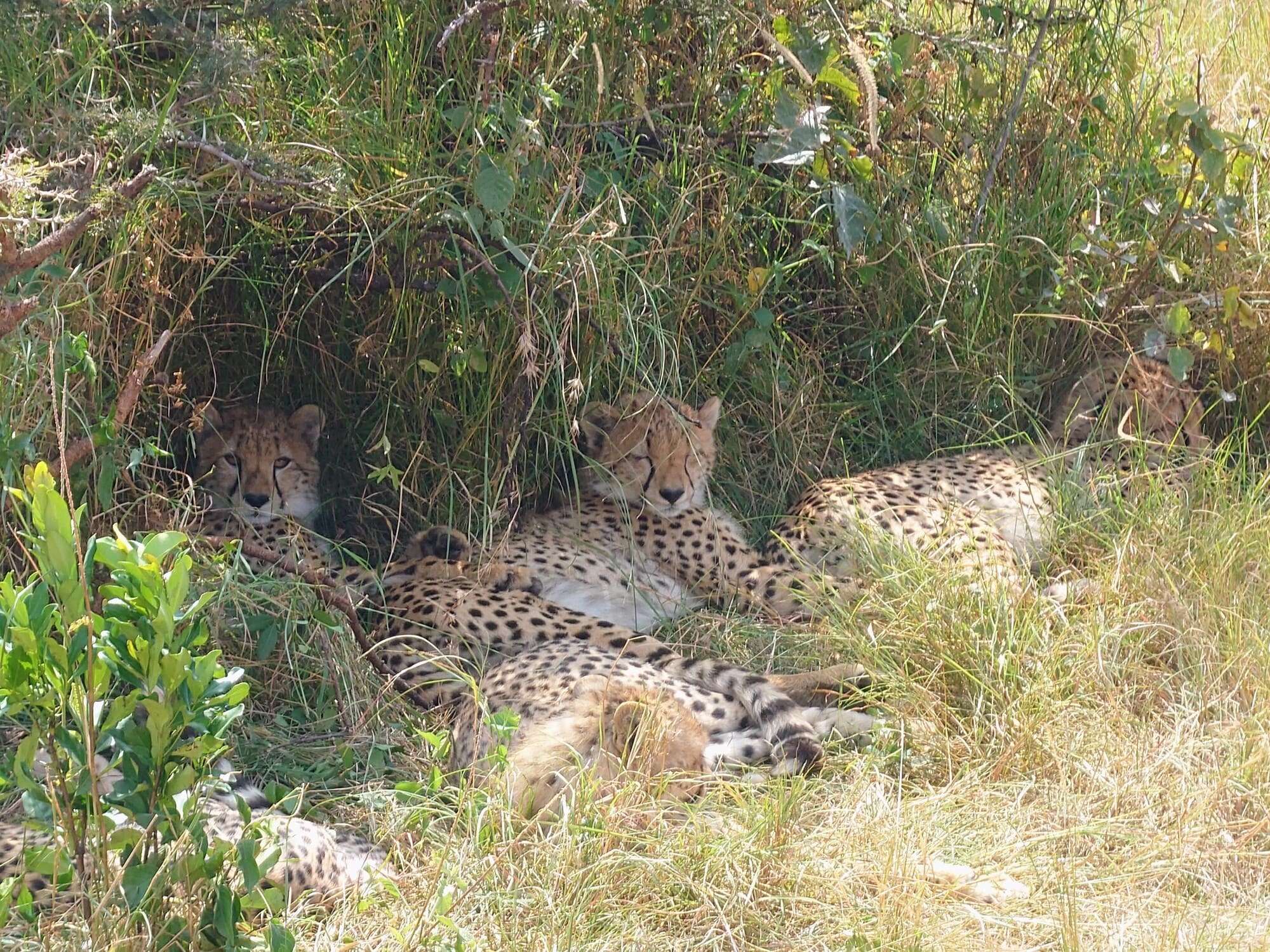
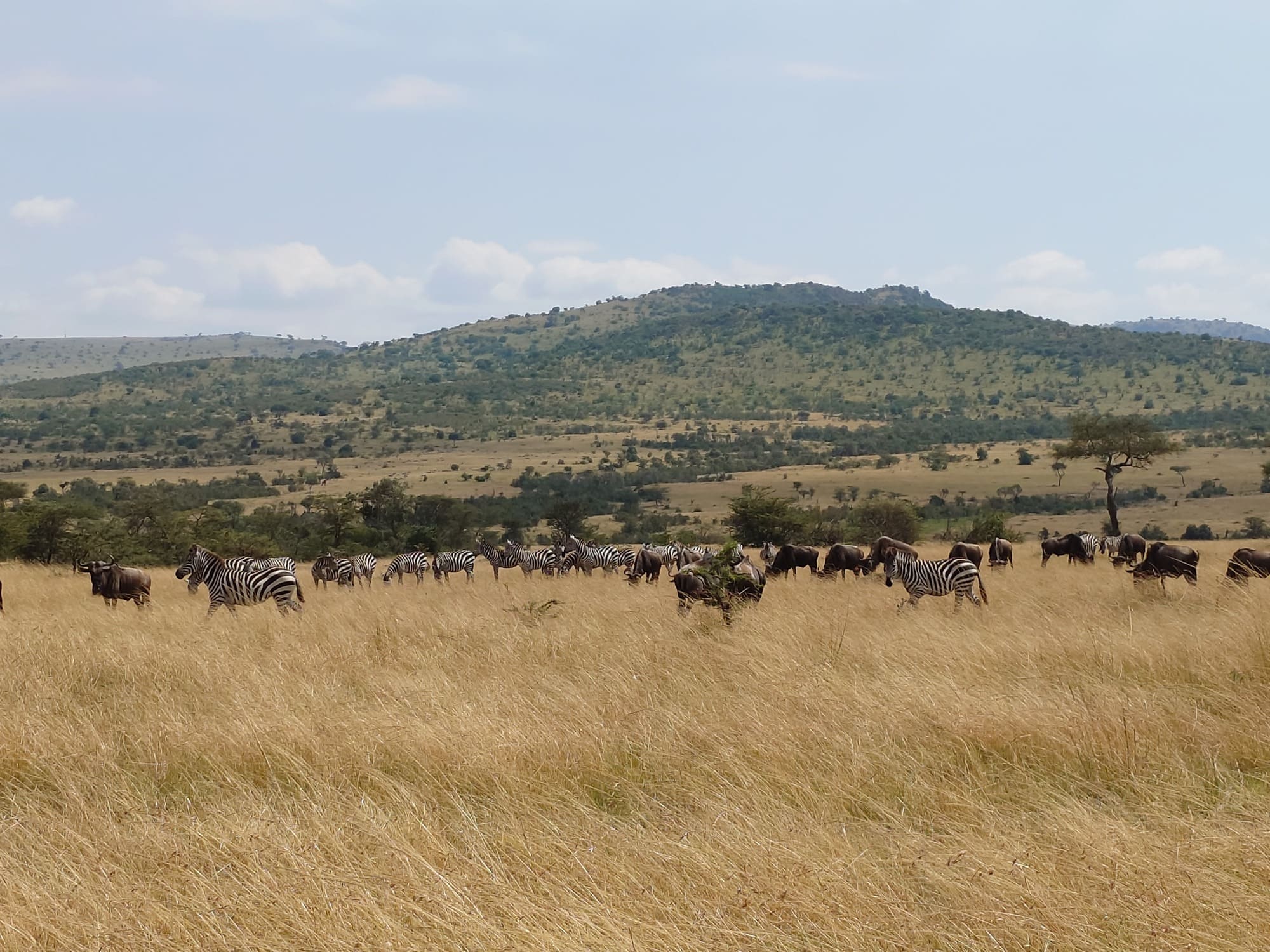
Cats again! Only this time, not lions, but a family of cheetahs. A mother and a few already quite large cubs—teenagers, again. They were dozing under the bushes and weren’t really disturbed by our intrusion into their privacy. Only the mother walked past the car for a moment and, somehow without a sound, roused them to their feet—simply by her presence. And that’s when it began… The game! Again! One was particularly playful and started chasing the others and playing with them. Then it “erupted” from all sides. All of a sudden, they were all running and chasing each other. They were just whizzing past us. A single game of nature and animals in the middle of the late morning. Mom protectively climbed onto a slightly higher termite mound so she could keep an eye on everything, while the young ones continued their game. Until they moved on toward a large herd of zebras and wildebeests, which triggered a sudden and violent movement of the herd, so that in an instant we saw only a cloud of dust kicked up by a hundred hooves.
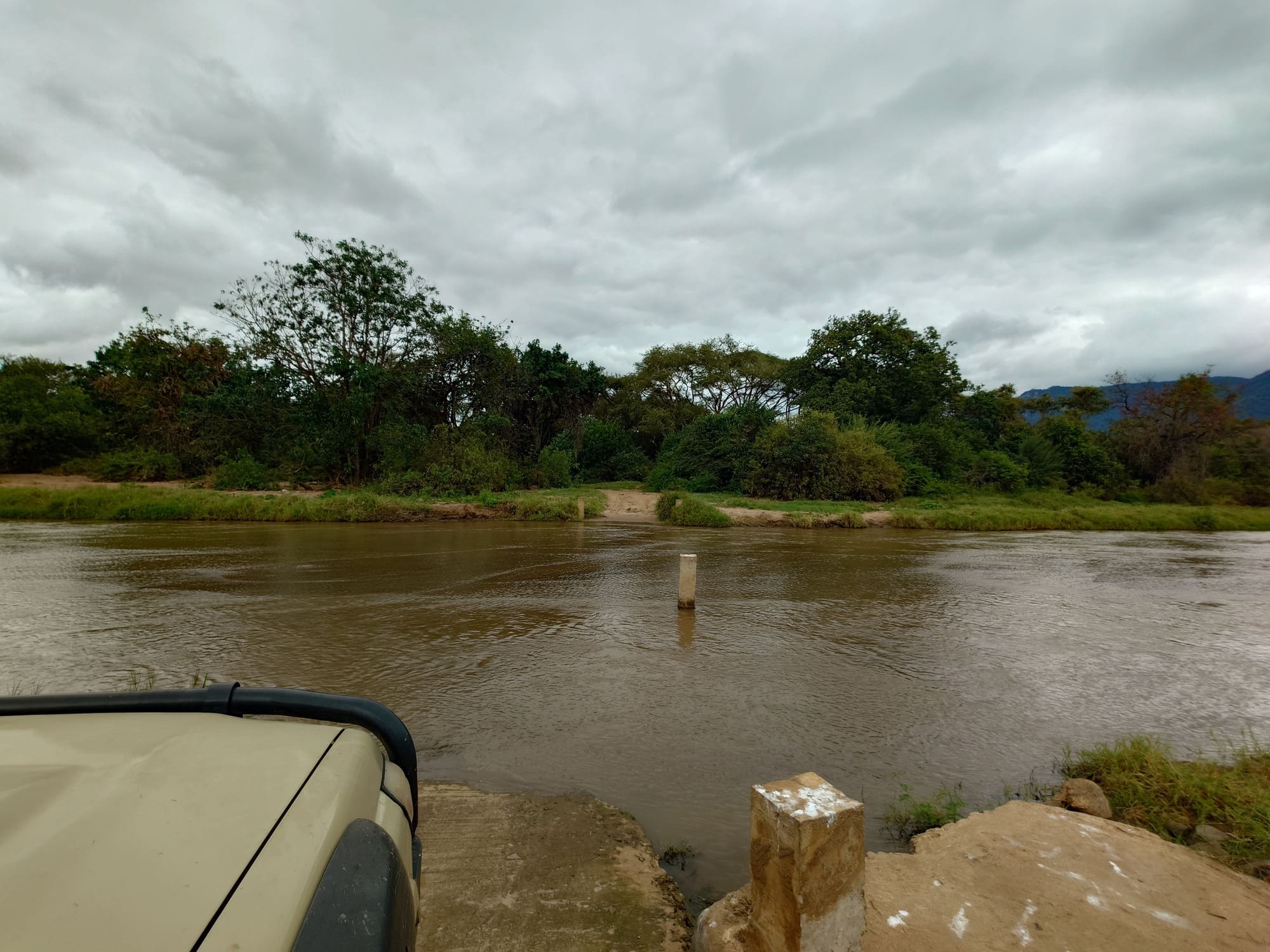
We continued our journey through the valley, along trails and off-road. At one point, we barely managed to cross the river, and a little later we got stuck in a hole dug by an ant-eater. We calmly got the car out of that hole, thanks mainly to Joseph, who knew exactly what to do in a situation like that. We lifted the car with a jack and propped up the front wheel—which had gotten stuck in the large hole—with rocks and wood. And off we went. Low gear, four-wheel drive, and we were out.
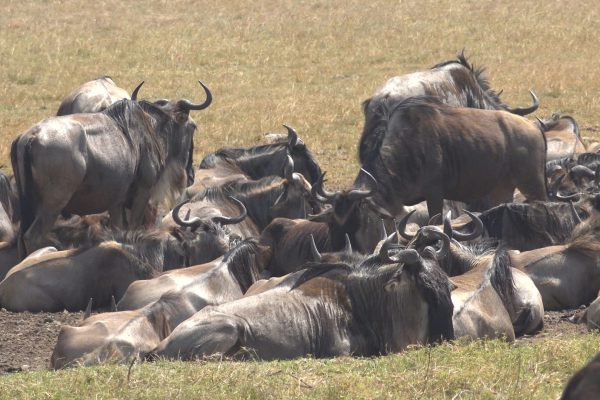
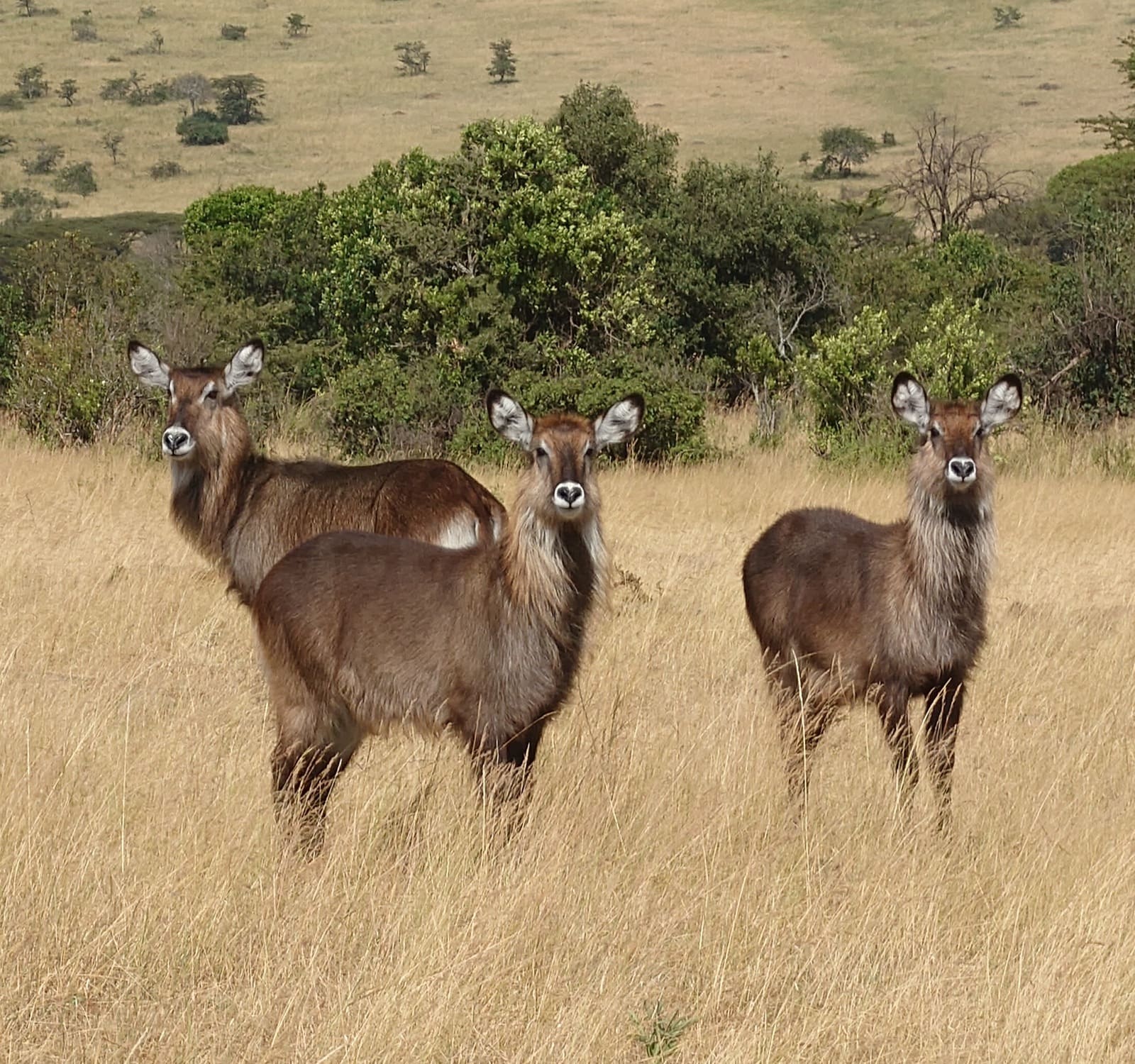
We had quite a few wonderful encounters that day, from a massive male elephant who, even from a distance, loudly warned us not to get too close, to a large lioness with her cub having lunch—by the carcass of a trapped wildebeest—and on to large, older male giraffes… Above all, herds of wildebeest, zebras, and buffalo were gathering throughout the entire area, preparing for their journey to the Serengeti and the crossing of the Mara River—an event most people know as the Great Migration.
But something touched me deeply that day and in the days leading up to it in Natron… The Play. Playfulness. Vitality. Creativity. Of humans and animals. Of the little Masai Luka, young lions, and cheetahs.
Journey of the Rising Sun
After a few hours of hiking and exploring the area, we returned to the lodge, where Ali and I had some coffee and spent a little more time admiring the magical view of the area we’d just explored. Joachim joined us; he made sure the whole time that we were very comfortable and had everything we needed. Although, to be honest, we really didn’t lack anything… In moments like these, it seems to me that the journey itself is the reward. When you feel somehow nourished and fulfilled by exploring and discovering the wonders of our beautiful planet.
It was incredibly wonderful to have two people by my side whom Aruna and I hold in such high regard: Ali and Joachim. Each of them is an exceptional expert on their respective environments—Ali on Zanzibar, of course, and Joachim in the wilderness of mainland Tanzania. A sort of “team” formed, together with Aruna, who, although she wasn’t physically there that day, is always with me in spirit and through her immeasurable intuitive insight.
It’s true—every day here in Tanzania feels like I’m in school. A school for navigating the wilderness, a school for leading people, a school for listening to my inner voice, and above all, a school for realizing that everything is always exactly as it should be and that everything is all right—a school for trusting myself.
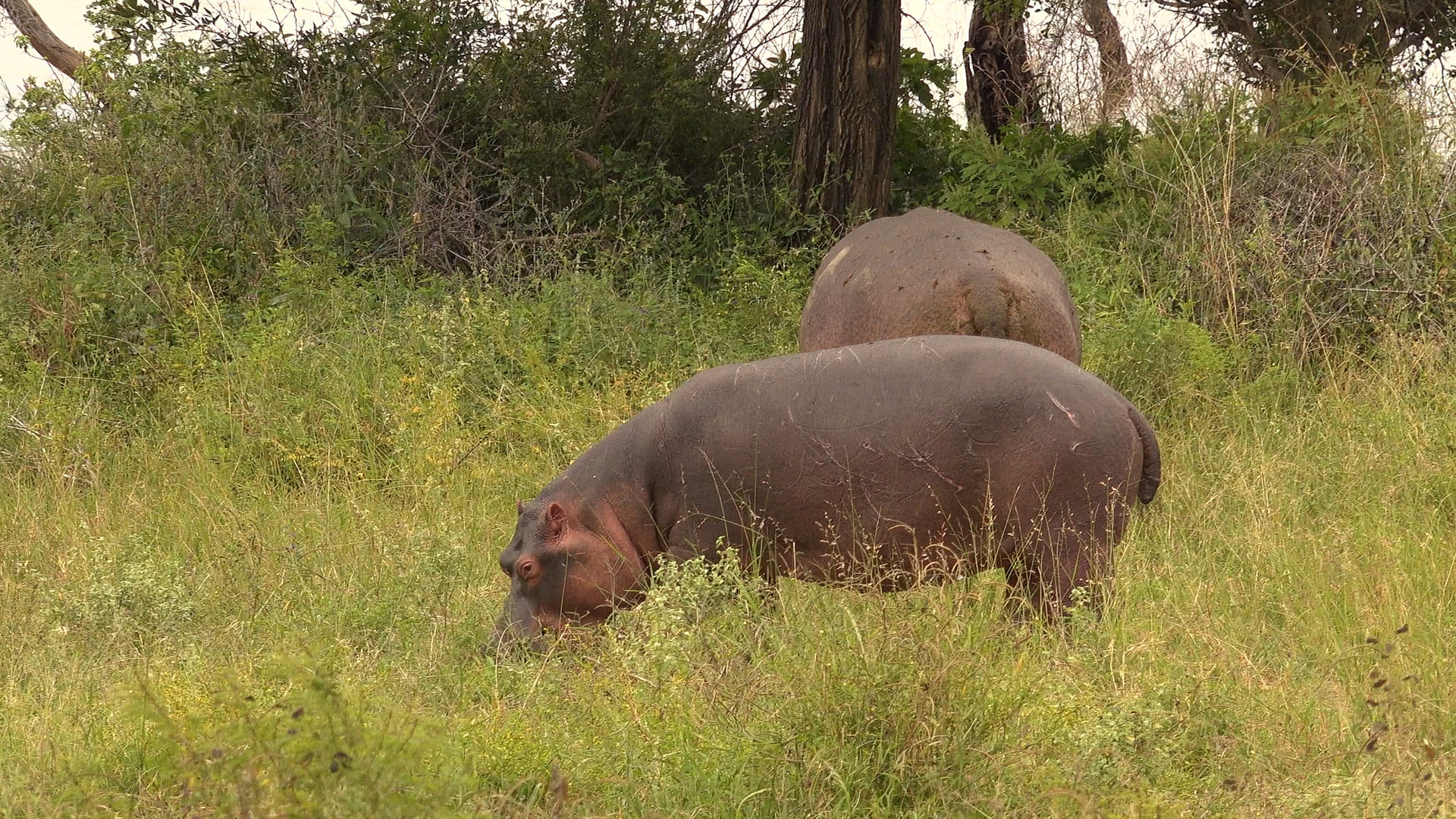
Soon we set off back toward Natron. Unfortunately, we didn’t have time to spend the night at the beautiful lodge, because we had a flight to Zanzibar the very next day, and it was quite a few kilometers to the airport. And so we were on the road again. Fulfilled. Even though I’d already been driving for about 15 hours on that last day, the sense of fulfillment from the journey was immeasurable. Just a few hours earlier, we’d been pulling the car out of a hole in the wilderness, and now we were already descending from the highlands back toward Lake Natron, into the heart of the tectonic rift. Just the day before yesterday, Ali and I had been admiring the hippos grazing along the lake’s shore 250 km to the south; today, we’re driving along completely unplanned routes at sunset beneath the peaks of stratovolcanoes.
An extraordinary journey. Exhausting. A test of endurance. But one that paid off in new experiences, new acquaintances, and above all, time and again, in the touches of Mother Africa—the touches of rhythms, the circle of life, and the touch of playfulness, diversity, and spontaneity.
There is something common to all the journeys I undertake, either alone or together with Aruna. Exploring at sunrise. That is when the wilderness of East Africa reveals itself in all its splendor, and the Earth’s vital energy fills you and grounds you in the moment. And in case you didn’t know, Aruna means “rising sun” in Sanskrit…
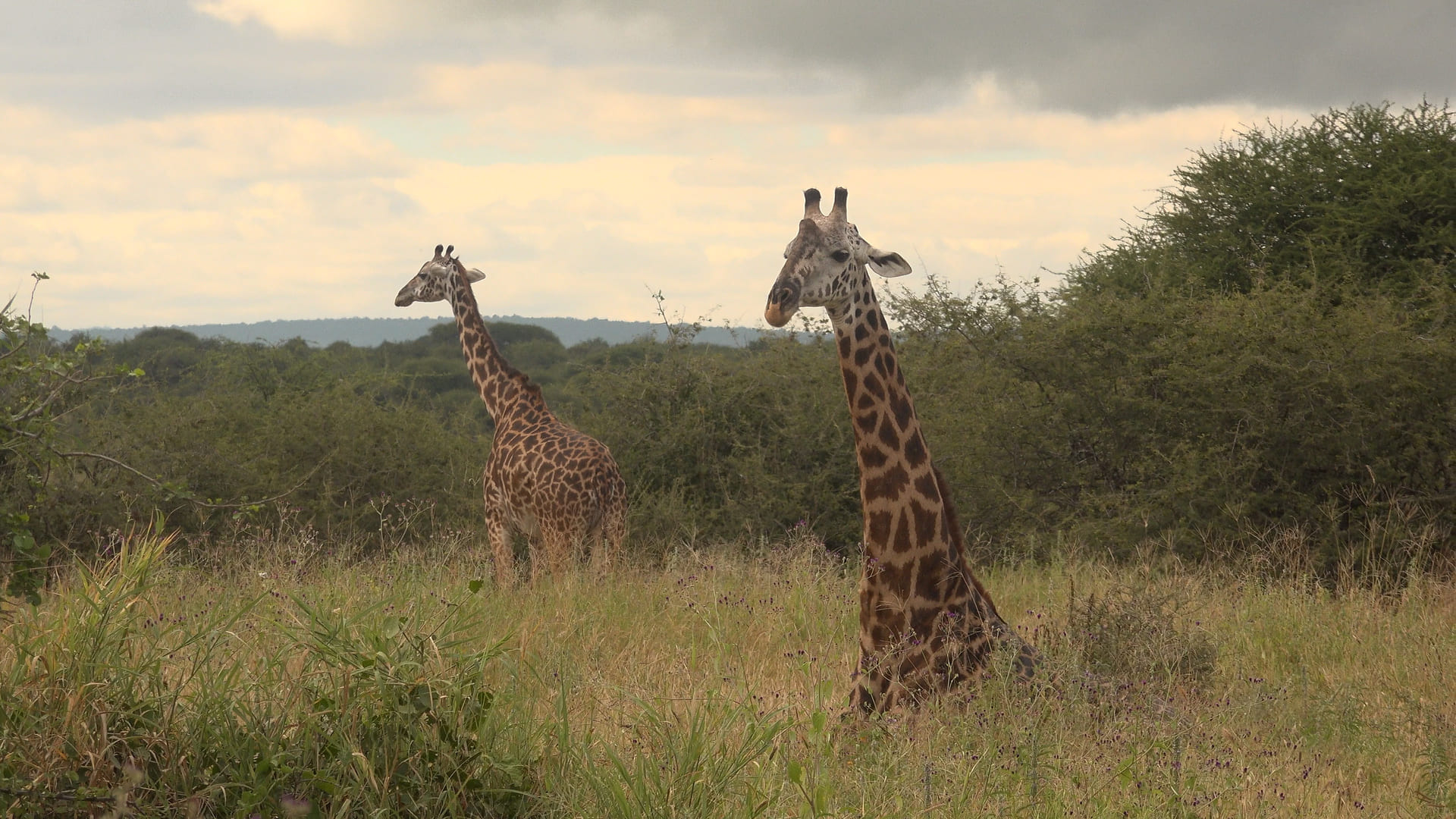
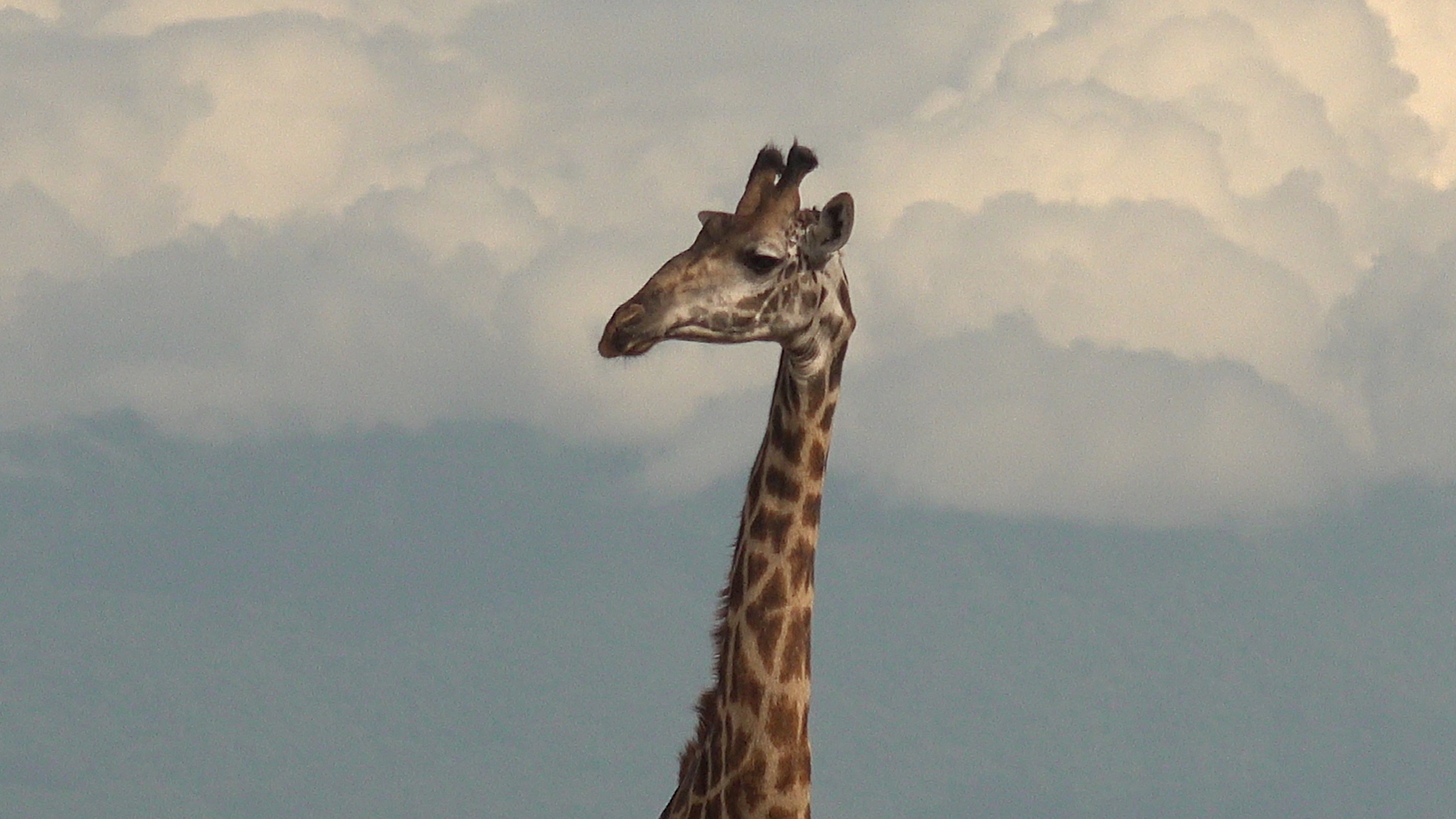
In an ancient African legend, the sun was very capricious at the beginning of time and traveled chaotically across the sky throughout the day. The Creator observed the giraffe, its height, and its very focused gaze. So he gave the giraffe the task of watching over the sun so that it would not get lost. It was to keep its gaze fixed on the sun at all times and ensure that it traveled across the sky in a straight line. The giraffe continues to do this job perfectly to this day…
The giraffe is still doing her job perfectly today.
The flight back to Zanzibar was smooth. Perhaps Ali has already gotten used to flying—this time the plane was a little bigger and the flight a little smoother… He’s immensely grateful to have been able to experience a small part of his beautiful homeland. As for me, I’m back home, writing, organizing, reliving those moments, and getting ready for the next JOURNEY OF THE RISING SUN. THE PATH OF THE RISING SUN.